Mateus Santana Sousa, Rita de Cássia Akutsu, Calliandra Maria de Souza Silva, Camila Silveira Silva Teixeira, Izabel Cristina Rodrigues da Silva
{"title":"巴西的食品安全:北部和东北地区社区餐馆的有效性评价。","authors":"Mateus Santana Sousa, Rita de Cássia Akutsu, Calliandra Maria de Souza Silva, Camila Silveira Silva Teixeira, Izabel Cristina Rodrigues da Silva","doi":"10.3390/ijerph22020315","DOIUrl":null,"url":null,"abstract":"<p><p>Community Restaurants (CRs), part of the Brazilian government's Popular Restaurant Program (PRP), provide free and/or affordable nutritionally balanced meals as an essential strategy to meet the most vulnerable population's basic needs and rights. This cross-sectional study evaluated the effectiveness of these CRs' proposed objectives in cities with ≥100,000 inhabitants in Brazil's northern and northeastern regions-Brazil's most vulnerable and historically unequal regions. Effectiveness was assessed using a CR evaluation matrix-based indicator system to classify CRs as \"not very effective\", \"effective\", or \"very effective\". Among the 94 CRs assessed (north: n = 23, 24.5%; northeast: n = 71, 75.5%), most were classified as \"effective\" or \"very effective\", except for the northern states of Amapá and Tocantins, whose only CR was rated as \"not very effective\" and the northeastern state of Sergipe, which had a PR considered \"not very effective\". State-operated CRs predominated (north: 82.6%; northeast: 76.1%) and primarily operated Monday to Friday (north: 87.0%; northeast: 59.2%), with 35.2% of the northeast CRs operating daily, serving lunch as the main meal (100%). Average daily meal counts were 486.5 (north) and 926.9 (northeast), and the average meal offering time was from 10:55 am to 1:21 pm in the north and from 10:35 am to 2:00 pm in the northeast region, with costs averaging USD 0.27 and USD 0.20, respectively. All CRs employed a nutritionist as a technical manager responsible for menu planning and demonstrated compliance with essential infrastructure criteria, including regular waste collection, water supply, and proximity to public transport. Most were in areas with sanitary sewage coverage (north: 91.3%; northeast: 98.6%) and had monitoring mechanisms (91.3% north; 94.4% northeast) and prioritization systems for vulnerable populations (north: 73.9%; northeast: 80.0%). These findings indicate that CRs in these regions effectively strive to address food security goals, demonstrating tangible outcomes that benefit society.</p>","PeriodicalId":49056,"journal":{"name":"International Journal of Environmental Research and Public Health","volume":"22 2","pages":""},"PeriodicalIF":0.0000,"publicationDate":"2025-02-19","publicationTypes":"Journal Article","fieldsOfStudy":null,"isOpenAccess":false,"openAccessPdf":"https://www.ncbi.nlm.nih.gov/pmc/articles/PMC11855411/pdf/","citationCount":"0","resultStr":"{\"title\":\"Food Security in Brazil: Evaluation of the Effectiveness of Community Restaurants in the North and Northeast Regions.\",\"authors\":\"Mateus Santana Sousa, Rita de Cássia Akutsu, Calliandra Maria de Souza Silva, Camila Silveira Silva Teixeira, Izabel Cristina Rodrigues da Silva\",\"doi\":\"10.3390/ijerph22020315\",\"DOIUrl\":null,\"url\":null,\"abstract\":\"<p><p>Community Restaurants (CRs), part of the Brazilian government's Popular Restaurant Program (PRP), provide free and/or affordable nutritionally balanced meals as an essential strategy to meet the most vulnerable population's basic needs and rights. This cross-sectional study evaluated the effectiveness of these CRs' proposed objectives in cities with ≥100,000 inhabitants in Brazil's northern and northeastern regions-Brazil's most vulnerable and historically unequal regions. Effectiveness was assessed using a CR evaluation matrix-based indicator system to classify CRs as \\\"not very effective\\\", \\\"effective\\\", or \\\"very effective\\\". Among the 94 CRs assessed (north: n = 23, 24.5%; northeast: n = 71, 75.5%), most were classified as \\\"effective\\\" or \\\"very effective\\\", except for the northern states of Amapá and Tocantins, whose only CR was rated as \\\"not very effective\\\" and the northeastern state of Sergipe, which had a PR considered \\\"not very effective\\\". State-operated CRs predominated (north: 82.6%; northeast: 76.1%) and primarily operated Monday to Friday (north: 87.0%; northeast: 59.2%), with 35.2% of the northeast CRs operating daily, serving lunch as the main meal (100%). Average daily meal counts were 486.5 (north) and 926.9 (northeast), and the average meal offering time was from 10:55 am to 1:21 pm in the north and from 10:35 am to 2:00 pm in the northeast region, with costs averaging USD 0.27 and USD 0.20, respectively. All CRs employed a nutritionist as a technical manager responsible for menu planning and demonstrated compliance with essential infrastructure criteria, including regular waste collection, water supply, and proximity to public transport. Most were in areas with sanitary sewage coverage (north: 91.3%; northeast: 98.6%) and had monitoring mechanisms (91.3% north; 94.4% northeast) and prioritization systems for vulnerable populations (north: 73.9%; northeast: 80.0%). These findings indicate that CRs in these regions effectively strive to address food security goals, demonstrating tangible outcomes that benefit society.</p>\",\"PeriodicalId\":49056,\"journal\":{\"name\":\"International Journal of Environmental Research and Public Health\",\"volume\":\"22 2\",\"pages\":\"\"},\"PeriodicalIF\":0.0000,\"publicationDate\":\"2025-02-19\",\"publicationTypes\":\"Journal Article\",\"fieldsOfStudy\":null,\"isOpenAccess\":false,\"openAccessPdf\":\"https://www.ncbi.nlm.nih.gov/pmc/articles/PMC11855411/pdf/\",\"citationCount\":\"0\",\"resultStr\":null,\"platform\":\"Semanticscholar\",\"paperid\":null,\"PeriodicalName\":\"International Journal of Environmental Research and Public Health\",\"FirstCategoryId\":\"103\",\"ListUrlMain\":\"https://doi.org/10.3390/ijerph22020315\",\"RegionNum\":3,\"RegionCategory\":\"综合性期刊\",\"ArticlePicture\":[],\"TitleCN\":null,\"AbstractTextCN\":null,\"PMCID\":null,\"EPubDate\":\"\",\"PubModel\":\"\",\"JCR\":\"\",\"JCRName\":\"\",\"Score\":null,\"Total\":0}","platform":"Semanticscholar","paperid":null,"PeriodicalName":"International Journal of Environmental Research and Public Health","FirstCategoryId":"103","ListUrlMain":"https://doi.org/10.3390/ijerph22020315","RegionNum":3,"RegionCategory":"综合性期刊","ArticlePicture":[],"TitleCN":null,"AbstractTextCN":null,"PMCID":null,"EPubDate":"","PubModel":"","JCR":"","JCRName":"","Score":null,"Total":0}
Food Security in Brazil: Evaluation of the Effectiveness of Community Restaurants in the North and Northeast Regions.
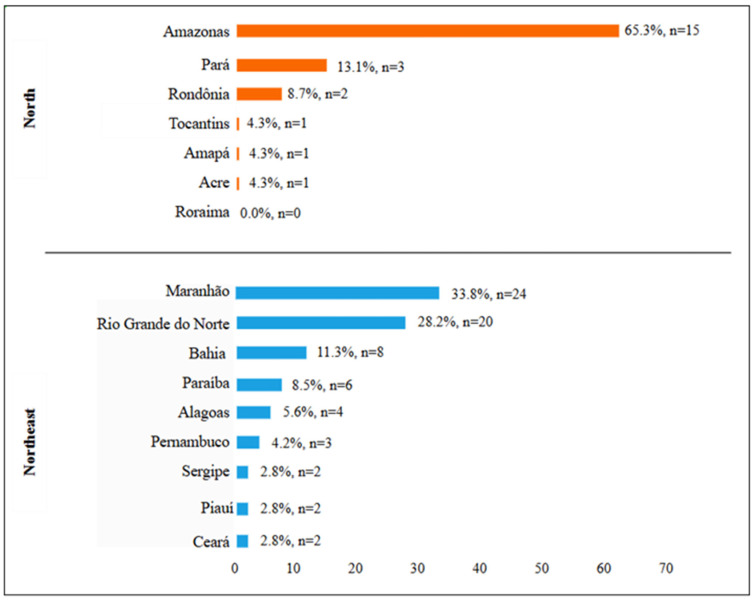
Community Restaurants (CRs), part of the Brazilian government's Popular Restaurant Program (PRP), provide free and/or affordable nutritionally balanced meals as an essential strategy to meet the most vulnerable population's basic needs and rights. This cross-sectional study evaluated the effectiveness of these CRs' proposed objectives in cities with ≥100,000 inhabitants in Brazil's northern and northeastern regions-Brazil's most vulnerable and historically unequal regions. Effectiveness was assessed using a CR evaluation matrix-based indicator system to classify CRs as "not very effective", "effective", or "very effective". Among the 94 CRs assessed (north: n = 23, 24.5%; northeast: n = 71, 75.5%), most were classified as "effective" or "very effective", except for the northern states of Amapá and Tocantins, whose only CR was rated as "not very effective" and the northeastern state of Sergipe, which had a PR considered "not very effective". State-operated CRs predominated (north: 82.6%; northeast: 76.1%) and primarily operated Monday to Friday (north: 87.0%; northeast: 59.2%), with 35.2% of the northeast CRs operating daily, serving lunch as the main meal (100%). Average daily meal counts were 486.5 (north) and 926.9 (northeast), and the average meal offering time was from 10:55 am to 1:21 pm in the north and from 10:35 am to 2:00 pm in the northeast region, with costs averaging USD 0.27 and USD 0.20, respectively. All CRs employed a nutritionist as a technical manager responsible for menu planning and demonstrated compliance with essential infrastructure criteria, including regular waste collection, water supply, and proximity to public transport. Most were in areas with sanitary sewage coverage (north: 91.3%; northeast: 98.6%) and had monitoring mechanisms (91.3% north; 94.4% northeast) and prioritization systems for vulnerable populations (north: 73.9%; northeast: 80.0%). These findings indicate that CRs in these regions effectively strive to address food security goals, demonstrating tangible outcomes that benefit society.
期刊介绍:
International Journal of Environmental Research and Public Health (IJERPH) (ISSN 1660-4601) is a peer-reviewed scientific journal that publishes original articles, critical reviews, research notes, and short communications in the interdisciplinary area of environmental health sciences and public health. It links several scientific disciplines including biology, biochemistry, biotechnology, cellular and molecular biology, chemistry, computer science, ecology, engineering, epidemiology, genetics, immunology, microbiology, oncology, pathology, pharmacology, and toxicology, in an integrated fashion, to address critical issues related to environmental quality and public health. Therefore, IJERPH focuses on the publication of scientific and technical information on the impacts of natural phenomena and anthropogenic factors on the quality of our environment, the interrelationships between environmental health and the quality of life, as well as the socio-cultural, political, economic, and legal considerations related to environmental stewardship and public health.
The 2018 IJERPH Outstanding Reviewer Award has been launched! This award acknowledge those who have generously dedicated their time to review manuscripts submitted to IJERPH. See full details at http://www.mdpi.com/journal/ijerph/awards.




 京公网安备 11010802042870号
京ICP备2023020795号-1
京公网安备 11010802042870号
京ICP备2023020795号-1

 分享
分享
 求助内容:
求助内容: 应助结果提醒方式:
 扫码关注我们
