Murat Can Güney, Hakan Süygün, Melike Polat, Hüseyin Ayhan, Telat Keleş, Zeynep Şeyma Turinay Ertop, Betül Banu Karasu, Engin Bozkurt
{"title":"经导管主动脉瓣置入术中射血分数降低患者心功能恢复和死亡率的预测因素。","authors":"Murat Can Güney, Hakan Süygün, Melike Polat, Hüseyin Ayhan, Telat Keleş, Zeynep Şeyma Turinay Ertop, Betül Banu Karasu, Engin Bozkurt","doi":"10.3390/medicina61020266","DOIUrl":null,"url":null,"abstract":"<p><p><i>Background and Objectives</i>: Patients with reduced left ventricular ejection fraction (LVEF) are reported to have unfavorable outcomes following transcatheter aortic valve implantation (TAVI). This study aims to evaluate outcomes and identify predictive factors for LVEF recovery following TAVI in patients with reduced LVEF. <i>Materials and Methods</i>: This retrospective study analyzed 114 patients with symptomatic severe aortic stenosis (AS) with LVEF < 40% who underwent TAVI between 2011 and 2023 at two centers. Echocardiographic parameters, including LVEF, ventricular dimensions, and relative wall thickness (RWT), were assessed at baseline and during follow-up. The outcomes and predictors of substantial LVEF improvement and mortality were analyzed using univariate and multivariate logistic regression methods. <i>Results</i>: Anemia (OR = 4.345, 95% CI: 1.208-15.626, <i>p</i> = 0.024), RWT (OR = 1.224, 95% CI: 1.064-1.407, <i>p</i> = 0.005), and early post-procedural changes in left ventricular end-systolic dimension (LVESD) (OR = 1.297, 95% CI: 1.037-1.622, <i>p</i> = 0.023) and left ventricular end-diastolic dimension (LVEDD) (OR = 1.346, 95% CI: 1.034-1.753, <i>p</i> = 0.027) at one-month follow-up were identified as significant factors associated with LVEF recovery at one year. Regarding factors related to mortality, higher baseline AVMG levels were associated with a lower probability of death after one year (OR = 0.926, 95% CI: 0.875-0.979, <i>p</i> = 0.007). Conversely, a more limited increase in LVEF from baseline to the final follow-up was linked to poor prognosis and higher mortality at one year (95% CI: 1.045-1.594, <i>p</i> = 0.018). <i>Conclusions</i>: This study demonstrated that TAVI in patients with AS and reduced LVEF can be performed with high procedural success, low mortality, and significant improvement in cardiac function during follow-up. Additionally, anemia, baseline RWT, and early post-procedural changes in LVESD and LVEDD were identified as factors associated with LVEF recovery. Baseline AVMG and changes in LVEF at the final follow-up were found to be significant predictors of total mortality.</p>","PeriodicalId":49830,"journal":{"name":"Medicina-Lithuania","volume":"61 2","pages":""},"PeriodicalIF":2.9000,"publicationDate":"2025-02-04","publicationTypes":"Journal Article","fieldsOfStudy":null,"isOpenAccess":false,"openAccessPdf":"https://www.ncbi.nlm.nih.gov/pmc/articles/PMC11857224/pdf/","citationCount":"0","resultStr":"{\"title\":\"Predictive Factors of Cardiac Function Recovery and Mortality in Patients with Reduced Ejection Fraction Undergoing Transcatheter Aortic Valve Implantation.\",\"authors\":\"Murat Can Güney, Hakan Süygün, Melike Polat, Hüseyin Ayhan, Telat Keleş, Zeynep Şeyma Turinay Ertop, Betül Banu Karasu, Engin Bozkurt\",\"doi\":\"10.3390/medicina61020266\",\"DOIUrl\":null,\"url\":null,\"abstract\":\"<p><p><i>Background and Objectives</i>: Patients with reduced left ventricular ejection fraction (LVEF) are reported to have unfavorable outcomes following transcatheter aortic valve implantation (TAVI). This study aims to evaluate outcomes and identify predictive factors for LVEF recovery following TAVI in patients with reduced LVEF. <i>Materials and Methods</i>: This retrospective study analyzed 114 patients with symptomatic severe aortic stenosis (AS) with LVEF < 40% who underwent TAVI between 2011 and 2023 at two centers. Echocardiographic parameters, including LVEF, ventricular dimensions, and relative wall thickness (RWT), were assessed at baseline and during follow-up. The outcomes and predictors of substantial LVEF improvement and mortality were analyzed using univariate and multivariate logistic regression methods. <i>Results</i>: Anemia (OR = 4.345, 95% CI: 1.208-15.626, <i>p</i> = 0.024), RWT (OR = 1.224, 95% CI: 1.064-1.407, <i>p</i> = 0.005), and early post-procedural changes in left ventricular end-systolic dimension (LVESD) (OR = 1.297, 95% CI: 1.037-1.622, <i>p</i> = 0.023) and left ventricular end-diastolic dimension (LVEDD) (OR = 1.346, 95% CI: 1.034-1.753, <i>p</i> = 0.027) at one-month follow-up were identified as significant factors associated with LVEF recovery at one year. Regarding factors related to mortality, higher baseline AVMG levels were associated with a lower probability of death after one year (OR = 0.926, 95% CI: 0.875-0.979, <i>p</i> = 0.007). Conversely, a more limited increase in LVEF from baseline to the final follow-up was linked to poor prognosis and higher mortality at one year (95% CI: 1.045-1.594, <i>p</i> = 0.018). <i>Conclusions</i>: This study demonstrated that TAVI in patients with AS and reduced LVEF can be performed with high procedural success, low mortality, and significant improvement in cardiac function during follow-up. Additionally, anemia, baseline RWT, and early post-procedural changes in LVESD and LVEDD were identified as factors associated with LVEF recovery. Baseline AVMG and changes in LVEF at the final follow-up were found to be significant predictors of total mortality.</p>\",\"PeriodicalId\":49830,\"journal\":{\"name\":\"Medicina-Lithuania\",\"volume\":\"61 2\",\"pages\":\"\"},\"PeriodicalIF\":2.9000,\"publicationDate\":\"2025-02-04\",\"publicationTypes\":\"Journal Article\",\"fieldsOfStudy\":null,\"isOpenAccess\":false,\"openAccessPdf\":\"https://www.ncbi.nlm.nih.gov/pmc/articles/PMC11857224/pdf/\",\"citationCount\":\"0\",\"resultStr\":null,\"platform\":\"Semanticscholar\",\"paperid\":null,\"PeriodicalName\":\"Medicina-Lithuania\",\"FirstCategoryId\":\"3\",\"ListUrlMain\":\"https://doi.org/10.3390/medicina61020266\",\"RegionNum\":4,\"RegionCategory\":\"医学\",\"ArticlePicture\":[],\"TitleCN\":null,\"AbstractTextCN\":null,\"PMCID\":null,\"EPubDate\":\"\",\"PubModel\":\"\",\"JCR\":\"Q1\",\"JCRName\":\"MEDICINE, GENERAL & INTERNAL\",\"Score\":null,\"Total\":0}","platform":"Semanticscholar","paperid":null,"PeriodicalName":"Medicina-Lithuania","FirstCategoryId":"3","ListUrlMain":"https://doi.org/10.3390/medicina61020266","RegionNum":4,"RegionCategory":"医学","ArticlePicture":[],"TitleCN":null,"AbstractTextCN":null,"PMCID":null,"EPubDate":"","PubModel":"","JCR":"Q1","JCRName":"MEDICINE, GENERAL & INTERNAL","Score":null,"Total":0}
引用次数: 0
摘要
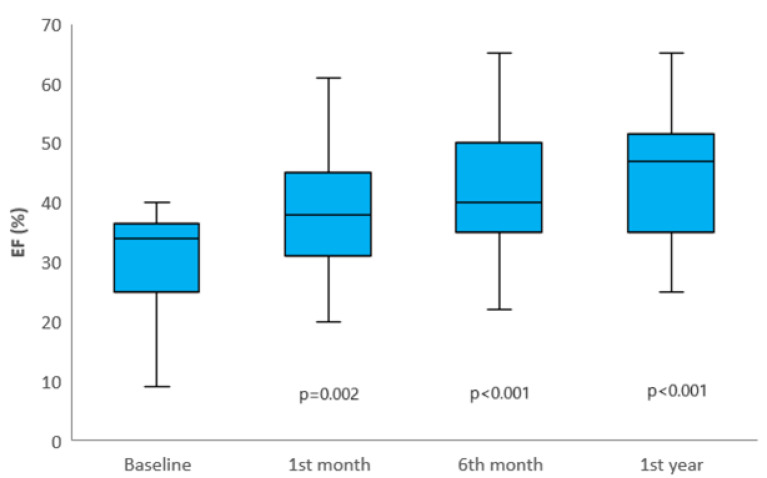
背景和目的:据报道,经导管主动脉瓣植入术(TAVI)后左室射血分数(LVEF)降低的患者预后不良。本研究旨在评估LVEF降低的TAVI患者LVEF恢复的结果并确定预测因素。材料和方法:本回顾性研究分析了2011年至2023年间在两个中心接受TAVI治疗的114例LVEF < 40%的症状性重度主动脉瓣狭窄(AS)患者。在基线和随访期间评估超声心动图参数,包括LVEF、心室尺寸和相对壁厚(RWT)。使用单变量和多变量逻辑回归方法分析LVEF显著改善和死亡率的结果和预测因素。结果:1个月随访时,贫血(OR = 4.345, 95% CI: 1.207 -15.626, p = 0.024)、RWT (OR = 1.224, 95% CI: 1.064-1.407, p = 0.005)和术后早期左室收缩末期尺寸(LVESD) (OR = 1.297, 95% CI: 1.037-1.622, p = 0.023)和左室舒张末期尺寸(LVEDD) (OR = 1.346, 95% CI: 1.034-1.753, p = 0.027)的变化被确定为与1年LVEF恢复相关的重要因素。关于死亡率相关因素,较高的AVMG基线水平与1年后较低的死亡概率相关(OR = 0.926, 95% CI: 0.875-0.979, p = 0.007)。相反,从基线到最终随访的LVEF增加有限,与预后差和一年内较高的死亡率有关(95% CI: 1.045-1.594, p = 0.018)。结论:本研究表明,在AS和LVEF降低的患者中进行TAVI手术成功率高,死亡率低,随访期间心功能明显改善。此外,贫血、基线RWT、LVESD和LVEDD术后早期变化被确定为与LVEF恢复相关的因素。基线AVMG和最终随访时LVEF的变化被发现是总死亡率的重要预测因子。
Predictive Factors of Cardiac Function Recovery and Mortality in Patients with Reduced Ejection Fraction Undergoing Transcatheter Aortic Valve Implantation.
Background and Objectives: Patients with reduced left ventricular ejection fraction (LVEF) are reported to have unfavorable outcomes following transcatheter aortic valve implantation (TAVI). This study aims to evaluate outcomes and identify predictive factors for LVEF recovery following TAVI in patients with reduced LVEF. Materials and Methods: This retrospective study analyzed 114 patients with symptomatic severe aortic stenosis (AS) with LVEF < 40% who underwent TAVI between 2011 and 2023 at two centers. Echocardiographic parameters, including LVEF, ventricular dimensions, and relative wall thickness (RWT), were assessed at baseline and during follow-up. The outcomes and predictors of substantial LVEF improvement and mortality were analyzed using univariate and multivariate logistic regression methods. Results: Anemia (OR = 4.345, 95% CI: 1.208-15.626, p = 0.024), RWT (OR = 1.224, 95% CI: 1.064-1.407, p = 0.005), and early post-procedural changes in left ventricular end-systolic dimension (LVESD) (OR = 1.297, 95% CI: 1.037-1.622, p = 0.023) and left ventricular end-diastolic dimension (LVEDD) (OR = 1.346, 95% CI: 1.034-1.753, p = 0.027) at one-month follow-up were identified as significant factors associated with LVEF recovery at one year. Regarding factors related to mortality, higher baseline AVMG levels were associated with a lower probability of death after one year (OR = 0.926, 95% CI: 0.875-0.979, p = 0.007). Conversely, a more limited increase in LVEF from baseline to the final follow-up was linked to poor prognosis and higher mortality at one year (95% CI: 1.045-1.594, p = 0.018). Conclusions: This study demonstrated that TAVI in patients with AS and reduced LVEF can be performed with high procedural success, low mortality, and significant improvement in cardiac function during follow-up. Additionally, anemia, baseline RWT, and early post-procedural changes in LVESD and LVEDD were identified as factors associated with LVEF recovery. Baseline AVMG and changes in LVEF at the final follow-up were found to be significant predictors of total mortality.
期刊介绍:
The journal’s main focus is on reviews as well as clinical and experimental investigations. The journal aims to advance knowledge related to problems in medicine in developing countries as well as developed economies, to disseminate research on global health, and to promote and foster prevention and treatment of diseases worldwide. MEDICINA publications cater to clinicians, diagnosticians and researchers, and serve as a forum to discuss the current status of health-related matters and their impact on a global and local scale.




 京公网安备 11010802042870号
京ICP备2023020795号-1
京公网安备 11010802042870号
京ICP备2023020795号-1

 分享
分享
 求助内容:
求助内容: 应助结果提醒方式:
 扫码关注我们
