Clara Fernández Fernández, Blanca Otero Torrón, Mercedes Bernaldo de Quirós Fernández, Rafael San Juan Garrido, Cristina Martín-Arriscado Arroba, Iago Justo Alonso, Alberto Alejandro Marcacuzco Quinto, Óscar Caso Maestro, Félix Cambra Molero, Oana Anisa Nutu, Jorge Calvo Pulido, Alejandro Manrique Municio, Álvaro García-Sesma Pérez-Fuentes, Carmelo Loinaz Segurola
{"title":"新冠肺炎对肝移植受者在大流行“波”中的影响和演变","authors":"Clara Fernández Fernández, Blanca Otero Torrón, Mercedes Bernaldo de Quirós Fernández, Rafael San Juan Garrido, Cristina Martín-Arriscado Arroba, Iago Justo Alonso, Alberto Alejandro Marcacuzco Quinto, Óscar Caso Maestro, Félix Cambra Molero, Oana Anisa Nutu, Jorge Calvo Pulido, Alejandro Manrique Municio, Álvaro García-Sesma Pérez-Fuentes, Carmelo Loinaz Segurola","doi":"10.3390/v17020273","DOIUrl":null,"url":null,"abstract":"<p><p>Liver transplant recipients (LTRs) have been considered a population group that is vulnerable to COVID-19 as they are chronically immunosuppressed patients with frequent comorbidities. This study describes the course of the SARS-CoV-2 disease from February 2020 to December 2023 along seven pandemic \"waves\". We carried out an observational study on 307 COVID-19 cases in a cohort of LTRs with the aim of evaluating the changes in the disease characteristics over time and determining the risk factors for severe COVID-19. An older age and serum creatinine level ≥ 2 mg/dL were found to be risk factors for hospital admission and respiratory failure. The use of calcineurin inhibitors was a protective factor for death, hospitalization, and respiratory failure from COVID-19. One hundred percent of patients who died (N = 12) were on mycophenolate mofetil, which was a determinant for respiratory failure. Azathioprine was associated with admission to the intensive care unit (ICU) and with invasive mechanical ventilation (IMV). Vaccination was a protective factor for hospitalization, respiratory failure, and mortality. The severe COVID-19 rate was higher during the first five waves, with a peak of 57.14%, and the highest mortality rate (21.43%) occurred in the fourth wave. The IMV and ICU admission rates did not show significant differences across the periods studied.</p>","PeriodicalId":49328,"journal":{"name":"Viruses-Basel","volume":"17 2","pages":""},"PeriodicalIF":3.5000,"publicationDate":"2025-02-16","publicationTypes":"Journal Article","fieldsOfStudy":null,"isOpenAccess":false,"openAccessPdf":"https://www.ncbi.nlm.nih.gov/pmc/articles/PMC11861689/pdf/","citationCount":"0","resultStr":"{\"title\":\"The Impact and Evolution of COVID-19 on Liver Transplant Recipients Throughout the Pandemic \\\"Waves\\\" in a Single Center.\",\"authors\":\"Clara Fernández Fernández, Blanca Otero Torrón, Mercedes Bernaldo de Quirós Fernández, Rafael San Juan Garrido, Cristina Martín-Arriscado Arroba, Iago Justo Alonso, Alberto Alejandro Marcacuzco Quinto, Óscar Caso Maestro, Félix Cambra Molero, Oana Anisa Nutu, Jorge Calvo Pulido, Alejandro Manrique Municio, Álvaro García-Sesma Pérez-Fuentes, Carmelo Loinaz Segurola\",\"doi\":\"10.3390/v17020273\",\"DOIUrl\":null,\"url\":null,\"abstract\":\"<p><p>Liver transplant recipients (LTRs) have been considered a population group that is vulnerable to COVID-19 as they are chronically immunosuppressed patients with frequent comorbidities. This study describes the course of the SARS-CoV-2 disease from February 2020 to December 2023 along seven pandemic \\\"waves\\\". We carried out an observational study on 307 COVID-19 cases in a cohort of LTRs with the aim of evaluating the changes in the disease characteristics over time and determining the risk factors for severe COVID-19. An older age and serum creatinine level ≥ 2 mg/dL were found to be risk factors for hospital admission and respiratory failure. The use of calcineurin inhibitors was a protective factor for death, hospitalization, and respiratory failure from COVID-19. One hundred percent of patients who died (N = 12) were on mycophenolate mofetil, which was a determinant for respiratory failure. Azathioprine was associated with admission to the intensive care unit (ICU) and with invasive mechanical ventilation (IMV). Vaccination was a protective factor for hospitalization, respiratory failure, and mortality. The severe COVID-19 rate was higher during the first five waves, with a peak of 57.14%, and the highest mortality rate (21.43%) occurred in the fourth wave. The IMV and ICU admission rates did not show significant differences across the periods studied.</p>\",\"PeriodicalId\":49328,\"journal\":{\"name\":\"Viruses-Basel\",\"volume\":\"17 2\",\"pages\":\"\"},\"PeriodicalIF\":3.5000,\"publicationDate\":\"2025-02-16\",\"publicationTypes\":\"Journal Article\",\"fieldsOfStudy\":null,\"isOpenAccess\":false,\"openAccessPdf\":\"https://www.ncbi.nlm.nih.gov/pmc/articles/PMC11861689/pdf/\",\"citationCount\":\"0\",\"resultStr\":null,\"platform\":\"Semanticscholar\",\"paperid\":null,\"PeriodicalName\":\"Viruses-Basel\",\"FirstCategoryId\":\"3\",\"ListUrlMain\":\"https://doi.org/10.3390/v17020273\",\"RegionNum\":3,\"RegionCategory\":\"医学\",\"ArticlePicture\":[],\"TitleCN\":null,\"AbstractTextCN\":null,\"PMCID\":null,\"EPubDate\":\"\",\"PubModel\":\"\",\"JCR\":\"Q2\",\"JCRName\":\"VIROLOGY\",\"Score\":null,\"Total\":0}","platform":"Semanticscholar","paperid":null,"PeriodicalName":"Viruses-Basel","FirstCategoryId":"3","ListUrlMain":"https://doi.org/10.3390/v17020273","RegionNum":3,"RegionCategory":"医学","ArticlePicture":[],"TitleCN":null,"AbstractTextCN":null,"PMCID":null,"EPubDate":"","PubModel":"","JCR":"Q2","JCRName":"VIROLOGY","Score":null,"Total":0}
The Impact and Evolution of COVID-19 on Liver Transplant Recipients Throughout the Pandemic "Waves" in a Single Center.
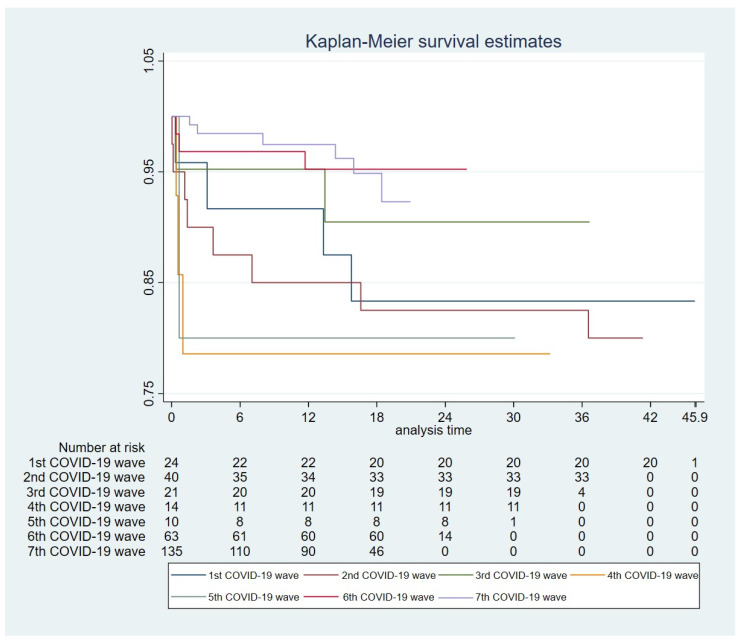
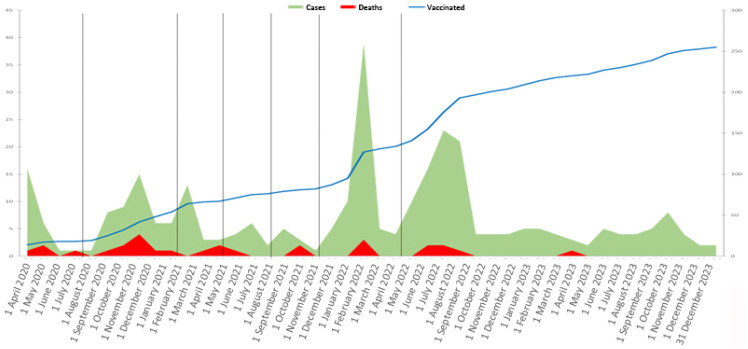
Liver transplant recipients (LTRs) have been considered a population group that is vulnerable to COVID-19 as they are chronically immunosuppressed patients with frequent comorbidities. This study describes the course of the SARS-CoV-2 disease from February 2020 to December 2023 along seven pandemic "waves". We carried out an observational study on 307 COVID-19 cases in a cohort of LTRs with the aim of evaluating the changes in the disease characteristics over time and determining the risk factors for severe COVID-19. An older age and serum creatinine level ≥ 2 mg/dL were found to be risk factors for hospital admission and respiratory failure. The use of calcineurin inhibitors was a protective factor for death, hospitalization, and respiratory failure from COVID-19. One hundred percent of patients who died (N = 12) were on mycophenolate mofetil, which was a determinant for respiratory failure. Azathioprine was associated with admission to the intensive care unit (ICU) and with invasive mechanical ventilation (IMV). Vaccination was a protective factor for hospitalization, respiratory failure, and mortality. The severe COVID-19 rate was higher during the first five waves, with a peak of 57.14%, and the highest mortality rate (21.43%) occurred in the fourth wave. The IMV and ICU admission rates did not show significant differences across the periods studied.
期刊介绍:
Viruses (ISSN 1999-4915) is an open access journal which provides an advanced forum for studies of viruses. It publishes reviews, regular research papers, communications, conference reports and short notes. Our aim is to encourage scientists to publish their experimental and theoretical results in as much detail as possible. There is no restriction on the length of the papers. The full experimental details must be provided so that the results can be reproduced. We also encourage the publication of timely reviews and commentaries on topics of interest to the virology community and feature highlights from the virology literature in the ''News and Views'' section. Electronic files or software regarding the full details of the calculation and experimental procedure, if unable to be published in a normal way, can be deposited as supplementary material.




 京公网安备 11010802042870号
京ICP备2023020795号-1
京公网安备 11010802042870号
京ICP备2023020795号-1

 分享
分享
 求助内容:
求助内容: 应助结果提醒方式:
 扫码关注我们
