Mads Dam Lyhne, Eugene Yuriditsky, Vasileios Zochios, Simone Juel Dragsbaek, Jacob Valentin Hansen, Mads Jønsson Andersen, Søren Mellemkjær, Christopher Kabrhel, Asger Andersen
{"title":"急性和慢性肺栓塞的肺动脉搏动指数。","authors":"Mads Dam Lyhne, Eugene Yuriditsky, Vasileios Zochios, Simone Juel Dragsbaek, Jacob Valentin Hansen, Mads Jønsson Andersen, Søren Mellemkjær, Christopher Kabrhel, Asger Andersen","doi":"10.3390/medicina61020363","DOIUrl":null,"url":null,"abstract":"<p><p><i>Background and Objectives</i>: The pulmonary artery pulsatility index (PAPi) is an emerging marker of right ventricular (RV) injury but has not been well investigated in acute pulmonary embolism (PE) or chronic thromboembolic pulmonary hypertension (CTEPH). We aimed to investigate its discriminatory capabilities and ability to detect therapeutic effects in acute PE and CTEPH. <i>Materials and Methods</i>: This was a secondary analysis of data from both experimental studies of autologous PE and human studies of acute PE and CTEPH. PAPi was calculated and compared in (1) PE versus sham and (2) before and after interventions aimed at reducing RV afterload in PE and CTEPH. The correlations between PAPi, cardiac output, and RV to pulmonary artery coupling were investigated. <i>Results</i>: PAPi did not differ between animals with acute PE versus sham, nor was it affected by clot burden (<i>p =</i> 0.673) or at a 30-day follow-up (<i>p =</i> 0.242). Pulmonary vasodilatation with oxygen was associated with a reduction in PAPi (4.9 [3.7-7.8] vs. 4.0 [3.2-5.6], <i>p</i> = 0.016), whereas positive inotropes increased PAPi in the experimental PE. In humans, PAPi did not change consistently with interventions. Balloon pulmonary angioplasty did not significantly increase PAPi (6.5 [4.3-10.7] vs. 9.8 [6.8-14.2], <i>p</i> = 0.1) in patients with CTEPH, and a non-significant reduction in PAPi (4.3 ± 1.6 vs. 3.3 ± 1.2, <i>p</i> = 0.074) was observed in patients with acute PE who received sildenafil. PAPi did not correlate well with cardiac output or measures of RV to pulmonary artery coupling in either species. <i>Conclusions</i>: PAPi did not detect acute, experimental PE or changes as a result of therapeutic interventions in patients with hemodynamically stable acute PE or CTEPH. However, it did change with pharmacological interventions in the experimental PE. Further research should establish its utility in detecting and monitoring RV injury in different clinical phenotypes of acute PE and CTEPH.</p>","PeriodicalId":49830,"journal":{"name":"Medicina-Lithuania","volume":"61 2","pages":""},"PeriodicalIF":2.9000,"publicationDate":"2025-02-19","publicationTypes":"Journal Article","fieldsOfStudy":null,"isOpenAccess":false,"openAccessPdf":"https://www.ncbi.nlm.nih.gov/pmc/articles/PMC11857435/pdf/","citationCount":"0","resultStr":"{\"title\":\"Pulmonary Artery Pulsatility Index in Acute and Chronic Pulmonary Embolism.\",\"authors\":\"Mads Dam Lyhne, Eugene Yuriditsky, Vasileios Zochios, Simone Juel Dragsbaek, Jacob Valentin Hansen, Mads Jønsson Andersen, Søren Mellemkjær, Christopher Kabrhel, Asger Andersen\",\"doi\":\"10.3390/medicina61020363\",\"DOIUrl\":null,\"url\":null,\"abstract\":\"<p><p><i>Background and Objectives</i>: The pulmonary artery pulsatility index (PAPi) is an emerging marker of right ventricular (RV) injury but has not been well investigated in acute pulmonary embolism (PE) or chronic thromboembolic pulmonary hypertension (CTEPH). We aimed to investigate its discriminatory capabilities and ability to detect therapeutic effects in acute PE and CTEPH. <i>Materials and Methods</i>: This was a secondary analysis of data from both experimental studies of autologous PE and human studies of acute PE and CTEPH. PAPi was calculated and compared in (1) PE versus sham and (2) before and after interventions aimed at reducing RV afterload in PE and CTEPH. The correlations between PAPi, cardiac output, and RV to pulmonary artery coupling were investigated. <i>Results</i>: PAPi did not differ between animals with acute PE versus sham, nor was it affected by clot burden (<i>p =</i> 0.673) or at a 30-day follow-up (<i>p =</i> 0.242). Pulmonary vasodilatation with oxygen was associated with a reduction in PAPi (4.9 [3.7-7.8] vs. 4.0 [3.2-5.6], <i>p</i> = 0.016), whereas positive inotropes increased PAPi in the experimental PE. In humans, PAPi did not change consistently with interventions. Balloon pulmonary angioplasty did not significantly increase PAPi (6.5 [4.3-10.7] vs. 9.8 [6.8-14.2], <i>p</i> = 0.1) in patients with CTEPH, and a non-significant reduction in PAPi (4.3 ± 1.6 vs. 3.3 ± 1.2, <i>p</i> = 0.074) was observed in patients with acute PE who received sildenafil. PAPi did not correlate well with cardiac output or measures of RV to pulmonary artery coupling in either species. <i>Conclusions</i>: PAPi did not detect acute, experimental PE or changes as a result of therapeutic interventions in patients with hemodynamically stable acute PE or CTEPH. However, it did change with pharmacological interventions in the experimental PE. Further research should establish its utility in detecting and monitoring RV injury in different clinical phenotypes of acute PE and CTEPH.</p>\",\"PeriodicalId\":49830,\"journal\":{\"name\":\"Medicina-Lithuania\",\"volume\":\"61 2\",\"pages\":\"\"},\"PeriodicalIF\":2.9000,\"publicationDate\":\"2025-02-19\",\"publicationTypes\":\"Journal Article\",\"fieldsOfStudy\":null,\"isOpenAccess\":false,\"openAccessPdf\":\"https://www.ncbi.nlm.nih.gov/pmc/articles/PMC11857435/pdf/\",\"citationCount\":\"0\",\"resultStr\":null,\"platform\":\"Semanticscholar\",\"paperid\":null,\"PeriodicalName\":\"Medicina-Lithuania\",\"FirstCategoryId\":\"3\",\"ListUrlMain\":\"https://doi.org/10.3390/medicina61020363\",\"RegionNum\":4,\"RegionCategory\":\"医学\",\"ArticlePicture\":[],\"TitleCN\":null,\"AbstractTextCN\":null,\"PMCID\":null,\"EPubDate\":\"\",\"PubModel\":\"\",\"JCR\":\"Q1\",\"JCRName\":\"MEDICINE, GENERAL & INTERNAL\",\"Score\":null,\"Total\":0}","platform":"Semanticscholar","paperid":null,"PeriodicalName":"Medicina-Lithuania","FirstCategoryId":"3","ListUrlMain":"https://doi.org/10.3390/medicina61020363","RegionNum":4,"RegionCategory":"医学","ArticlePicture":[],"TitleCN":null,"AbstractTextCN":null,"PMCID":null,"EPubDate":"","PubModel":"","JCR":"Q1","JCRName":"MEDICINE, GENERAL & INTERNAL","Score":null,"Total":0}
引用次数: 0
摘要
背景和目的:肺动脉搏动指数(PAPi)是一种新兴的右心室(RV)损伤标志物,但在急性肺栓塞(PE)或慢性血栓栓塞性肺动脉高压(CTEPH)中尚未得到很好的研究。我们的目的是研究其鉴别能力和检测急性PE和CTEPH治疗效果的能力。材料和方法:这是对自体PE实验研究和急性PE和CTEPH的人类研究数据的二次分析。计算并比较(1)PE与sham和(2)旨在减少PE和CTEPH中RV后负荷的干预前后的PAPi。研究了PAPi、心输出量和RV与肺动脉耦合的相关性。结果:急性肺水肿动物与假性肺水肿动物之间的PAPi没有差异,也不受血栓负荷的影响(p = 0.673)或30天随访(p = 0.242)。肺血管扩张伴氧与PAPi降低相关(4.9 [3.7-7.8]vs. 4.0 [3.2-5.6], p = 0.016),而在实验PE中,正性肌力增加PAPi。在人类中,PAPi并没有随着干预而持续改变。球囊肺动脉成形术未显著增加CTEPH患者的PAPi (6.5 [4.3-10.7] vs. 9.8 [6.8-14.2], p = 0.1),急性PE患者接受西地那非后,其PAPi无显著降低(4.3±1.6 vs. 3.3±1.2,p = 0.074)。在两种动物中,PAPi与心输出量或左心室与肺动脉耦合的测量没有很好的相关性。结论:在血流动力学稳定的急性PE或CTEPH患者中,PAPi不能检测到急性、实验性PE或治疗干预导致的变化。然而,在实验性PE中,它确实随着药物干预而改变。进一步的研究应确定其在检测和监测急性PE和CTEPH不同临床表型的RV损伤中的应用价值。
Pulmonary Artery Pulsatility Index in Acute and Chronic Pulmonary Embolism.
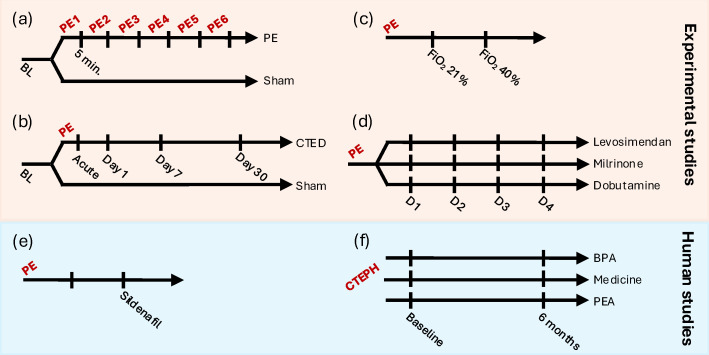
Background and Objectives: The pulmonary artery pulsatility index (PAPi) is an emerging marker of right ventricular (RV) injury but has not been well investigated in acute pulmonary embolism (PE) or chronic thromboembolic pulmonary hypertension (CTEPH). We aimed to investigate its discriminatory capabilities and ability to detect therapeutic effects in acute PE and CTEPH. Materials and Methods: This was a secondary analysis of data from both experimental studies of autologous PE and human studies of acute PE and CTEPH. PAPi was calculated and compared in (1) PE versus sham and (2) before and after interventions aimed at reducing RV afterload in PE and CTEPH. The correlations between PAPi, cardiac output, and RV to pulmonary artery coupling were investigated. Results: PAPi did not differ between animals with acute PE versus sham, nor was it affected by clot burden (p = 0.673) or at a 30-day follow-up (p = 0.242). Pulmonary vasodilatation with oxygen was associated with a reduction in PAPi (4.9 [3.7-7.8] vs. 4.0 [3.2-5.6], p = 0.016), whereas positive inotropes increased PAPi in the experimental PE. In humans, PAPi did not change consistently with interventions. Balloon pulmonary angioplasty did not significantly increase PAPi (6.5 [4.3-10.7] vs. 9.8 [6.8-14.2], p = 0.1) in patients with CTEPH, and a non-significant reduction in PAPi (4.3 ± 1.6 vs. 3.3 ± 1.2, p = 0.074) was observed in patients with acute PE who received sildenafil. PAPi did not correlate well with cardiac output or measures of RV to pulmonary artery coupling in either species. Conclusions: PAPi did not detect acute, experimental PE or changes as a result of therapeutic interventions in patients with hemodynamically stable acute PE or CTEPH. However, it did change with pharmacological interventions in the experimental PE. Further research should establish its utility in detecting and monitoring RV injury in different clinical phenotypes of acute PE and CTEPH.
期刊介绍:
The journal’s main focus is on reviews as well as clinical and experimental investigations. The journal aims to advance knowledge related to problems in medicine in developing countries as well as developed economies, to disseminate research on global health, and to promote and foster prevention and treatment of diseases worldwide. MEDICINA publications cater to clinicians, diagnosticians and researchers, and serve as a forum to discuss the current status of health-related matters and their impact on a global and local scale.






 京公网安备 11010802042870号
京ICP备2023020795号-1
京公网安备 11010802042870号
京ICP备2023020795号-1

 分享
分享
 求助内容:
求助内容: 应助结果提醒方式:
 扫码关注我们
