{"title":"去地单抗与唑来膦酸治疗骨转移性乳腺癌患者接受CDK4/6抑制剂治疗的疗效和安全性比较","authors":"İrem Öner, Hicran Anık, Bediz Kurt İnci, Pınar Kubilay Tolunay, Öztürk Ateş, Ülkü Yalçıntaş Arslan, Cengiz Karaçin","doi":"10.3390/medicina61020360","DOIUrl":null,"url":null,"abstract":"<p><p><i>Background and Objectives</i>: Bone metastases in patients can cause significant quality-of-life declines due to skeletal-related events (SREs). SRE is defined as the occurrence of radiotherapy for bone pain, pathologic fracture, bone surgery, spinal cord compression, or hypercalcemia. Bone-modifying agents (BMAs), such as denosumab and zoledronic acid, are crucial in reducing the frequency and severity of SREs. The inhibition of cyclin-dependent kinase 4/6 (CDK4/6) inhibitors has emerged as the standard treatment for hormone receptor-positive metastatic breast cancer, demonstrating significant improvements in survival outcomes. This study aims to compare the effectiveness of denosumab and zoledronic acid in preventing SRE in patients receiving CDK4/6 inhibitors with endocrine therapy. <i>Materials and Methods</i>: This retrospective study included 328 patients diagnosed with bone metastatic breast cancer receiving first-line CDK4/6 inhibitor therapy (palbociclib or ribociclib). Patients were assigned to receive either subcutaneous denosumab or intravenous zoledronic acid every 4 weeks. Time to the first skeletal-related event post bone-modifying agent initiation, SRE incidence, and the safety data were evaluated. The data were analyzed using independent samples t-tests, chi-square tests, and Kaplan-Meier methods for time-to-event data. <i>Results</i>: In the denosumab group, the median time to the first skeletal-related event was significantly longer than in the zoledronic acid group (44.55 months and 29.16 months, respectively). Denosumab treatment was associated with a statistically significant reduction in the risk of developing the first SRE after bone-modifying agent initiation compared to zoledronic acid (HR: 0.56, <i>p</i> = 0.001). Additionally, ECOG PS and the number of metastatic bone sites were identified as independent prognostic factors for time to the first SRE. The safety profile was consistent with previous studies reported in the literature. <i>Conclusions</i>: Our study demonstrated that when used with CDK4/6 inhibitors, denosumab is associated with a delay in SREs and a lower SRE incidence than zoledronic acid in patients with bone metastases. These findings support the efficacy of denosumab in preventing SREs and suggest that CDK4/6 inhibitors may have distinct effects on the bone microenvironment, particularly when combined with denosumab.</p>","PeriodicalId":49830,"journal":{"name":"Medicina-Lithuania","volume":"61 2","pages":""},"PeriodicalIF":2.9000,"publicationDate":"2025-02-19","publicationTypes":"Journal Article","fieldsOfStudy":null,"isOpenAccess":false,"openAccessPdf":"https://www.ncbi.nlm.nih.gov/pmc/articles/PMC11857531/pdf/","citationCount":"0","resultStr":"{\"title\":\"A Comparison of the Efficacy and Safety of Denosumab and Zoledronic Acid in Patients with Bone Metastatic Breast Cancer Receiving CDK4/6 Inhibitor Therapy.\",\"authors\":\"İrem Öner, Hicran Anık, Bediz Kurt İnci, Pınar Kubilay Tolunay, Öztürk Ateş, Ülkü Yalçıntaş Arslan, Cengiz Karaçin\",\"doi\":\"10.3390/medicina61020360\",\"DOIUrl\":null,\"url\":null,\"abstract\":\"<p><p><i>Background and Objectives</i>: Bone metastases in patients can cause significant quality-of-life declines due to skeletal-related events (SREs). SRE is defined as the occurrence of radiotherapy for bone pain, pathologic fracture, bone surgery, spinal cord compression, or hypercalcemia. Bone-modifying agents (BMAs), such as denosumab and zoledronic acid, are crucial in reducing the frequency and severity of SREs. The inhibition of cyclin-dependent kinase 4/6 (CDK4/6) inhibitors has emerged as the standard treatment for hormone receptor-positive metastatic breast cancer, demonstrating significant improvements in survival outcomes. This study aims to compare the effectiveness of denosumab and zoledronic acid in preventing SRE in patients receiving CDK4/6 inhibitors with endocrine therapy. <i>Materials and Methods</i>: This retrospective study included 328 patients diagnosed with bone metastatic breast cancer receiving first-line CDK4/6 inhibitor therapy (palbociclib or ribociclib). Patients were assigned to receive either subcutaneous denosumab or intravenous zoledronic acid every 4 weeks. Time to the first skeletal-related event post bone-modifying agent initiation, SRE incidence, and the safety data were evaluated. The data were analyzed using independent samples t-tests, chi-square tests, and Kaplan-Meier methods for time-to-event data. <i>Results</i>: In the denosumab group, the median time to the first skeletal-related event was significantly longer than in the zoledronic acid group (44.55 months and 29.16 months, respectively). Denosumab treatment was associated with a statistically significant reduction in the risk of developing the first SRE after bone-modifying agent initiation compared to zoledronic acid (HR: 0.56, <i>p</i> = 0.001). Additionally, ECOG PS and the number of metastatic bone sites were identified as independent prognostic factors for time to the first SRE. The safety profile was consistent with previous studies reported in the literature. <i>Conclusions</i>: Our study demonstrated that when used with CDK4/6 inhibitors, denosumab is associated with a delay in SREs and a lower SRE incidence than zoledronic acid in patients with bone metastases. These findings support the efficacy of denosumab in preventing SREs and suggest that CDK4/6 inhibitors may have distinct effects on the bone microenvironment, particularly when combined with denosumab.</p>\",\"PeriodicalId\":49830,\"journal\":{\"name\":\"Medicina-Lithuania\",\"volume\":\"61 2\",\"pages\":\"\"},\"PeriodicalIF\":2.9000,\"publicationDate\":\"2025-02-19\",\"publicationTypes\":\"Journal Article\",\"fieldsOfStudy\":null,\"isOpenAccess\":false,\"openAccessPdf\":\"https://www.ncbi.nlm.nih.gov/pmc/articles/PMC11857531/pdf/\",\"citationCount\":\"0\",\"resultStr\":null,\"platform\":\"Semanticscholar\",\"paperid\":null,\"PeriodicalName\":\"Medicina-Lithuania\",\"FirstCategoryId\":\"3\",\"ListUrlMain\":\"https://doi.org/10.3390/medicina61020360\",\"RegionNum\":4,\"RegionCategory\":\"医学\",\"ArticlePicture\":[],\"TitleCN\":null,\"AbstractTextCN\":null,\"PMCID\":null,\"EPubDate\":\"\",\"PubModel\":\"\",\"JCR\":\"Q1\",\"JCRName\":\"MEDICINE, GENERAL & INTERNAL\",\"Score\":null,\"Total\":0}","platform":"Semanticscholar","paperid":null,"PeriodicalName":"Medicina-Lithuania","FirstCategoryId":"3","ListUrlMain":"https://doi.org/10.3390/medicina61020360","RegionNum":4,"RegionCategory":"医学","ArticlePicture":[],"TitleCN":null,"AbstractTextCN":null,"PMCID":null,"EPubDate":"","PubModel":"","JCR":"Q1","JCRName":"MEDICINE, GENERAL & INTERNAL","Score":null,"Total":0}
引用次数: 0
摘要
背景和目的:骨转移患者可因骨骼相关事件(SREs)导致显著的生活质量下降。SRE定义为因骨痛、病理性骨折、骨手术、脊髓压迫或高钙血症而进行放疗的发生。骨修饰剂(bma),如地诺单抗和唑来膦酸,在降低SREs的频率和严重程度方面至关重要。细胞周期蛋白依赖性激酶4/6 (CDK4/6)抑制剂的抑制已成为激素受体阳性转移性乳腺癌的标准治疗方法,显示出生存结果的显着改善。本研究旨在比较denosumab和唑来膦酸在接受CDK4/6抑制剂和内分泌治疗的患者中预防SRE的有效性。材料和方法:本回顾性研究纳入328例接受一线CDK4/6抑制剂治疗(palbociclib或ribociclib)的骨转移性乳腺癌患者。患者每4周接受一次地诺单抗皮下注射或唑来膦酸静脉注射。评估骨修饰剂使用后首次发生骨骼相关事件的时间、SRE发生率和安全性数据。使用独立样本t检验、卡方检验和Kaplan-Meier方法对事件时间数据进行分析。结果:在denosumab组中,到第一次骨骼相关事件的中位时间明显长于唑来膦酸组(分别为44.55个月和29.16个月)。与唑来膦酸相比,Denosumab治疗与骨修饰剂启动后发生第一次SRE的风险显著降低相关(HR: 0.56, p = 0.001)。此外,ECOG PS和转移骨位置的数量被确定为第一次SRE时间的独立预后因素。安全性与先前文献报道的研究结果一致。结论:我们的研究表明,当与CDK4/6抑制剂联合使用时,denosumab与骨转移患者的SRE延迟和SRE发生率低于唑来膦酸相关。这些发现支持了denosumab预防SREs的有效性,并提示CDK4/6抑制剂可能对骨微环境有明显的影响,特别是当与denosumab联合使用时。
A Comparison of the Efficacy and Safety of Denosumab and Zoledronic Acid in Patients with Bone Metastatic Breast Cancer Receiving CDK4/6 Inhibitor Therapy.
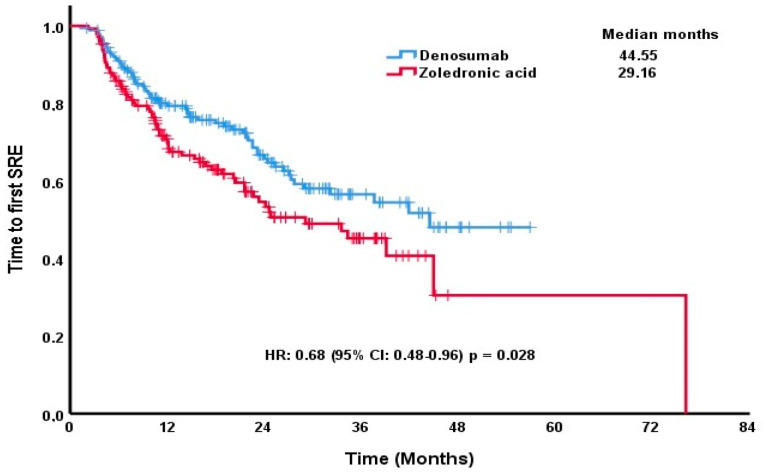
Background and Objectives: Bone metastases in patients can cause significant quality-of-life declines due to skeletal-related events (SREs). SRE is defined as the occurrence of radiotherapy for bone pain, pathologic fracture, bone surgery, spinal cord compression, or hypercalcemia. Bone-modifying agents (BMAs), such as denosumab and zoledronic acid, are crucial in reducing the frequency and severity of SREs. The inhibition of cyclin-dependent kinase 4/6 (CDK4/6) inhibitors has emerged as the standard treatment for hormone receptor-positive metastatic breast cancer, demonstrating significant improvements in survival outcomes. This study aims to compare the effectiveness of denosumab and zoledronic acid in preventing SRE in patients receiving CDK4/6 inhibitors with endocrine therapy. Materials and Methods: This retrospective study included 328 patients diagnosed with bone metastatic breast cancer receiving first-line CDK4/6 inhibitor therapy (palbociclib or ribociclib). Patients were assigned to receive either subcutaneous denosumab or intravenous zoledronic acid every 4 weeks. Time to the first skeletal-related event post bone-modifying agent initiation, SRE incidence, and the safety data were evaluated. The data were analyzed using independent samples t-tests, chi-square tests, and Kaplan-Meier methods for time-to-event data. Results: In the denosumab group, the median time to the first skeletal-related event was significantly longer than in the zoledronic acid group (44.55 months and 29.16 months, respectively). Denosumab treatment was associated with a statistically significant reduction in the risk of developing the first SRE after bone-modifying agent initiation compared to zoledronic acid (HR: 0.56, p = 0.001). Additionally, ECOG PS and the number of metastatic bone sites were identified as independent prognostic factors for time to the first SRE. The safety profile was consistent with previous studies reported in the literature. Conclusions: Our study demonstrated that when used with CDK4/6 inhibitors, denosumab is associated with a delay in SREs and a lower SRE incidence than zoledronic acid in patients with bone metastases. These findings support the efficacy of denosumab in preventing SREs and suggest that CDK4/6 inhibitors may have distinct effects on the bone microenvironment, particularly when combined with denosumab.
期刊介绍:
The journal’s main focus is on reviews as well as clinical and experimental investigations. The journal aims to advance knowledge related to problems in medicine in developing countries as well as developed economies, to disseminate research on global health, and to promote and foster prevention and treatment of diseases worldwide. MEDICINA publications cater to clinicians, diagnosticians and researchers, and serve as a forum to discuss the current status of health-related matters and their impact on a global and local scale.




 京公网安备 11010802042870号
京ICP备2023020795号-1
京公网安备 11010802042870号
京ICP备2023020795号-1

 分享
分享
 求助内容:
求助内容: 应助结果提醒方式:
 扫码关注我们
