Christel E van Dijk, Tristan Langereis, Jan-Willem H Dik, Trynke Hoekstra, Bernard van den Berg
{"title":"荷兰人生命最后一年的健康和长期护理费用。","authors":"Christel E van Dijk, Tristan Langereis, Jan-Willem H Dik, Trynke Hoekstra, Bernard van den Berg","doi":"10.1007/s10198-025-01763-w","DOIUrl":null,"url":null,"abstract":"<p><p>Knowing the determinants of rising health and long-term care costs is crucial to support cost containment policies and to predict future expenditures. According to the \"red herring\" debate, not ageing per se, but proximity to death is the most important determinant of future expenditures. This study aims to update and expand the existing Dutch literature after two major reforms in health and long-term care. Insurance claims data from 2018-2019 of 13,738,193 insured individuals were included. Using negative binomial regression analyses, the association between deceased individuals and survivors on total health and long-term care costs was investigated, as well as per health care sector. Costs rose sharply in the two months prior to death. Regression models showed an association with total health and long-term care costs of 10.8 for deceased individuals compared with survivors (crude model) and 3.3 (adjusted model). Especially including age and chronic diseases decreased the association. The largest differences in costs between deceased individuals and survivors in the adjusted model were found for geriatric rehabilitation care and primary care stays (16.7), home nursing (10,6), and long-term care (9.3). Not just the costs of deceased individuals are important for health care costs, but also age, as measured by being in the highest age category, and chronic diseases. The costs of deceased individuals were heterogeneous across health care sectors.</p>","PeriodicalId":51416,"journal":{"name":"European Journal of Health Economics","volume":" ","pages":"1149-1162"},"PeriodicalIF":3.1000,"publicationDate":"2025-09-01","publicationTypes":"Journal Article","fieldsOfStudy":null,"isOpenAccess":false,"openAccessPdf":"https://www.ncbi.nlm.nih.gov/pmc/articles/PMC12432058/pdf/","citationCount":"0","resultStr":"{\"title\":\"The health and long-term care costs in the last year of life in The Netherlands.\",\"authors\":\"Christel E van Dijk, Tristan Langereis, Jan-Willem H Dik, Trynke Hoekstra, Bernard van den Berg\",\"doi\":\"10.1007/s10198-025-01763-w\",\"DOIUrl\":null,\"url\":null,\"abstract\":\"<p><p>Knowing the determinants of rising health and long-term care costs is crucial to support cost containment policies and to predict future expenditures. According to the \\\"red herring\\\" debate, not ageing per se, but proximity to death is the most important determinant of future expenditures. This study aims to update and expand the existing Dutch literature after two major reforms in health and long-term care. Insurance claims data from 2018-2019 of 13,738,193 insured individuals were included. Using negative binomial regression analyses, the association between deceased individuals and survivors on total health and long-term care costs was investigated, as well as per health care sector. Costs rose sharply in the two months prior to death. Regression models showed an association with total health and long-term care costs of 10.8 for deceased individuals compared with survivors (crude model) and 3.3 (adjusted model). Especially including age and chronic diseases decreased the association. The largest differences in costs between deceased individuals and survivors in the adjusted model were found for geriatric rehabilitation care and primary care stays (16.7), home nursing (10,6), and long-term care (9.3). Not just the costs of deceased individuals are important for health care costs, but also age, as measured by being in the highest age category, and chronic diseases. The costs of deceased individuals were heterogeneous across health care sectors.</p>\",\"PeriodicalId\":51416,\"journal\":{\"name\":\"European Journal of Health Economics\",\"volume\":\" \",\"pages\":\"1149-1162\"},\"PeriodicalIF\":3.1000,\"publicationDate\":\"2025-09-01\",\"publicationTypes\":\"Journal Article\",\"fieldsOfStudy\":null,\"isOpenAccess\":false,\"openAccessPdf\":\"https://www.ncbi.nlm.nih.gov/pmc/articles/PMC12432058/pdf/\",\"citationCount\":\"0\",\"resultStr\":null,\"platform\":\"Semanticscholar\",\"paperid\":null,\"PeriodicalName\":\"European Journal of Health Economics\",\"FirstCategoryId\":\"3\",\"ListUrlMain\":\"https://doi.org/10.1007/s10198-025-01763-w\",\"RegionNum\":3,\"RegionCategory\":\"医学\",\"ArticlePicture\":[],\"TitleCN\":null,\"AbstractTextCN\":null,\"PMCID\":null,\"EPubDate\":\"2025/2/26 0:00:00\",\"PubModel\":\"Epub\",\"JCR\":\"Q1\",\"JCRName\":\"ECONOMICS\",\"Score\":null,\"Total\":0}","platform":"Semanticscholar","paperid":null,"PeriodicalName":"European Journal of Health Economics","FirstCategoryId":"3","ListUrlMain":"https://doi.org/10.1007/s10198-025-01763-w","RegionNum":3,"RegionCategory":"医学","ArticlePicture":[],"TitleCN":null,"AbstractTextCN":null,"PMCID":null,"EPubDate":"2025/2/26 0:00:00","PubModel":"Epub","JCR":"Q1","JCRName":"ECONOMICS","Score":null,"Total":0}
The health and long-term care costs in the last year of life in The Netherlands.
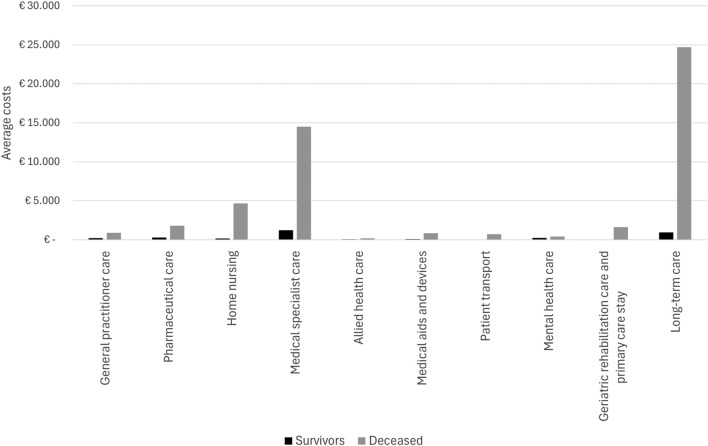
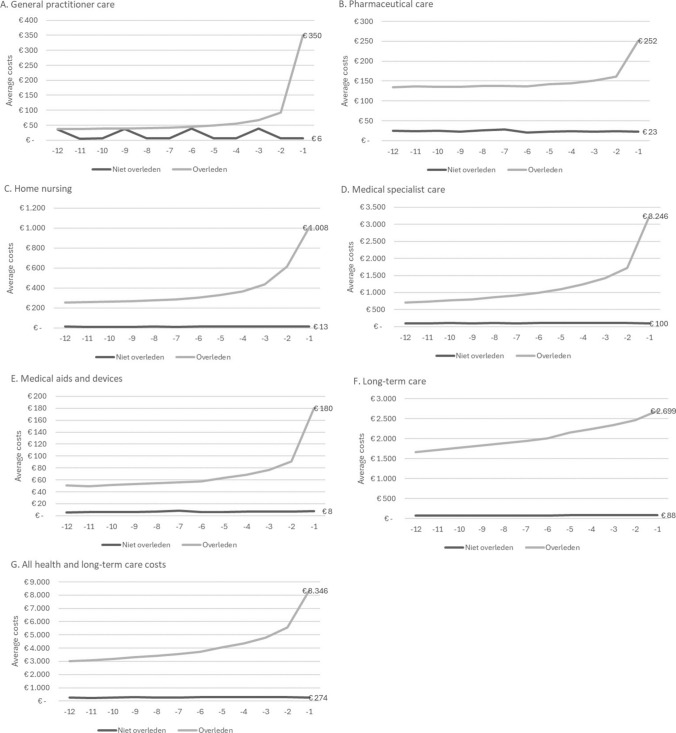
Knowing the determinants of rising health and long-term care costs is crucial to support cost containment policies and to predict future expenditures. According to the "red herring" debate, not ageing per se, but proximity to death is the most important determinant of future expenditures. This study aims to update and expand the existing Dutch literature after two major reforms in health and long-term care. Insurance claims data from 2018-2019 of 13,738,193 insured individuals were included. Using negative binomial regression analyses, the association between deceased individuals and survivors on total health and long-term care costs was investigated, as well as per health care sector. Costs rose sharply in the two months prior to death. Regression models showed an association with total health and long-term care costs of 10.8 for deceased individuals compared with survivors (crude model) and 3.3 (adjusted model). Especially including age and chronic diseases decreased the association. The largest differences in costs between deceased individuals and survivors in the adjusted model were found for geriatric rehabilitation care and primary care stays (16.7), home nursing (10,6), and long-term care (9.3). Not just the costs of deceased individuals are important for health care costs, but also age, as measured by being in the highest age category, and chronic diseases. The costs of deceased individuals were heterogeneous across health care sectors.
期刊介绍:
The European Journal of Health Economics is a journal of Health Economics and associated disciplines. The growing demand for health economics and the introduction of new guidelines in various European countries were the motivation to generate a highly scientific and at the same time practice oriented journal considering the requirements of various health care systems in Europe. The international scientific board of opinion leaders guarantees high-quality, peer-reviewed publications as well as articles for pragmatic approaches in the field of health economics. We intend to cover all aspects of health economics:
• Basics of health economic approaches and methods
• Pharmacoeconomics
• Health Care Systems
• Pricing and Reimbursement Systems
• Quality-of-Life-Studies The editors reserve the right to reject manuscripts that do not comply with the above-mentioned requirements. The author will be held responsible for false statements or for failure to fulfill the above-mentioned requirements.
Officially cited as: Eur J Health Econ




 京公网安备 11010802042870号
京ICP备2023020795号-1
京公网安备 11010802042870号
京ICP备2023020795号-1

 分享
分享
 求助内容:
求助内容: 应助结果提醒方式:
 扫码关注我们
