Mihai Dan Pomohaci, Mugur Cristian Grasu, Alexandru-Ştefan Băicoianu-Nițescu, Robert Mihai Enache, Ioana Gabriela Lupescu
{"title":"系统综述:人工智能在肝脏成像中的应用,重点是分割和检测。","authors":"Mihai Dan Pomohaci, Mugur Cristian Grasu, Alexandru-Ştefan Băicoianu-Nițescu, Robert Mihai Enache, Ioana Gabriela Lupescu","doi":"10.3390/life15020258","DOIUrl":null,"url":null,"abstract":"<p><p>The liver is a frequent focus in radiology due to its diverse pathology, and artificial intelligence (AI) could improve diagnosis and management. This systematic review aimed to assess and categorize research studies on AI applications in liver radiology from 2018 to 2024, classifying them according to areas of interest (AOIs), AI task and imaging modality used. We excluded reviews and non-liver and non-radiology studies. Using the PRISMA guidelines, we identified 6680 articles from the PubMed/Medline, Scopus and Web of Science databases; 1232 were found to be eligible. A further analysis of a subgroup of 329 studies focused on detection and/or segmentation tasks was performed. Liver lesions were the main AOI and CT was the most popular modality, while classification was the predominant AI task. Most detection and/or segmentation studies (48.02%) used only public datasets, and 27.65% used only one public dataset. Code sharing was practiced by 10.94% of these articles. This review highlights the predominance of classification tasks, especially applied to liver lesion imaging, most often using CT imaging. Detection and/or segmentation tasks relied mostly on public datasets, while external testing and code sharing were lacking. Future research should explore multi-task models and improve dataset availability to enhance AI's clinical impact in liver imaging.</p>","PeriodicalId":56144,"journal":{"name":"Life-Basel","volume":"15 2","pages":""},"PeriodicalIF":3.4000,"publicationDate":"2025-02-08","publicationTypes":"Journal Article","fieldsOfStudy":null,"isOpenAccess":false,"openAccessPdf":"https://www.ncbi.nlm.nih.gov/pmc/articles/PMC11856300/pdf/","citationCount":"0","resultStr":"{\"title\":\"Systematic Review: AI Applications in Liver Imaging with a Focus on Segmentation and Detection.\",\"authors\":\"Mihai Dan Pomohaci, Mugur Cristian Grasu, Alexandru-Ştefan Băicoianu-Nițescu, Robert Mihai Enache, Ioana Gabriela Lupescu\",\"doi\":\"10.3390/life15020258\",\"DOIUrl\":null,\"url\":null,\"abstract\":\"<p><p>The liver is a frequent focus in radiology due to its diverse pathology, and artificial intelligence (AI) could improve diagnosis and management. This systematic review aimed to assess and categorize research studies on AI applications in liver radiology from 2018 to 2024, classifying them according to areas of interest (AOIs), AI task and imaging modality used. We excluded reviews and non-liver and non-radiology studies. Using the PRISMA guidelines, we identified 6680 articles from the PubMed/Medline, Scopus and Web of Science databases; 1232 were found to be eligible. A further analysis of a subgroup of 329 studies focused on detection and/or segmentation tasks was performed. Liver lesions were the main AOI and CT was the most popular modality, while classification was the predominant AI task. Most detection and/or segmentation studies (48.02%) used only public datasets, and 27.65% used only one public dataset. Code sharing was practiced by 10.94% of these articles. This review highlights the predominance of classification tasks, especially applied to liver lesion imaging, most often using CT imaging. Detection and/or segmentation tasks relied mostly on public datasets, while external testing and code sharing were lacking. Future research should explore multi-task models and improve dataset availability to enhance AI's clinical impact in liver imaging.</p>\",\"PeriodicalId\":56144,\"journal\":{\"name\":\"Life-Basel\",\"volume\":\"15 2\",\"pages\":\"\"},\"PeriodicalIF\":3.4000,\"publicationDate\":\"2025-02-08\",\"publicationTypes\":\"Journal Article\",\"fieldsOfStudy\":null,\"isOpenAccess\":false,\"openAccessPdf\":\"https://www.ncbi.nlm.nih.gov/pmc/articles/PMC11856300/pdf/\",\"citationCount\":\"0\",\"resultStr\":null,\"platform\":\"Semanticscholar\",\"paperid\":null,\"PeriodicalName\":\"Life-Basel\",\"FirstCategoryId\":\"99\",\"ListUrlMain\":\"https://doi.org/10.3390/life15020258\",\"RegionNum\":3,\"RegionCategory\":\"生物学\",\"ArticlePicture\":[],\"TitleCN\":null,\"AbstractTextCN\":null,\"PMCID\":null,\"EPubDate\":\"\",\"PubModel\":\"\",\"JCR\":\"Q1\",\"JCRName\":\"BIOLOGY\",\"Score\":null,\"Total\":0}","platform":"Semanticscholar","paperid":null,"PeriodicalName":"Life-Basel","FirstCategoryId":"99","ListUrlMain":"https://doi.org/10.3390/life15020258","RegionNum":3,"RegionCategory":"生物学","ArticlePicture":[],"TitleCN":null,"AbstractTextCN":null,"PMCID":null,"EPubDate":"","PubModel":"","JCR":"Q1","JCRName":"BIOLOGY","Score":null,"Total":0}
引用次数: 0
摘要
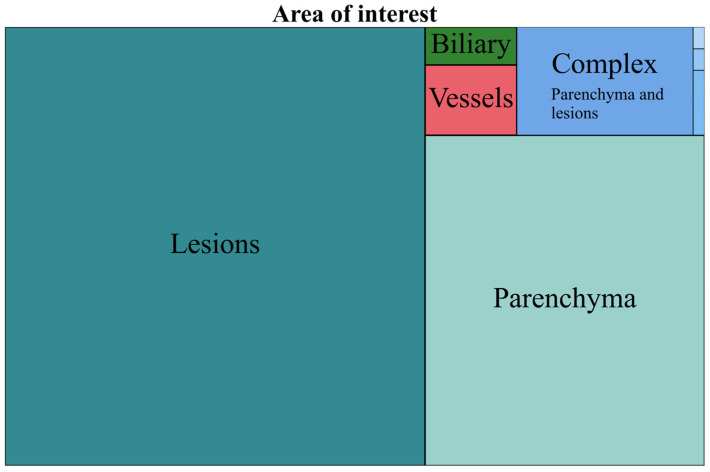
由于肝脏的病理多样性,它经常成为放射学的焦点,而人工智能(AI)可以改善诊断和管理。本系统综述旨在对2018年至2024年人工智能在肝脏放射学中的应用研究进行评估和分类,根据兴趣领域(aoi)、人工智能任务和使用的成像方式进行分类。我们排除了综述和非肝脏和非放射学研究。使用PRISMA指南,我们从PubMed/Medline、Scopus和Web of Science数据库中确定了6680篇文章;1232人被发现符合条件。对329项研究的亚组进行了进一步的分析,重点是检测和/或分割任务。AOI以肝脏病变为主,CT是最常见的方式,而分类是主要的AI任务。大多数检测和/或分割研究(48.02%)只使用公共数据集,27.65%只使用一个公共数据集。这些文章中有10.94%实践了代码共享。这篇综述强调了分类任务的优势,特别是在肝脏病变成像中,最常使用的是CT成像。检测和/或分割任务主要依赖于公共数据集,而缺乏外部测试和代码共享。未来的研究应探索多任务模型,提高数据集的可用性,以增强人工智能在肝脏成像中的临床影响。
Systematic Review: AI Applications in Liver Imaging with a Focus on Segmentation and Detection.
The liver is a frequent focus in radiology due to its diverse pathology, and artificial intelligence (AI) could improve diagnosis and management. This systematic review aimed to assess and categorize research studies on AI applications in liver radiology from 2018 to 2024, classifying them according to areas of interest (AOIs), AI task and imaging modality used. We excluded reviews and non-liver and non-radiology studies. Using the PRISMA guidelines, we identified 6680 articles from the PubMed/Medline, Scopus and Web of Science databases; 1232 were found to be eligible. A further analysis of a subgroup of 329 studies focused on detection and/or segmentation tasks was performed. Liver lesions were the main AOI and CT was the most popular modality, while classification was the predominant AI task. Most detection and/or segmentation studies (48.02%) used only public datasets, and 27.65% used only one public dataset. Code sharing was practiced by 10.94% of these articles. This review highlights the predominance of classification tasks, especially applied to liver lesion imaging, most often using CT imaging. Detection and/or segmentation tasks relied mostly on public datasets, while external testing and code sharing were lacking. Future research should explore multi-task models and improve dataset availability to enhance AI's clinical impact in liver imaging.
Life-BaselBiochemistry, Genetics and Molecular Biology-General Biochemistry,Genetics and Molecular Biology
CiteScore
4.30
自引率
6.20%
发文量
1798
审稿时长
11 weeks
期刊介绍:
Life (ISSN 2075-1729) is an international, peer-reviewed open access journal of scientific studies related to fundamental themes in Life Sciences, especially those concerned with the origins of life and evolution of biosystems. Our aim is to encourage scientists to publish their experimental and theoretical results in as much detail as possible. There is no restriction on the length of the papers.







 京公网安备 11010802042870号
京ICP备2023020795号-1
京公网安备 11010802042870号
京ICP备2023020795号-1

 分享
分享
 求助内容:
求助内容: 应助结果提醒方式:
 扫码关注我们
