{"title":"自动商用听力计在安静和嘈杂环境下评估听力的准确性和时间效率。","authors":"Ying Yi, Xian-Ren Wang, Qin Xiong, Guan-Xia Xiong","doi":"10.1177/00368504251324348","DOIUrl":null,"url":null,"abstract":"<p><strong>Introduction: </strong>In this study, we sought to validate the effectiveness of an automated audiometry system in quiet (AA) and noisy environments (AA-N) by comparing the air pure-tone thresholds obtained by AA to those obtained by traditional manual audiometry (MA).</p><p><strong>Methods: </strong>In this cross-sectional study, 150 participants with or without hearing loss were tested (age: 11-84 years; female: 57.3%). Air conduction thresholds were assessed by MA, AA, and AA-N in a quiet or noisy sound booth.</p><p><strong>Results: </strong>In participants without hearing loss, 94.5% and 96% of the threshold comparisons differed between MA versus AA and AA versus AA-N within 10 dB HL or less. In participants with hearing loss, there was no statistically significant difference between the three testing conditions at any frequency (<i>p</i> > 0.05). The hearing threshold difference in the poor hearing ear in participants with a bilateral difference ≥40 dB HL was -15 and +15 dB HL; however, this difference was not statistically significant when excluding participants with tinnitus.</p><p><strong>Conclusions: </strong>Automatic audiometry can accurately estimate hearing thresholds and screen for hearing loss even in noisy environments. Nevertheless, the algorithm must be corrected when patients experience tinnitus.</p>","PeriodicalId":56061,"journal":{"name":"Science Progress","volume":"108 1","pages":"368504251324348"},"PeriodicalIF":2.6000,"publicationDate":"2025-01-01","publicationTypes":"Journal Article","fieldsOfStudy":null,"isOpenAccess":false,"openAccessPdf":"https://www.ncbi.nlm.nih.gov/pmc/articles/PMC11863217/pdf/","citationCount":"0","resultStr":"{\"title\":\"Accuracy and time efficiency of an automated commercial audiometer in the evaluation of hearing in quiet and noisy environments.\",\"authors\":\"Ying Yi, Xian-Ren Wang, Qin Xiong, Guan-Xia Xiong\",\"doi\":\"10.1177/00368504251324348\",\"DOIUrl\":null,\"url\":null,\"abstract\":\"<p><strong>Introduction: </strong>In this study, we sought to validate the effectiveness of an automated audiometry system in quiet (AA) and noisy environments (AA-N) by comparing the air pure-tone thresholds obtained by AA to those obtained by traditional manual audiometry (MA).</p><p><strong>Methods: </strong>In this cross-sectional study, 150 participants with or without hearing loss were tested (age: 11-84 years; female: 57.3%). Air conduction thresholds were assessed by MA, AA, and AA-N in a quiet or noisy sound booth.</p><p><strong>Results: </strong>In participants without hearing loss, 94.5% and 96% of the threshold comparisons differed between MA versus AA and AA versus AA-N within 10 dB HL or less. In participants with hearing loss, there was no statistically significant difference between the three testing conditions at any frequency (<i>p</i> > 0.05). The hearing threshold difference in the poor hearing ear in participants with a bilateral difference ≥40 dB HL was -15 and +15 dB HL; however, this difference was not statistically significant when excluding participants with tinnitus.</p><p><strong>Conclusions: </strong>Automatic audiometry can accurately estimate hearing thresholds and screen for hearing loss even in noisy environments. Nevertheless, the algorithm must be corrected when patients experience tinnitus.</p>\",\"PeriodicalId\":56061,\"journal\":{\"name\":\"Science Progress\",\"volume\":\"108 1\",\"pages\":\"368504251324348\"},\"PeriodicalIF\":2.6000,\"publicationDate\":\"2025-01-01\",\"publicationTypes\":\"Journal Article\",\"fieldsOfStudy\":null,\"isOpenAccess\":false,\"openAccessPdf\":\"https://www.ncbi.nlm.nih.gov/pmc/articles/PMC11863217/pdf/\",\"citationCount\":\"0\",\"resultStr\":null,\"platform\":\"Semanticscholar\",\"paperid\":null,\"PeriodicalName\":\"Science Progress\",\"FirstCategoryId\":\"103\",\"ListUrlMain\":\"https://doi.org/10.1177/00368504251324348\",\"RegionNum\":4,\"RegionCategory\":\"综合性期刊\",\"ArticlePicture\":[],\"TitleCN\":null,\"AbstractTextCN\":null,\"PMCID\":null,\"EPubDate\":\"\",\"PubModel\":\"\",\"JCR\":\"Q2\",\"JCRName\":\"MULTIDISCIPLINARY SCIENCES\",\"Score\":null,\"Total\":0}","platform":"Semanticscholar","paperid":null,"PeriodicalName":"Science Progress","FirstCategoryId":"103","ListUrlMain":"https://doi.org/10.1177/00368504251324348","RegionNum":4,"RegionCategory":"综合性期刊","ArticlePicture":[],"TitleCN":null,"AbstractTextCN":null,"PMCID":null,"EPubDate":"","PubModel":"","JCR":"Q2","JCRName":"MULTIDISCIPLINARY SCIENCES","Score":null,"Total":0}
引用次数: 0
摘要
在这项研究中,我们试图通过比较AA获得的空气纯音阈值与传统手动测听(MA)获得的空气纯音阈值来验证自动测听系统在安静(AA)和嘈杂环境(AA- n)中的有效性。方法:在这项横断面研究中,150名有或没有听力损失的参与者接受了测试(年龄:11-84岁;女:57.3%)。采用MA、AA和AA- n法在安静或嘈杂的音箱中评估空气传导阈值。结果:在没有听力损失的参与者中,94.5%和96%的阈值比较在10 dB HL或更低范围内MA与AA和AA与AA- n之间存在差异。在听力损失的参与者中,三种测试条件在任何频率下均无统计学差异(p < 0.05)。双侧差异≥40 dB HL的受试者听力差耳的听阈差分别为-15和+15 dB HL;然而,当排除有耳鸣的参与者时,这种差异没有统计学意义。结论:即使在嘈杂环境下,自动测听也能准确地估计听力阈值和筛查听力损失。然而,当患者出现耳鸣时,必须纠正算法。
Accuracy and time efficiency of an automated commercial audiometer in the evaluation of hearing in quiet and noisy environments.
Introduction: In this study, we sought to validate the effectiveness of an automated audiometry system in quiet (AA) and noisy environments (AA-N) by comparing the air pure-tone thresholds obtained by AA to those obtained by traditional manual audiometry (MA).
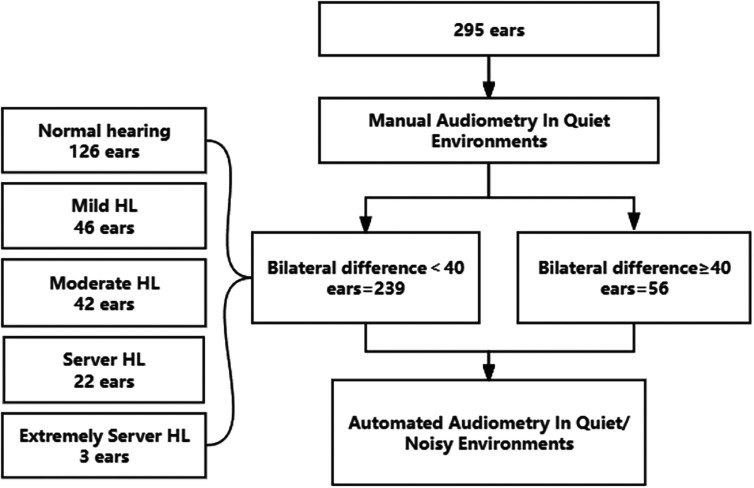
Methods: In this cross-sectional study, 150 participants with or without hearing loss were tested (age: 11-84 years; female: 57.3%). Air conduction thresholds were assessed by MA, AA, and AA-N in a quiet or noisy sound booth.
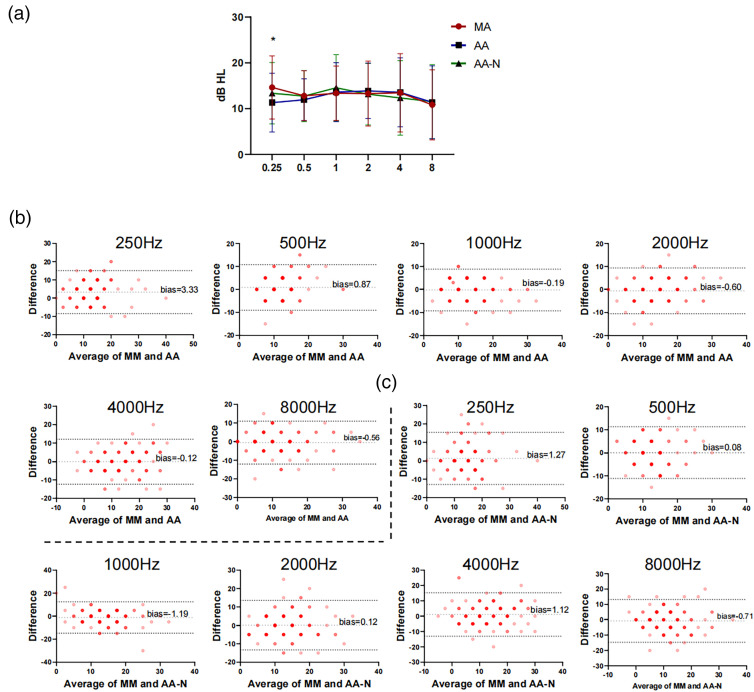
Results: In participants without hearing loss, 94.5% and 96% of the threshold comparisons differed between MA versus AA and AA versus AA-N within 10 dB HL or less. In participants with hearing loss, there was no statistically significant difference between the three testing conditions at any frequency (p > 0.05). The hearing threshold difference in the poor hearing ear in participants with a bilateral difference ≥40 dB HL was -15 and +15 dB HL; however, this difference was not statistically significant when excluding participants with tinnitus.
Conclusions: Automatic audiometry can accurately estimate hearing thresholds and screen for hearing loss even in noisy environments. Nevertheless, the algorithm must be corrected when patients experience tinnitus.
期刊介绍:
Science Progress has for over 100 years been a highly regarded review publication in science, technology and medicine. Its objective is to excite the readers'' interest in areas with which they may not be fully familiar but which could facilitate their interest, or even activity, in a cognate field.





 京公网安备 11010802042870号
京ICP备2023020795号-1
京公网安备 11010802042870号
京ICP备2023020795号-1

 分享
分享
 求助内容:
求助内容: 应助结果提醒方式:
 扫码关注我们
