{"title":"追踪黄斑姬鼠的形态趋势:来自50年研究的证据。","authors":"Linas Balčiauskas, Laima Balčiauskienė","doi":"10.3390/life15020322","DOIUrl":null,"url":null,"abstract":"<p><p>We examined long-term trends in the yellow-necked mouse (<i>Apodemus flavicollis</i>) in Lithuania using data collected from 1980 to 2024. Over 10,000 individuals were captured and 5666 were necropsied to measure standard morphometric traits, including body mass, length, and appendage dimensions. Temporal trends revealed an increase in the proportion of <i>A. flavicollis</i> within small mammal communities, from 6.5% in the 1980s to 28.2% in the 2020s, particularly in forest and grassland habitats. Sexual dimorphism was confirmed, with males generally larger than females in all traits, although age influenced the degree of size difference. Morphometric traits showed a consistent increase from the 1980s to the 2010s, followed by significant declines in body mass, body length, and ear length in the 2020s. Declines were most pronounced in males across all age groups. These findings are consistent with our previous findings in the field vole (<i>Microtus agrestis</i>) from the Baltic region, and the global patterns of body size reduction in small mammals due to climate warming and habitat change. This study highlights the importance of integrating sex- and age-based analyses to understand the ecological and evolutionary responses of mammals to environmental pressures. Future research is essential to explore the broader implications of these trends for ecosystem dynamics and species survival.</p>","PeriodicalId":56144,"journal":{"name":"Life-Basel","volume":"15 2","pages":""},"PeriodicalIF":3.9000,"publicationDate":"2025-02-19","publicationTypes":"Journal Article","fieldsOfStudy":null,"isOpenAccess":false,"openAccessPdf":"https://www.ncbi.nlm.nih.gov/pmc/articles/PMC11857790/pdf/","citationCount":"0","resultStr":"{\"title\":\"Tracking the Morphological Trends in <i>Apodemus flavicollis</i>: Evidence from a Five-Decade Study.\",\"authors\":\"Linas Balčiauskas, Laima Balčiauskienė\",\"doi\":\"10.3390/life15020322\",\"DOIUrl\":null,\"url\":null,\"abstract\":\"<p><p>We examined long-term trends in the yellow-necked mouse (<i>Apodemus flavicollis</i>) in Lithuania using data collected from 1980 to 2024. Over 10,000 individuals were captured and 5666 were necropsied to measure standard morphometric traits, including body mass, length, and appendage dimensions. Temporal trends revealed an increase in the proportion of <i>A. flavicollis</i> within small mammal communities, from 6.5% in the 1980s to 28.2% in the 2020s, particularly in forest and grassland habitats. Sexual dimorphism was confirmed, with males generally larger than females in all traits, although age influenced the degree of size difference. Morphometric traits showed a consistent increase from the 1980s to the 2010s, followed by significant declines in body mass, body length, and ear length in the 2020s. Declines were most pronounced in males across all age groups. These findings are consistent with our previous findings in the field vole (<i>Microtus agrestis</i>) from the Baltic region, and the global patterns of body size reduction in small mammals due to climate warming and habitat change. This study highlights the importance of integrating sex- and age-based analyses to understand the ecological and evolutionary responses of mammals to environmental pressures. Future research is essential to explore the broader implications of these trends for ecosystem dynamics and species survival.</p>\",\"PeriodicalId\":56144,\"journal\":{\"name\":\"Life-Basel\",\"volume\":\"15 2\",\"pages\":\"\"},\"PeriodicalIF\":3.9000,\"publicationDate\":\"2025-02-19\",\"publicationTypes\":\"Journal Article\",\"fieldsOfStudy\":null,\"isOpenAccess\":false,\"openAccessPdf\":\"https://www.ncbi.nlm.nih.gov/pmc/articles/PMC11857790/pdf/\",\"citationCount\":\"0\",\"resultStr\":null,\"platform\":\"Semanticscholar\",\"paperid\":null,\"PeriodicalName\":\"Life-Basel\",\"FirstCategoryId\":\"99\",\"ListUrlMain\":\"https://doi.org/10.3390/life15020322\",\"RegionNum\":3,\"RegionCategory\":\"生物学\",\"ArticlePicture\":[],\"TitleCN\":null,\"AbstractTextCN\":null,\"PMCID\":null,\"EPubDate\":\"\",\"PubModel\":\"\",\"JCR\":\"Q1\",\"JCRName\":\"BIOLOGY\",\"Score\":null,\"Total\":0}","platform":"Semanticscholar","paperid":null,"PeriodicalName":"Life-Basel","FirstCategoryId":"99","ListUrlMain":"https://doi.org/10.3390/life15020322","RegionNum":3,"RegionCategory":"生物学","ArticlePicture":[],"TitleCN":null,"AbstractTextCN":null,"PMCID":null,"EPubDate":"","PubModel":"","JCR":"Q1","JCRName":"BIOLOGY","Score":null,"Total":0}
Tracking the Morphological Trends in Apodemus flavicollis: Evidence from a Five-Decade Study.
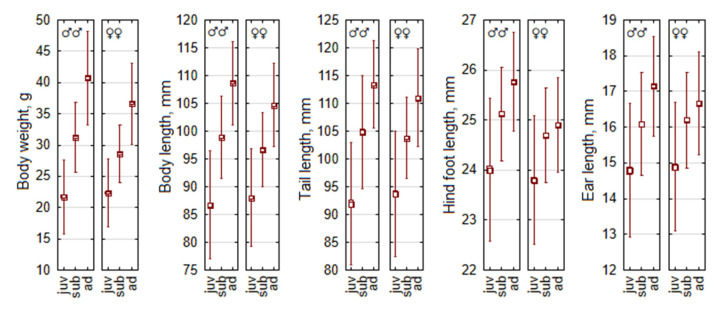
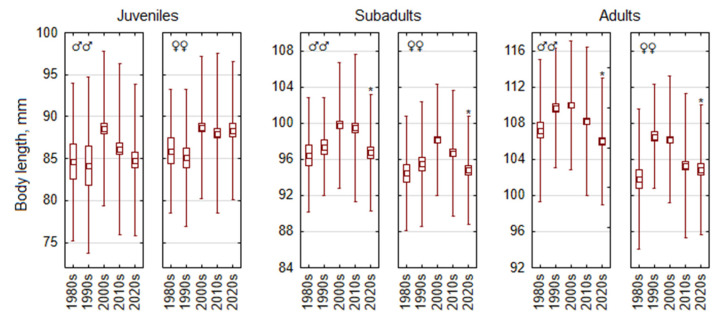
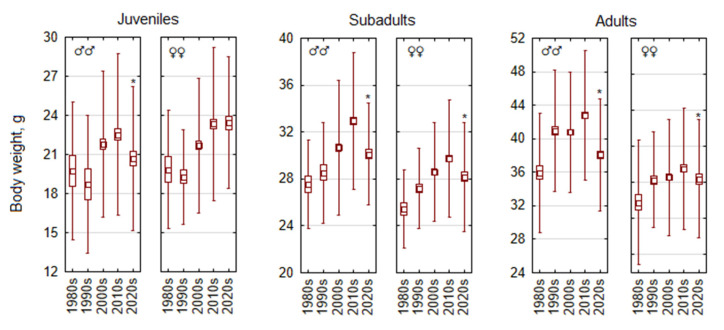
We examined long-term trends in the yellow-necked mouse (Apodemus flavicollis) in Lithuania using data collected from 1980 to 2024. Over 10,000 individuals were captured and 5666 were necropsied to measure standard morphometric traits, including body mass, length, and appendage dimensions. Temporal trends revealed an increase in the proportion of A. flavicollis within small mammal communities, from 6.5% in the 1980s to 28.2% in the 2020s, particularly in forest and grassland habitats. Sexual dimorphism was confirmed, with males generally larger than females in all traits, although age influenced the degree of size difference. Morphometric traits showed a consistent increase from the 1980s to the 2010s, followed by significant declines in body mass, body length, and ear length in the 2020s. Declines were most pronounced in males across all age groups. These findings are consistent with our previous findings in the field vole (Microtus agrestis) from the Baltic region, and the global patterns of body size reduction in small mammals due to climate warming and habitat change. This study highlights the importance of integrating sex- and age-based analyses to understand the ecological and evolutionary responses of mammals to environmental pressures. Future research is essential to explore the broader implications of these trends for ecosystem dynamics and species survival.
Life-BaselBiochemistry, Genetics and Molecular Biology-General Biochemistry,Genetics and Molecular Biology
CiteScore
4.30
自引率
6.20%
发文量
1798
审稿时长
11 weeks
期刊介绍:
Life (ISSN 2075-1729) is an international, peer-reviewed open access journal of scientific studies related to fundamental themes in Life Sciences, especially those concerned with the origins of life and evolution of biosystems. Our aim is to encourage scientists to publish their experimental and theoretical results in as much detail as possible. There is no restriction on the length of the papers.





 京公网安备 11010802042870号
京ICP备2023020795号-1
京公网安备 11010802042870号
京ICP备2023020795号-1

 分享
分享
 求助内容:
求助内容: 应助结果提醒方式:
 扫码关注我们
