{"title":"用于抗菌和伤口愈合的锌-色氨酸纳米组装体的制备","authors":"Durba Banerjee, Subrat Vishwakarma, Malay Nayak, Anjali Upadhyay, Lipi Pradhan, Pandeeswar Makam* and Sudip Mukherjee*, ","doi":"10.1021/acsanm.5c00657","DOIUrl":null,"url":null,"abstract":"<p >Wound healing is a complex process often hindered by factors, including infection, oxidative stress, and inflammation, particularly in chronic wounds. Zinc (Zn) has therapeutic potential due to its antibacterial, antioxidant, and anti-inflammatory properties. Similarly, the amino acid tryptophan (W) plays a crucial role in protein synthesis for tissue repair. Herein, we developed zinc–tryptophan (Zn–W) nanosheet assemblies with enhanced multifunctional properties, demonstrating a versatile biomedical application: antioxidant, antibacterial, antibiofilm, and wound-healing. Detailed characterization studies were performed for the newly synthesized Zn–W nanoassemblies. <i>In vitro</i> assays revealed potent antibacterial and antibiofilm activities against both Gram-negative (<i>Escherichia coli</i>) and Gram-positive bacteria (<i>Bacillus subtilis</i>), while antioxidant assays confirmed significant free radical scavenging ability. <i>In vivo</i> wound models showed that Zn–W treatment markedly accelerated the tissue regeneration. These results highlight Zn–W nanoassemblies as promising therapeutics for managing infected and chronic wounds, combining the benefits of Zn and W while overcoming their individual limitations.</p>","PeriodicalId":6,"journal":{"name":"ACS Applied Nano Materials","volume":"8 8","pages":"4263–4278 4263–4278"},"PeriodicalIF":5.5000,"publicationDate":"2025-02-18","publicationTypes":"Journal Article","fieldsOfStudy":null,"isOpenAccess":false,"openAccessPdf":"","citationCount":"0","resultStr":"{\"title\":\"Fabrication of Zinc-Tryptophan Nanoassemblies for Antibacterial and Wound Healing Applications\",\"authors\":\"Durba Banerjee, Subrat Vishwakarma, Malay Nayak, Anjali Upadhyay, Lipi Pradhan, Pandeeswar Makam* and Sudip Mukherjee*, \",\"doi\":\"10.1021/acsanm.5c00657\",\"DOIUrl\":null,\"url\":null,\"abstract\":\"<p >Wound healing is a complex process often hindered by factors, including infection, oxidative stress, and inflammation, particularly in chronic wounds. Zinc (Zn) has therapeutic potential due to its antibacterial, antioxidant, and anti-inflammatory properties. Similarly, the amino acid tryptophan (W) plays a crucial role in protein synthesis for tissue repair. Herein, we developed zinc–tryptophan (Zn–W) nanosheet assemblies with enhanced multifunctional properties, demonstrating a versatile biomedical application: antioxidant, antibacterial, antibiofilm, and wound-healing. Detailed characterization studies were performed for the newly synthesized Zn–W nanoassemblies. <i>In vitro</i> assays revealed potent antibacterial and antibiofilm activities against both Gram-negative (<i>Escherichia coli</i>) and Gram-positive bacteria (<i>Bacillus subtilis</i>), while antioxidant assays confirmed significant free radical scavenging ability. <i>In vivo</i> wound models showed that Zn–W treatment markedly accelerated the tissue regeneration. These results highlight Zn–W nanoassemblies as promising therapeutics for managing infected and chronic wounds, combining the benefits of Zn and W while overcoming their individual limitations.</p>\",\"PeriodicalId\":6,\"journal\":{\"name\":\"ACS Applied Nano Materials\",\"volume\":\"8 8\",\"pages\":\"4263–4278 4263–4278\"},\"PeriodicalIF\":5.5000,\"publicationDate\":\"2025-02-18\",\"publicationTypes\":\"Journal Article\",\"fieldsOfStudy\":null,\"isOpenAccess\":false,\"openAccessPdf\":\"\",\"citationCount\":\"0\",\"resultStr\":null,\"platform\":\"Semanticscholar\",\"paperid\":null,\"PeriodicalName\":\"ACS Applied Nano Materials\",\"FirstCategoryId\":\"88\",\"ListUrlMain\":\"https://pubs.acs.org/doi/10.1021/acsanm.5c00657\",\"RegionNum\":2,\"RegionCategory\":\"材料科学\",\"ArticlePicture\":[],\"TitleCN\":null,\"AbstractTextCN\":null,\"PMCID\":null,\"EPubDate\":\"\",\"PubModel\":\"\",\"JCR\":\"Q2\",\"JCRName\":\"MATERIALS SCIENCE, MULTIDISCIPLINARY\",\"Score\":null,\"Total\":0}","platform":"Semanticscholar","paperid":null,"PeriodicalName":"ACS Applied Nano Materials","FirstCategoryId":"88","ListUrlMain":"https://pubs.acs.org/doi/10.1021/acsanm.5c00657","RegionNum":2,"RegionCategory":"材料科学","ArticlePicture":[],"TitleCN":null,"AbstractTextCN":null,"PMCID":null,"EPubDate":"","PubModel":"","JCR":"Q2","JCRName":"MATERIALS SCIENCE, MULTIDISCIPLINARY","Score":null,"Total":0}
Fabrication of Zinc-Tryptophan Nanoassemblies for Antibacterial and Wound Healing Applications
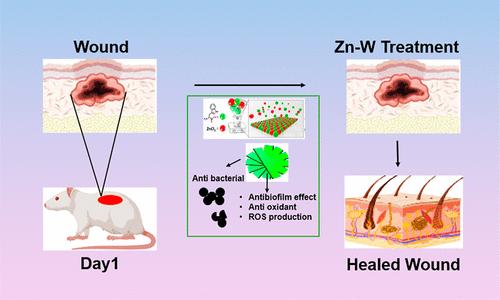
Wound healing is a complex process often hindered by factors, including infection, oxidative stress, and inflammation, particularly in chronic wounds. Zinc (Zn) has therapeutic potential due to its antibacterial, antioxidant, and anti-inflammatory properties. Similarly, the amino acid tryptophan (W) plays a crucial role in protein synthesis for tissue repair. Herein, we developed zinc–tryptophan (Zn–W) nanosheet assemblies with enhanced multifunctional properties, demonstrating a versatile biomedical application: antioxidant, antibacterial, antibiofilm, and wound-healing. Detailed characterization studies were performed for the newly synthesized Zn–W nanoassemblies. In vitro assays revealed potent antibacterial and antibiofilm activities against both Gram-negative (Escherichia coli) and Gram-positive bacteria (Bacillus subtilis), while antioxidant assays confirmed significant free radical scavenging ability. In vivo wound models showed that Zn–W treatment markedly accelerated the tissue regeneration. These results highlight Zn–W nanoassemblies as promising therapeutics for managing infected and chronic wounds, combining the benefits of Zn and W while overcoming their individual limitations.
期刊介绍:
ACS Applied Nano Materials is an interdisciplinary journal publishing original research covering all aspects of engineering, chemistry, physics and biology relevant to applications of nanomaterials. The journal is devoted to reports of new and original experimental and theoretical research of an applied nature that integrate knowledge in the areas of materials, engineering, physics, bioscience, and chemistry into important applications of nanomaterials.




 京公网安备 11010802042870号
京ICP备2023020795号-1
京公网安备 11010802042870号
京ICP备2023020795号-1

 分享
分享
 求助内容:
求助内容: 应助结果提醒方式:
 扫码关注我们
