{"title":"西北汉族人口上颌窦自动分割及年龄估计模型。","authors":"Yu-Xin Guo, Jun-Long Lan, Wen-Qing Bu, Yu Tang, Di Wu, Hui Yang, Jia-Chen Ren, Yu-Xuan Song, Hong-Ying Yue, Yu-Cheng Guo, Hao-Tian Meng","doi":"10.1186/s12903-025-05618-x","DOIUrl":null,"url":null,"abstract":"<p><strong>Background: </strong>Age estimation is vital in forensic science, with maxillary sinus development serving as a reliable indicator. This study developed an automatic segmentation model for maxillary sinus identification and parameter measurement, combined with regression and machine learning models for age estimation.</p><p><strong>Methods: </strong>Cone Beam Computed Tomography (CBCT) images from 292 Han individuals (ranging from 5 to 53 years) were used to train and validate the segmentation model. Measurements included sinus dimensions (length, width, height), inter-sinus distance, and volume. Age estimation models using multiple linear regression and random forest algorithms were built based on these variables.</p><p><strong>Results: </strong>The automatic segmentation model achieved high accuracy, which yielded a Dice similarity coefficient (DSC) of 0.873, an Intersection over Union (IoU) of 0.7753, a Hausdorff Distance 95% (HD95) of 9.8337, and an Average Surface Distance (ASD) of 2.4507. The regression model performed best, with mean absolute errors (MAE) of 1.45 years (under 18) and 3.51 years (aged 18 and above), providing relatively precise age predictions.</p><p><strong>Conclusion: </strong>The maxillary sinus-based model is a promising tool for age estimation, particularly in adults, and could be enhanced by incorporating additional variables like dental dimensions.</p>","PeriodicalId":9072,"journal":{"name":"BMC Oral Health","volume":"25 1","pages":"310"},"PeriodicalIF":3.8000,"publicationDate":"2025-02-26","publicationTypes":"Journal Article","fieldsOfStudy":null,"isOpenAccess":false,"openAccessPdf":"https://www.ncbi.nlm.nih.gov/pmc/articles/PMC11866577/pdf/","citationCount":"0","resultStr":"{\"title\":\"Automatic maxillary sinus segmentation and age estimation model for the northwestern Chinese Han population.\",\"authors\":\"Yu-Xin Guo, Jun-Long Lan, Wen-Qing Bu, Yu Tang, Di Wu, Hui Yang, Jia-Chen Ren, Yu-Xuan Song, Hong-Ying Yue, Yu-Cheng Guo, Hao-Tian Meng\",\"doi\":\"10.1186/s12903-025-05618-x\",\"DOIUrl\":null,\"url\":null,\"abstract\":\"<p><strong>Background: </strong>Age estimation is vital in forensic science, with maxillary sinus development serving as a reliable indicator. This study developed an automatic segmentation model for maxillary sinus identification and parameter measurement, combined with regression and machine learning models for age estimation.</p><p><strong>Methods: </strong>Cone Beam Computed Tomography (CBCT) images from 292 Han individuals (ranging from 5 to 53 years) were used to train and validate the segmentation model. Measurements included sinus dimensions (length, width, height), inter-sinus distance, and volume. Age estimation models using multiple linear regression and random forest algorithms were built based on these variables.</p><p><strong>Results: </strong>The automatic segmentation model achieved high accuracy, which yielded a Dice similarity coefficient (DSC) of 0.873, an Intersection over Union (IoU) of 0.7753, a Hausdorff Distance 95% (HD95) of 9.8337, and an Average Surface Distance (ASD) of 2.4507. The regression model performed best, with mean absolute errors (MAE) of 1.45 years (under 18) and 3.51 years (aged 18 and above), providing relatively precise age predictions.</p><p><strong>Conclusion: </strong>The maxillary sinus-based model is a promising tool for age estimation, particularly in adults, and could be enhanced by incorporating additional variables like dental dimensions.</p>\",\"PeriodicalId\":9072,\"journal\":{\"name\":\"BMC Oral Health\",\"volume\":\"25 1\",\"pages\":\"310\"},\"PeriodicalIF\":3.8000,\"publicationDate\":\"2025-02-26\",\"publicationTypes\":\"Journal Article\",\"fieldsOfStudy\":null,\"isOpenAccess\":false,\"openAccessPdf\":\"https://www.ncbi.nlm.nih.gov/pmc/articles/PMC11866577/pdf/\",\"citationCount\":\"0\",\"resultStr\":null,\"platform\":\"Semanticscholar\",\"paperid\":null,\"PeriodicalName\":\"BMC Oral Health\",\"FirstCategoryId\":\"3\",\"ListUrlMain\":\"https://doi.org/10.1186/s12903-025-05618-x\",\"RegionNum\":2,\"RegionCategory\":\"医学\",\"ArticlePicture\":[],\"TitleCN\":null,\"AbstractTextCN\":null,\"PMCID\":null,\"EPubDate\":\"\",\"PubModel\":\"\",\"JCR\":\"Q1\",\"JCRName\":\"DENTISTRY, ORAL SURGERY & MEDICINE\",\"Score\":null,\"Total\":0}","platform":"Semanticscholar","paperid":null,"PeriodicalName":"BMC Oral Health","FirstCategoryId":"3","ListUrlMain":"https://doi.org/10.1186/s12903-025-05618-x","RegionNum":2,"RegionCategory":"医学","ArticlePicture":[],"TitleCN":null,"AbstractTextCN":null,"PMCID":null,"EPubDate":"","PubModel":"","JCR":"Q1","JCRName":"DENTISTRY, ORAL SURGERY & MEDICINE","Score":null,"Total":0}
引用次数: 0
摘要
背景:年龄估计在法医学中是至关重要的,上颌窦发育是一个可靠的指标。本研究开发了一种用于上颌窦识别和参数测量的自动分割模型,并结合回归和机器学习模型进行年龄估计。方法:使用292例汉族个体(年龄在5 ~ 53岁之间)的锥形束ct (Cone Beam Computed Tomography, CBCT)图像对分割模型进行训练和验证。测量包括鼻窦尺寸(长、宽、高)、鼻窦间距离和容积。基于这些变量建立了基于多元线性回归和随机森林算法的年龄估计模型。结果:自动分割模型获得了较高的分割精度,其Dice similarity coefficient (DSC)为0.873,Intersection over Union (IoU)为0.7753,Hausdorff Distance (HD95)为9.8337,Average Surface Distance (ASD)为2.4507。回归模型表现最好,平均绝对误差(MAE)为1.45岁(18岁以下)和3.51岁(18岁及以上),提供了相对精确的年龄预测。结论:上颌窦为基础的模型是一种很有前途的年龄估计工具,特别是在成人中,并且可以通过纳入其他变量如牙齿尺寸来增强。
Automatic maxillary sinus segmentation and age estimation model for the northwestern Chinese Han population.
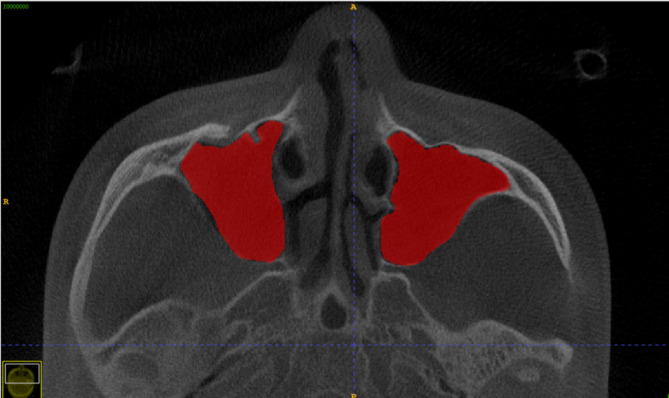
Background: Age estimation is vital in forensic science, with maxillary sinus development serving as a reliable indicator. This study developed an automatic segmentation model for maxillary sinus identification and parameter measurement, combined with regression and machine learning models for age estimation.
Methods: Cone Beam Computed Tomography (CBCT) images from 292 Han individuals (ranging from 5 to 53 years) were used to train and validate the segmentation model. Measurements included sinus dimensions (length, width, height), inter-sinus distance, and volume. Age estimation models using multiple linear regression and random forest algorithms were built based on these variables.
Results: The automatic segmentation model achieved high accuracy, which yielded a Dice similarity coefficient (DSC) of 0.873, an Intersection over Union (IoU) of 0.7753, a Hausdorff Distance 95% (HD95) of 9.8337, and an Average Surface Distance (ASD) of 2.4507. The regression model performed best, with mean absolute errors (MAE) of 1.45 years (under 18) and 3.51 years (aged 18 and above), providing relatively precise age predictions.
Conclusion: The maxillary sinus-based model is a promising tool for age estimation, particularly in adults, and could be enhanced by incorporating additional variables like dental dimensions.
期刊介绍:
BMC Oral Health is an open access, peer-reviewed journal that considers articles on all aspects of the prevention, diagnosis and management of disorders of the mouth, teeth and gums, as well as related molecular genetics, pathophysiology, and epidemiology.






 京公网安备 11010802042870号
京ICP备2023020795号-1
京公网安备 11010802042870号
京ICP备2023020795号-1

 分享
分享
 求助内容:
求助内容: 应助结果提醒方式:
 扫码关注我们
