{"title":"代谢综合征与肾细胞癌易感性增加——一项荟萃分析。","authors":"Yanyu Zhou, Yujun Chen, Heng Yang, Zhiqi Xu, Jinbiao Zhuang, Qitao Bian, Gongxian Wang","doi":"10.1186/s12882-025-04013-6","DOIUrl":null,"url":null,"abstract":"<p><strong>Background: </strong>Metabolic syndrome (MetS) has been demonstrated to be associated with various types of cancer, but its specific relationship with kidney cancer remains inconclusive. Therefore, this study conducts a Meta-analysis to systematically evaluate the potential link between metabolic syndrome and the risk of kidney cancer development.</p><p><strong>Methods: </strong>Observational studies were retrieved from PubMed, Embase, Cochrane Library, and Web of Science. Two independent reviewers extracted study characteristics and assessed the quality of the studies. A random-effects model was employed to account for heterogeneity, and subgroup analyses were conducted to explore the impact of study characteristics on the results. Publication bias was evaluated using funnel plot symmetry and Egger's regression test.</p><p><strong>Results: </strong>Six studies were included, with 10 results extracted for the Meta-analysis. The findings indicated that MetS is an independent risk factor for kidney cancer (HR: 1.44, 95% CI: 1.31-1.59, P < 0.001). Heterogeneity between studies was significant (Cochran's Q test, P < 0.001; I<sup>2</sup> = 83.7%), indicating substantial variability. Subgroup analyses revealed consistent associations across gender, follow-up duration, and MetS diagnostic criteria (P > 0.05), but significant variations by race and study design (P < 0.05). The funnel plot appeared symmetrical, and Egger's regression test (P = 0.425) confirmed a low risk of publication bias.</p><p><strong>Conclusion: </strong>MetS is independently associated with an increased susceptibility to RCC in the adult population, although the strength of this association varies across different study designs and regions due to the observed heterogeneity.</p>","PeriodicalId":9089,"journal":{"name":"BMC Nephrology","volume":"26 1","pages":"102"},"PeriodicalIF":2.4000,"publicationDate":"2025-02-26","publicationTypes":"Journal Article","fieldsOfStudy":null,"isOpenAccess":false,"openAccessPdf":"https://www.ncbi.nlm.nih.gov/pmc/articles/PMC11863896/pdf/","citationCount":"0","resultStr":"{\"title\":\"Metabolic syndrome and increased susceptibility to renal cell carcinoma - a meta-analysis.\",\"authors\":\"Yanyu Zhou, Yujun Chen, Heng Yang, Zhiqi Xu, Jinbiao Zhuang, Qitao Bian, Gongxian Wang\",\"doi\":\"10.1186/s12882-025-04013-6\",\"DOIUrl\":null,\"url\":null,\"abstract\":\"<p><strong>Background: </strong>Metabolic syndrome (MetS) has been demonstrated to be associated with various types of cancer, but its specific relationship with kidney cancer remains inconclusive. Therefore, this study conducts a Meta-analysis to systematically evaluate the potential link between metabolic syndrome and the risk of kidney cancer development.</p><p><strong>Methods: </strong>Observational studies were retrieved from PubMed, Embase, Cochrane Library, and Web of Science. Two independent reviewers extracted study characteristics and assessed the quality of the studies. A random-effects model was employed to account for heterogeneity, and subgroup analyses were conducted to explore the impact of study characteristics on the results. Publication bias was evaluated using funnel plot symmetry and Egger's regression test.</p><p><strong>Results: </strong>Six studies were included, with 10 results extracted for the Meta-analysis. The findings indicated that MetS is an independent risk factor for kidney cancer (HR: 1.44, 95% CI: 1.31-1.59, P < 0.001). Heterogeneity between studies was significant (Cochran's Q test, P < 0.001; I<sup>2</sup> = 83.7%), indicating substantial variability. Subgroup analyses revealed consistent associations across gender, follow-up duration, and MetS diagnostic criteria (P > 0.05), but significant variations by race and study design (P < 0.05). The funnel plot appeared symmetrical, and Egger's regression test (P = 0.425) confirmed a low risk of publication bias.</p><p><strong>Conclusion: </strong>MetS is independently associated with an increased susceptibility to RCC in the adult population, although the strength of this association varies across different study designs and regions due to the observed heterogeneity.</p>\",\"PeriodicalId\":9089,\"journal\":{\"name\":\"BMC Nephrology\",\"volume\":\"26 1\",\"pages\":\"102\"},\"PeriodicalIF\":2.4000,\"publicationDate\":\"2025-02-26\",\"publicationTypes\":\"Journal Article\",\"fieldsOfStudy\":null,\"isOpenAccess\":false,\"openAccessPdf\":\"https://www.ncbi.nlm.nih.gov/pmc/articles/PMC11863896/pdf/\",\"citationCount\":\"0\",\"resultStr\":null,\"platform\":\"Semanticscholar\",\"paperid\":null,\"PeriodicalName\":\"BMC Nephrology\",\"FirstCategoryId\":\"3\",\"ListUrlMain\":\"https://doi.org/10.1186/s12882-025-04013-6\",\"RegionNum\":4,\"RegionCategory\":\"医学\",\"ArticlePicture\":[],\"TitleCN\":null,\"AbstractTextCN\":null,\"PMCID\":null,\"EPubDate\":\"\",\"PubModel\":\"\",\"JCR\":\"Q2\",\"JCRName\":\"UROLOGY & NEPHROLOGY\",\"Score\":null,\"Total\":0}","platform":"Semanticscholar","paperid":null,"PeriodicalName":"BMC Nephrology","FirstCategoryId":"3","ListUrlMain":"https://doi.org/10.1186/s12882-025-04013-6","RegionNum":4,"RegionCategory":"医学","ArticlePicture":[],"TitleCN":null,"AbstractTextCN":null,"PMCID":null,"EPubDate":"","PubModel":"","JCR":"Q2","JCRName":"UROLOGY & NEPHROLOGY","Score":null,"Total":0}
引用次数: 0
摘要
背景:代谢综合征(MetS)已被证实与多种类型的癌症相关,但其与肾癌的具体关系尚不明确。因此,本研究进行meta分析,系统评价代谢综合征与肾癌发生风险之间的潜在联系。方法:从PubMed、Embase、Cochrane图书馆和Web of Science检索观察性研究。两名独立审稿人提取研究特征并评估研究质量。采用随机效应模型来解释异质性,并进行亚组分析来探讨研究特征对结果的影响。采用漏斗图对称和Egger回归检验评价发表偏倚。结果:纳入6项研究,提取10项结果进行meta分析。研究结果表明,met是肾癌的独立危险因素(HR: 1.44, 95% CI: 1.31-1.59, P = 83.7%),表明存在很大的可变性。亚组分析显示,性别、随访时间和MetS诊断标准之间存在一致的关联(P < 0.05),但种族和研究设计之间存在显著差异(P结论:MetS与成年人群中RCC易感性增加独立相关,尽管由于观察到的异质性,这种关联的强度在不同的研究设计和地区有所不同。
Metabolic syndrome and increased susceptibility to renal cell carcinoma - a meta-analysis.
Background: Metabolic syndrome (MetS) has been demonstrated to be associated with various types of cancer, but its specific relationship with kidney cancer remains inconclusive. Therefore, this study conducts a Meta-analysis to systematically evaluate the potential link between metabolic syndrome and the risk of kidney cancer development.
Methods: Observational studies were retrieved from PubMed, Embase, Cochrane Library, and Web of Science. Two independent reviewers extracted study characteristics and assessed the quality of the studies. A random-effects model was employed to account for heterogeneity, and subgroup analyses were conducted to explore the impact of study characteristics on the results. Publication bias was evaluated using funnel plot symmetry and Egger's regression test.
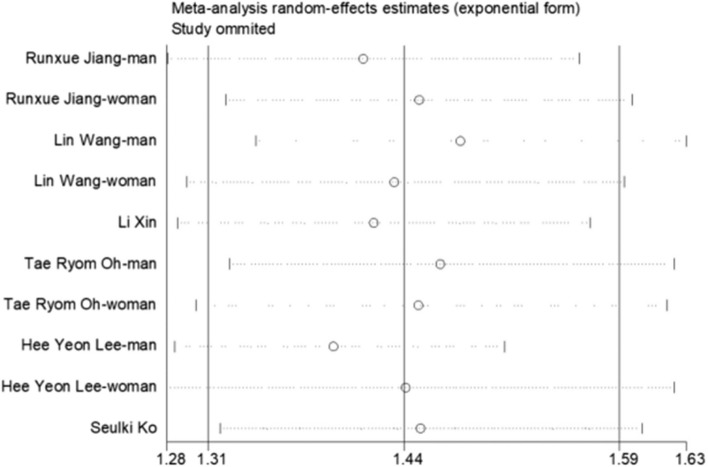
Results: Six studies were included, with 10 results extracted for the Meta-analysis. The findings indicated that MetS is an independent risk factor for kidney cancer (HR: 1.44, 95% CI: 1.31-1.59, P < 0.001). Heterogeneity between studies was significant (Cochran's Q test, P < 0.001; I2 = 83.7%), indicating substantial variability. Subgroup analyses revealed consistent associations across gender, follow-up duration, and MetS diagnostic criteria (P > 0.05), but significant variations by race and study design (P < 0.05). The funnel plot appeared symmetrical, and Egger's regression test (P = 0.425) confirmed a low risk of publication bias.
Conclusion: MetS is independently associated with an increased susceptibility to RCC in the adult population, although the strength of this association varies across different study designs and regions due to the observed heterogeneity.
期刊介绍:
BMC Nephrology is an open access journal publishing original peer-reviewed research articles in all aspects of the prevention, diagnosis and management of kidney and associated disorders, as well as related molecular genetics, pathophysiology, and epidemiology.






 京公网安备 11010802042870号
京ICP备2023020795号-1
京公网安备 11010802042870号
京ICP备2023020795号-1

 分享
分享
 求助内容:
求助内容: 应助结果提醒方式:
 扫码关注我们
