Matthias Nuernberger, Sebastian Lang, Tabea Maass, Thomas Lehmann, Stefan Brodoehl, Jan-Christoph Lewejohann
{"title":"在救援服务和急诊科工作人员之间进行isobar结构的病人交接对话的效果:COPTER试验。","authors":"Matthias Nuernberger, Sebastian Lang, Tabea Maass, Thomas Lehmann, Stefan Brodoehl, Jan-Christoph Lewejohann","doi":"10.1016/j.acepjo.2024.100011","DOIUrl":null,"url":null,"abstract":"<p><strong>Objectives: </strong>Communication errors are the main cause of adverse events in emergency medicine, underscoring the importance of patient handover conversations. This study aims to assess the impact of implementing the ISOBAR handover protocol for patient transfer between emergency medical services and emergency department (ED) personnel.</p><p><strong>Methods: </strong>We conducted a single-center implementation trial to evaluate the ISOBAR handover protocol efficacy in a German university hospital ED. We observed and analyzed 651 handover conversations involving adult patients, comparing those using the ISOBAR protocol to those following standard procedure without the protocol. Direct observation of handover processes was employed during alternating interventional periods across 6 trial phases. Primary outcome measure was the \"Key Information Transfer Efficiency\" score (KITE), a higher score indicating a more efficient patient handover conversation. Secondary outcome measure was the retention of key information by ED personnel, indicating successfully conveyed information.</p><p><strong>Results: </strong>The KITE score was significantly higher in the ISOBAR group (difference 0.12, 95% CI 0.02-0.22), showing a notable increase from baseline without ISOBAR to the final trial phase using ISOBAR (difference 0.16, 95% CI 0.02-0.34). Key information retention increased significantly: +18% for physicians (95% CI 9-28) and +19% (95% CI 10-28) for nurses. The number of questions asked after handover decreased by 29% (95% CI 5.81-41.46). The adherence to ISOBAR had no notable effect on outcome measures.</p><p><strong>Conclusion: </strong>The implementation of ISOBAR can enhance information transfer during handover. However, adherence to ISOBAR was not crucial, highlighting the importance of focusing on quality of communication during patient handover.</p>","PeriodicalId":73967,"journal":{"name":"Journal of the American College of Emergency Physicians open","volume":"6 1","pages":"100011"},"PeriodicalIF":1.8000,"publicationDate":"2025-01-09","publicationTypes":"Journal Article","fieldsOfStudy":null,"isOpenAccess":false,"openAccessPdf":"https://www.ncbi.nlm.nih.gov/pmc/articles/PMC11852710/pdf/","citationCount":"0","resultStr":"{\"title\":\"The Effects of an ISOBAR-Structured Patient Handover Conversation Between Rescue Services and Emergency Department Staff: The COPTER Trial.\",\"authors\":\"Matthias Nuernberger, Sebastian Lang, Tabea Maass, Thomas Lehmann, Stefan Brodoehl, Jan-Christoph Lewejohann\",\"doi\":\"10.1016/j.acepjo.2024.100011\",\"DOIUrl\":null,\"url\":null,\"abstract\":\"<p><strong>Objectives: </strong>Communication errors are the main cause of adverse events in emergency medicine, underscoring the importance of patient handover conversations. This study aims to assess the impact of implementing the ISOBAR handover protocol for patient transfer between emergency medical services and emergency department (ED) personnel.</p><p><strong>Methods: </strong>We conducted a single-center implementation trial to evaluate the ISOBAR handover protocol efficacy in a German university hospital ED. We observed and analyzed 651 handover conversations involving adult patients, comparing those using the ISOBAR protocol to those following standard procedure without the protocol. Direct observation of handover processes was employed during alternating interventional periods across 6 trial phases. Primary outcome measure was the \\\"Key Information Transfer Efficiency\\\" score (KITE), a higher score indicating a more efficient patient handover conversation. Secondary outcome measure was the retention of key information by ED personnel, indicating successfully conveyed information.</p><p><strong>Results: </strong>The KITE score was significantly higher in the ISOBAR group (difference 0.12, 95% CI 0.02-0.22), showing a notable increase from baseline without ISOBAR to the final trial phase using ISOBAR (difference 0.16, 95% CI 0.02-0.34). Key information retention increased significantly: +18% for physicians (95% CI 9-28) and +19% (95% CI 10-28) for nurses. The number of questions asked after handover decreased by 29% (95% CI 5.81-41.46). The adherence to ISOBAR had no notable effect on outcome measures.</p><p><strong>Conclusion: </strong>The implementation of ISOBAR can enhance information transfer during handover. However, adherence to ISOBAR was not crucial, highlighting the importance of focusing on quality of communication during patient handover.</p>\",\"PeriodicalId\":73967,\"journal\":{\"name\":\"Journal of the American College of Emergency Physicians open\",\"volume\":\"6 1\",\"pages\":\"100011\"},\"PeriodicalIF\":1.8000,\"publicationDate\":\"2025-01-09\",\"publicationTypes\":\"Journal Article\",\"fieldsOfStudy\":null,\"isOpenAccess\":false,\"openAccessPdf\":\"https://www.ncbi.nlm.nih.gov/pmc/articles/PMC11852710/pdf/\",\"citationCount\":\"0\",\"resultStr\":null,\"platform\":\"Semanticscholar\",\"paperid\":null,\"PeriodicalName\":\"Journal of the American College of Emergency Physicians open\",\"FirstCategoryId\":\"1085\",\"ListUrlMain\":\"https://doi.org/10.1016/j.acepjo.2024.100011\",\"RegionNum\":0,\"RegionCategory\":null,\"ArticlePicture\":[],\"TitleCN\":null,\"AbstractTextCN\":null,\"PMCID\":null,\"EPubDate\":\"2025/2/1 0:00:00\",\"PubModel\":\"eCollection\",\"JCR\":\"Q2\",\"JCRName\":\"EMERGENCY MEDICINE\",\"Score\":null,\"Total\":0}","platform":"Semanticscholar","paperid":null,"PeriodicalName":"Journal of the American College of Emergency Physicians open","FirstCategoryId":"1085","ListUrlMain":"https://doi.org/10.1016/j.acepjo.2024.100011","RegionNum":0,"RegionCategory":null,"ArticlePicture":[],"TitleCN":null,"AbstractTextCN":null,"PMCID":null,"EPubDate":"2025/2/1 0:00:00","PubModel":"eCollection","JCR":"Q2","JCRName":"EMERGENCY MEDICINE","Score":null,"Total":0}
引用次数: 0
摘要
目的:沟通错误是急诊医学不良事件的主要原因,强调病人交接对话的重要性。本研究旨在评估实施ISOBAR交接协议对急诊医疗服务和急诊科(ED)人员之间患者转移的影响。方法:我们在一所德国大学医院急诊科进行了一项单中心实施试验,以评估ISOBAR交接协议的有效性。我们观察并分析了651例涉及成年患者的交接对话,将使用ISOBAR协议的患者与遵循标准程序但未使用该协议的患者进行了比较。在6个试验阶段交替干预期间,直接观察交接过程。主要观察指标为“关键信息传递效率”评分(KITE),得分越高表明患者交接对话越有效。次要指标是ED人员对关键信息的保留,表明信息传达成功。结果:ISOBAR组的KITE评分明显较高(差异0.12,95% CI 0.02-0.22),显示从无ISOBAR的基线到使用ISOBAR的最后试验阶段的显著增加(差异0.16,95% CI 0.02-0.34)。关键信息保留显著增加:医生+18% (95% CI 9-28),护士+19% (95% CI 10-28)。移交后询问的问题数量减少了29% (95% CI 5.81-41.46)。坚持ISOBAR对结果测量没有显著影响。结论:实施ISOBAR可以增强交接过程中的信息传递。然而,遵守ISOBAR并不是至关重要的,这强调了在病人移交过程中关注沟通质量的重要性。
The Effects of an ISOBAR-Structured Patient Handover Conversation Between Rescue Services and Emergency Department Staff: The COPTER Trial.
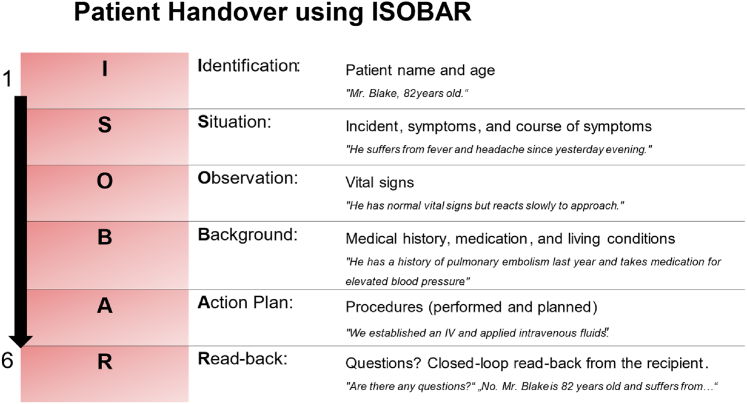
Objectives: Communication errors are the main cause of adverse events in emergency medicine, underscoring the importance of patient handover conversations. This study aims to assess the impact of implementing the ISOBAR handover protocol for patient transfer between emergency medical services and emergency department (ED) personnel.
Methods: We conducted a single-center implementation trial to evaluate the ISOBAR handover protocol efficacy in a German university hospital ED. We observed and analyzed 651 handover conversations involving adult patients, comparing those using the ISOBAR protocol to those following standard procedure without the protocol. Direct observation of handover processes was employed during alternating interventional periods across 6 trial phases. Primary outcome measure was the "Key Information Transfer Efficiency" score (KITE), a higher score indicating a more efficient patient handover conversation. Secondary outcome measure was the retention of key information by ED personnel, indicating successfully conveyed information.
Results: The KITE score was significantly higher in the ISOBAR group (difference 0.12, 95% CI 0.02-0.22), showing a notable increase from baseline without ISOBAR to the final trial phase using ISOBAR (difference 0.16, 95% CI 0.02-0.34). Key information retention increased significantly: +18% for physicians (95% CI 9-28) and +19% (95% CI 10-28) for nurses. The number of questions asked after handover decreased by 29% (95% CI 5.81-41.46). The adherence to ISOBAR had no notable effect on outcome measures.
Conclusion: The implementation of ISOBAR can enhance information transfer during handover. However, adherence to ISOBAR was not crucial, highlighting the importance of focusing on quality of communication during patient handover.






 京公网安备 11010802042870号
京ICP备2023020795号-1
京公网安备 11010802042870号
京ICP备2023020795号-1

 分享
分享

 求助内容:
求助内容: 应助结果提醒方式:
 扫码关注我们
