Sarah Buchholz, Mohamed Aghyad Al Kabbani, Michael Bell-Simons, Lena Kluge, Cagla Cagmak, Jennifer Klimek, Natja Haag, Lukas C. Iohan, Audrey Coulon, Marcos R. Costa, Devrim Kilinc, Hans Zempel
{"title":"tau亚型1N4R赋予MAPT敲除的人类ipsc衍生神经元对淀粉样蛋白和磷酸化tau诱导的神经元功能障碍的易感性","authors":"Sarah Buchholz, Mohamed Aghyad Al Kabbani, Michael Bell-Simons, Lena Kluge, Cagla Cagmak, Jennifer Klimek, Natja Haag, Lukas C. Iohan, Audrey Coulon, Marcos R. Costa, Devrim Kilinc, Hans Zempel","doi":"10.1002/alz.14403","DOIUrl":null,"url":null,"abstract":"<div>\n \n \n <section>\n \n <h3> INTRODUCTION</h3>\n \n <p>Human tau protein, composed of six brain-specific isoforms, is a major driver of Alzheimer's disease (AD). The role of its isoforms however remains unclear and human AD models are scarce.</p>\n </section>\n \n <section>\n \n <h3> METHODS</h3>\n \n <p>We generated human <i>MAPT</i>– (tau–) knockout (KO) induced pluripotent stem cells (iPSC) using CRISPR/Cas9, differentiated these into glutamatergic neurons, and assessed isoform-specific functions of tau in these neurons. We used omic- approaches, live-cell imaging, subcompartmental analysis, and lentivirus-based reintroduction of specific tau isoforms to investigate isoform-mediated neuronal dysfunction in an AD model.</p>\n </section>\n \n <section>\n \n <h3> RESULTS</h3>\n \n <p>Tau KO human iPSC-derived neurons showed decreased neurite outgrowth and axon initial segment length and, notably, resisted amyloid beta oligomer (AβO)–induced neuronal activity reduction. Introducing the 1N4R-tau isoform, but not other isoforms, confers AβO vulnerability and increases KxGS phosphorylation of tau, without altering neuronal activity or microtubule modifications.</p>\n </section>\n \n <section>\n \n <h3> DISCUSSION</h3>\n \n <p>While tau KO impacts neuronal development and activity, tau-KO also confers resistance against AβO insult. 1N4R-tau likely mediates AβO-induced and phosphorylated tau toxicity, representing a novel prime therapeutic target for AD.</p>\n </section>\n \n <section>\n \n <h3> Highlights</h3>\n \n <div>\n <ul>\n \n <li>Tau knockout alters neurite growth and axon initial segment formation in human neurons.</li>\n \n <li>Tau isoforms show differential axonal localization in human neurons.</li>\n \n <li>Tau depletion protects against amyloid beta oligomer (AβO)–mediated neurotoxicity.</li>\n \n <li>1N4R tau mediates AβO-induced toxicity in human neurons.</li>\n </ul>\n </div>\n </section>\n </div>","PeriodicalId":7471,"journal":{"name":"Alzheimer's & Dementia","volume":"21 5","pages":""},"PeriodicalIF":11.1000,"publicationDate":"2025-02-28","publicationTypes":"Journal Article","fieldsOfStudy":null,"isOpenAccess":false,"openAccessPdf":"https://onlinelibrary.wiley.com/doi/epdf/10.1002/alz.14403","citationCount":"0","resultStr":"{\"title\":\"The tau isoform 1N4R confers vulnerability of MAPT knockout human iPSC-derived neurons to amyloid beta and phosphorylated tau-induced neuronal dysfunction\",\"authors\":\"Sarah Buchholz, Mohamed Aghyad Al Kabbani, Michael Bell-Simons, Lena Kluge, Cagla Cagmak, Jennifer Klimek, Natja Haag, Lukas C. Iohan, Audrey Coulon, Marcos R. Costa, Devrim Kilinc, Hans Zempel\",\"doi\":\"10.1002/alz.14403\",\"DOIUrl\":null,\"url\":null,\"abstract\":\"<div>\\n \\n \\n <section>\\n \\n <h3> INTRODUCTION</h3>\\n \\n <p>Human tau protein, composed of six brain-specific isoforms, is a major driver of Alzheimer's disease (AD). The role of its isoforms however remains unclear and human AD models are scarce.</p>\\n </section>\\n \\n <section>\\n \\n <h3> METHODS</h3>\\n \\n <p>We generated human <i>MAPT</i>– (tau–) knockout (KO) induced pluripotent stem cells (iPSC) using CRISPR/Cas9, differentiated these into glutamatergic neurons, and assessed isoform-specific functions of tau in these neurons. We used omic- approaches, live-cell imaging, subcompartmental analysis, and lentivirus-based reintroduction of specific tau isoforms to investigate isoform-mediated neuronal dysfunction in an AD model.</p>\\n </section>\\n \\n <section>\\n \\n <h3> RESULTS</h3>\\n \\n <p>Tau KO human iPSC-derived neurons showed decreased neurite outgrowth and axon initial segment length and, notably, resisted amyloid beta oligomer (AβO)–induced neuronal activity reduction. Introducing the 1N4R-tau isoform, but not other isoforms, confers AβO vulnerability and increases KxGS phosphorylation of tau, without altering neuronal activity or microtubule modifications.</p>\\n </section>\\n \\n <section>\\n \\n <h3> DISCUSSION</h3>\\n \\n <p>While tau KO impacts neuronal development and activity, tau-KO also confers resistance against AβO insult. 1N4R-tau likely mediates AβO-induced and phosphorylated tau toxicity, representing a novel prime therapeutic target for AD.</p>\\n </section>\\n \\n <section>\\n \\n <h3> Highlights</h3>\\n \\n <div>\\n <ul>\\n \\n <li>Tau knockout alters neurite growth and axon initial segment formation in human neurons.</li>\\n \\n <li>Tau isoforms show differential axonal localization in human neurons.</li>\\n \\n <li>Tau depletion protects against amyloid beta oligomer (AβO)–mediated neurotoxicity.</li>\\n \\n <li>1N4R tau mediates AβO-induced toxicity in human neurons.</li>\\n </ul>\\n </div>\\n </section>\\n </div>\",\"PeriodicalId\":7471,\"journal\":{\"name\":\"Alzheimer's & Dementia\",\"volume\":\"21 5\",\"pages\":\"\"},\"PeriodicalIF\":11.1000,\"publicationDate\":\"2025-02-28\",\"publicationTypes\":\"Journal Article\",\"fieldsOfStudy\":null,\"isOpenAccess\":false,\"openAccessPdf\":\"https://onlinelibrary.wiley.com/doi/epdf/10.1002/alz.14403\",\"citationCount\":\"0\",\"resultStr\":null,\"platform\":\"Semanticscholar\",\"paperid\":null,\"PeriodicalName\":\"Alzheimer's & Dementia\",\"FirstCategoryId\":\"3\",\"ListUrlMain\":\"https://alz-journals.onlinelibrary.wiley.com/doi/10.1002/alz.14403\",\"RegionNum\":1,\"RegionCategory\":\"医学\",\"ArticlePicture\":[],\"TitleCN\":null,\"AbstractTextCN\":null,\"PMCID\":null,\"EPubDate\":\"\",\"PubModel\":\"\",\"JCR\":\"Q1\",\"JCRName\":\"CLINICAL NEUROLOGY\",\"Score\":null,\"Total\":0}","platform":"Semanticscholar","paperid":null,"PeriodicalName":"Alzheimer's & Dementia","FirstCategoryId":"3","ListUrlMain":"https://alz-journals.onlinelibrary.wiley.com/doi/10.1002/alz.14403","RegionNum":1,"RegionCategory":"医学","ArticlePicture":[],"TitleCN":null,"AbstractTextCN":null,"PMCID":null,"EPubDate":"","PubModel":"","JCR":"Q1","JCRName":"CLINICAL NEUROLOGY","Score":null,"Total":0}
The tau isoform 1N4R confers vulnerability of MAPT knockout human iPSC-derived neurons to amyloid beta and phosphorylated tau-induced neuronal dysfunction
INTRODUCTION
Human tau protein, composed of six brain-specific isoforms, is a major driver of Alzheimer's disease (AD). The role of its isoforms however remains unclear and human AD models are scarce.
METHODS
We generated human MAPT– (tau–) knockout (KO) induced pluripotent stem cells (iPSC) using CRISPR/Cas9, differentiated these into glutamatergic neurons, and assessed isoform-specific functions of tau in these neurons. We used omic- approaches, live-cell imaging, subcompartmental analysis, and lentivirus-based reintroduction of specific tau isoforms to investigate isoform-mediated neuronal dysfunction in an AD model.
RESULTS
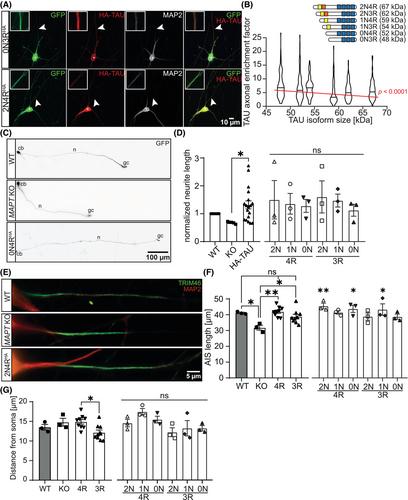
Tau KO human iPSC-derived neurons showed decreased neurite outgrowth and axon initial segment length and, notably, resisted amyloid beta oligomer (AβO)–induced neuronal activity reduction. Introducing the 1N4R-tau isoform, but not other isoforms, confers AβO vulnerability and increases KxGS phosphorylation of tau, without altering neuronal activity or microtubule modifications.
DISCUSSION
While tau KO impacts neuronal development and activity, tau-KO also confers resistance against AβO insult. 1N4R-tau likely mediates AβO-induced and phosphorylated tau toxicity, representing a novel prime therapeutic target for AD.
Highlights
Tau knockout alters neurite growth and axon initial segment formation in human neurons.
Tau isoforms show differential axonal localization in human neurons.
Tau depletion protects against amyloid beta oligomer (AβO)–mediated neurotoxicity.
1N4R tau mediates AβO-induced toxicity in human neurons.
期刊介绍:
Alzheimer's & Dementia is a peer-reviewed journal that aims to bridge knowledge gaps in dementia research by covering the entire spectrum, from basic science to clinical trials to social and behavioral investigations. It provides a platform for rapid communication of new findings and ideas, optimal translation of research into practical applications, increasing knowledge across diverse disciplines for early detection, diagnosis, and intervention, and identifying promising new research directions. In July 2008, Alzheimer's & Dementia was accepted for indexing by MEDLINE, recognizing its scientific merit and contribution to Alzheimer's research.






 京公网安备 11010802042870号
京ICP备2023020795号-1
京公网安备 11010802042870号
京ICP备2023020795号-1

 分享
分享
 求助内容:
求助内容: 应助结果提醒方式:
 扫码关注我们
