Siri S Horn, Anna K Sonesson, Aleksei Krasnov, Muhammad L Aslam, Borghild Hillestad, Bente Ruyter
{"title":"大西洋鲑鱼肝脏脂肪积累个体差异的遗传和代谢特征。","authors":"Siri S Horn, Anna K Sonesson, Aleksei Krasnov, Muhammad L Aslam, Borghild Hillestad, Bente Ruyter","doi":"10.3389/fgene.2025.1512769","DOIUrl":null,"url":null,"abstract":"<p><strong>Introduction: </strong>Lipid accumulation in the liver can negatively impact liver function and health, which is well-described for humans and other mammals, but relatively unexplored in Atlantic salmon. This study investigates the phenotypic, genetic, and transcriptomic variations related to individual differences in liver fat content within a group of slaughter-sized Atlantic salmon reared under the same conditions and fed the same feed. The objective was to increase the knowledge on liver fat deposition in farmed salmon and evaluate the potential for genetic improvement of this trait.</p><p><strong>Methods: </strong>The study involved measuring liver fat content in a group of slaughter-sized Atlantic salmon. Genetic analysis included estimating heritability and conducting genome-wide association studies (GWAS) to identify quantitative trait loci (QTLs). Transcriptomic analysis was performed to link liver fat content to gene expression, focusing on genes involved in lipid metabolic processes.</p><p><strong>Results: </strong>There was a large variation in liver fat content, ranging from 3.6% to 18.8%, with frequent occurrences of high liver fat. Livers with higher levels of fat had higher proportions of the fatty acids 16:1 n-7, 18:2 n-6, and 18:1 n-9, and less of the long-chain omega-3 fatty acids. The heritability of liver fat was estimated at 0.38, and the genetic coefficient of variation was 20%, indicating substantial potential for selective breeding to reduce liver fat deposition in Atlantic salmon. Liver fat deposition appears to be a polygenic trait, with no large QTLs detected by GWAS. Gene expression analysis linked liver fat content to numerous genes involved in lipid metabolic processes, including key transcription factors such as LXR, SREBP1, and ChREBP.</p><p><strong>Discussion: </strong>The results indicated a connection between liver fat and increased cholesterol synthesis in Atlantic salmon, with potentially harmful free cholesterol accumulation. Further, the gene expression results linked liver fat accumulation to reduced peroxisomal β-oxidation, increased conversion of carbohydrates to lipids, altered phospholipid synthesis, and possibly increased <i>de novo</i> lipogenesis. It is undetermined whether these outcomes are due to high fat levels or if they are caused by underlying metabolic differences that result in higher liver fat levels in certain individuals. Nonetheless, the results provide new insights into the metabolic profile of livers in fish with inherent differences in liver fat content.</p>","PeriodicalId":12750,"journal":{"name":"Frontiers in Genetics","volume":"16 ","pages":"1512769"},"PeriodicalIF":2.8000,"publicationDate":"2025-02-13","publicationTypes":"Journal Article","fieldsOfStudy":null,"isOpenAccess":false,"openAccessPdf":"https://www.ncbi.nlm.nih.gov/pmc/articles/PMC11865213/pdf/","citationCount":"0","resultStr":"{\"title\":\"Genetic and metabolic characterization of individual differences in liver fat accumulation in Atlantic salmon.\",\"authors\":\"Siri S Horn, Anna K Sonesson, Aleksei Krasnov, Muhammad L Aslam, Borghild Hillestad, Bente Ruyter\",\"doi\":\"10.3389/fgene.2025.1512769\",\"DOIUrl\":null,\"url\":null,\"abstract\":\"<p><strong>Introduction: </strong>Lipid accumulation in the liver can negatively impact liver function and health, which is well-described for humans and other mammals, but relatively unexplored in Atlantic salmon. This study investigates the phenotypic, genetic, and transcriptomic variations related to individual differences in liver fat content within a group of slaughter-sized Atlantic salmon reared under the same conditions and fed the same feed. The objective was to increase the knowledge on liver fat deposition in farmed salmon and evaluate the potential for genetic improvement of this trait.</p><p><strong>Methods: </strong>The study involved measuring liver fat content in a group of slaughter-sized Atlantic salmon. Genetic analysis included estimating heritability and conducting genome-wide association studies (GWAS) to identify quantitative trait loci (QTLs). Transcriptomic analysis was performed to link liver fat content to gene expression, focusing on genes involved in lipid metabolic processes.</p><p><strong>Results: </strong>There was a large variation in liver fat content, ranging from 3.6% to 18.8%, with frequent occurrences of high liver fat. Livers with higher levels of fat had higher proportions of the fatty acids 16:1 n-7, 18:2 n-6, and 18:1 n-9, and less of the long-chain omega-3 fatty acids. The heritability of liver fat was estimated at 0.38, and the genetic coefficient of variation was 20%, indicating substantial potential for selective breeding to reduce liver fat deposition in Atlantic salmon. Liver fat deposition appears to be a polygenic trait, with no large QTLs detected by GWAS. Gene expression analysis linked liver fat content to numerous genes involved in lipid metabolic processes, including key transcription factors such as LXR, SREBP1, and ChREBP.</p><p><strong>Discussion: </strong>The results indicated a connection between liver fat and increased cholesterol synthesis in Atlantic salmon, with potentially harmful free cholesterol accumulation. Further, the gene expression results linked liver fat accumulation to reduced peroxisomal β-oxidation, increased conversion of carbohydrates to lipids, altered phospholipid synthesis, and possibly increased <i>de novo</i> lipogenesis. It is undetermined whether these outcomes are due to high fat levels or if they are caused by underlying metabolic differences that result in higher liver fat levels in certain individuals. Nonetheless, the results provide new insights into the metabolic profile of livers in fish with inherent differences in liver fat content.</p>\",\"PeriodicalId\":12750,\"journal\":{\"name\":\"Frontiers in Genetics\",\"volume\":\"16 \",\"pages\":\"1512769\"},\"PeriodicalIF\":2.8000,\"publicationDate\":\"2025-02-13\",\"publicationTypes\":\"Journal Article\",\"fieldsOfStudy\":null,\"isOpenAccess\":false,\"openAccessPdf\":\"https://www.ncbi.nlm.nih.gov/pmc/articles/PMC11865213/pdf/\",\"citationCount\":\"0\",\"resultStr\":null,\"platform\":\"Semanticscholar\",\"paperid\":null,\"PeriodicalName\":\"Frontiers in Genetics\",\"FirstCategoryId\":\"99\",\"ListUrlMain\":\"https://doi.org/10.3389/fgene.2025.1512769\",\"RegionNum\":3,\"RegionCategory\":\"生物学\",\"ArticlePicture\":[],\"TitleCN\":null,\"AbstractTextCN\":null,\"PMCID\":null,\"EPubDate\":\"2025/1/1 0:00:00\",\"PubModel\":\"eCollection\",\"JCR\":\"Q2\",\"JCRName\":\"GENETICS & HEREDITY\",\"Score\":null,\"Total\":0}","platform":"Semanticscholar","paperid":null,"PeriodicalName":"Frontiers in Genetics","FirstCategoryId":"99","ListUrlMain":"https://doi.org/10.3389/fgene.2025.1512769","RegionNum":3,"RegionCategory":"生物学","ArticlePicture":[],"TitleCN":null,"AbstractTextCN":null,"PMCID":null,"EPubDate":"2025/1/1 0:00:00","PubModel":"eCollection","JCR":"Q2","JCRName":"GENETICS & HEREDITY","Score":null,"Total":0}
Genetic and metabolic characterization of individual differences in liver fat accumulation in Atlantic salmon.
Introduction: Lipid accumulation in the liver can negatively impact liver function and health, which is well-described for humans and other mammals, but relatively unexplored in Atlantic salmon. This study investigates the phenotypic, genetic, and transcriptomic variations related to individual differences in liver fat content within a group of slaughter-sized Atlantic salmon reared under the same conditions and fed the same feed. The objective was to increase the knowledge on liver fat deposition in farmed salmon and evaluate the potential for genetic improvement of this trait.
Methods: The study involved measuring liver fat content in a group of slaughter-sized Atlantic salmon. Genetic analysis included estimating heritability and conducting genome-wide association studies (GWAS) to identify quantitative trait loci (QTLs). Transcriptomic analysis was performed to link liver fat content to gene expression, focusing on genes involved in lipid metabolic processes.
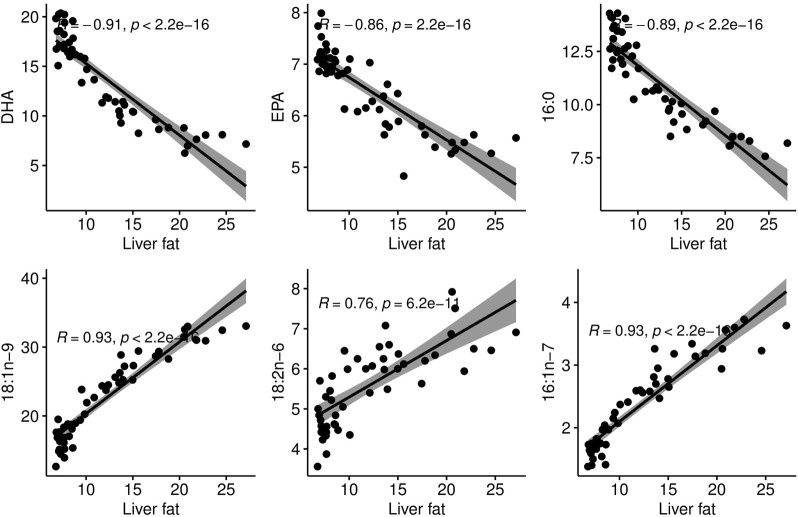
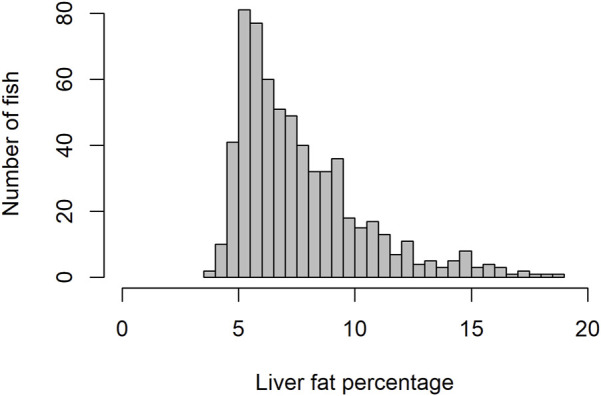
Results: There was a large variation in liver fat content, ranging from 3.6% to 18.8%, with frequent occurrences of high liver fat. Livers with higher levels of fat had higher proportions of the fatty acids 16:1 n-7, 18:2 n-6, and 18:1 n-9, and less of the long-chain omega-3 fatty acids. The heritability of liver fat was estimated at 0.38, and the genetic coefficient of variation was 20%, indicating substantial potential for selective breeding to reduce liver fat deposition in Atlantic salmon. Liver fat deposition appears to be a polygenic trait, with no large QTLs detected by GWAS. Gene expression analysis linked liver fat content to numerous genes involved in lipid metabolic processes, including key transcription factors such as LXR, SREBP1, and ChREBP.
Discussion: The results indicated a connection between liver fat and increased cholesterol synthesis in Atlantic salmon, with potentially harmful free cholesterol accumulation. Further, the gene expression results linked liver fat accumulation to reduced peroxisomal β-oxidation, increased conversion of carbohydrates to lipids, altered phospholipid synthesis, and possibly increased de novo lipogenesis. It is undetermined whether these outcomes are due to high fat levels or if they are caused by underlying metabolic differences that result in higher liver fat levels in certain individuals. Nonetheless, the results provide new insights into the metabolic profile of livers in fish with inherent differences in liver fat content.
Frontiers in GeneticsBiochemistry, Genetics and Molecular Biology-Molecular Medicine
CiteScore
5.50
自引率
8.10%
发文量
3491
审稿时长
14 weeks
期刊介绍:
Frontiers in Genetics publishes rigorously peer-reviewed research on genes and genomes relating to all the domains of life, from humans to plants to livestock and other model organisms. Led by an outstanding Editorial Board of the world’s leading experts, this multidisciplinary, open-access journal is at the forefront of communicating cutting-edge research to researchers, academics, clinicians, policy makers and the public.
The study of inheritance and the impact of the genome on various biological processes is well documented. However, the majority of discoveries are still to come. A new era is seeing major developments in the function and variability of the genome, the use of genetic and genomic tools and the analysis of the genetic basis of various biological phenomena.





 京公网安备 11010802042870号
京ICP备2023020795号-1
京公网安备 11010802042870号
京ICP备2023020795号-1

 分享
分享
 求助内容:
求助内容: 应助结果提醒方式:
 扫码关注我们
