Aleksander S Golub, William H Nugent, Roland N Pittman, Bjorn K Song
{"title":"年轻和年老雄性大鼠斜方肌间质PO2的休息-工作和工作-休息瞬态。","authors":"Aleksander S Golub, William H Nugent, Roland N Pittman, Bjorn K Song","doi":"10.14814/phy2.70260","DOIUrl":null,"url":null,"abstract":"<p><p>Muscle function declines with age. Since the primary energy source for contraction is aerobic, this study investigated age-related changes in muscle oxygenation dynamics to: characterize PO<sub>2</sub> transients during rest-work transitions, identify age-specific differences in oxygen delivery/utilization balance, and examine the relationship between interstitial and arterial oxygen tension (PO<sub>2</sub>). Interstitial PO<sub>2</sub> was measured with a high-resolution stroboscopic phosphorescence quenching technique to map intra-contractile dynamics during changes in muscle activity-rest-to-work (RtW) and work-to-rest (WtR) in rats aged three (young) and 23 (old) months. RtW (τ<sub>w</sub>) and WtR (τ<sub>r</sub>) PO<sub>2</sub> transitions had lag periods and mono-exponential time constants. In young muscles, lag was 4 s, τ<sub>w</sub> = 9.0 ± 3.7 s, and τ<sub>r</sub> = 15.4 ± 3.9 s. For old, lag was also 4 s with increases to τ<sub>w</sub> = 15.9 ± 3.5 s and τ<sub>r</sub> = 41.4 ± 8.3 s. Resting PO<sub>2</sub>'s were higher for young than for old (66.7 ± 13.7 vs. 60.2 ± 13.0 mmHg; p < 0.05). Work reduced PO<sub>2</sub> with a greater effect on old (42.5 ± 14.0 vs. 28.3 ± 16.5 mmHg; p < 0.05). Intra-contractile measurements revealed a spike in PO<sub>2</sub> (11 mmHg amplitude for >200 ms), which was absent in old. Further, sustained exercise in young showed a rising trend in PO<sub>2</sub>, while old remained at nadir. The missing PO<sub>2</sub> spike in aged muscle contributes to reduced PO<sub>2</sub> during work and may explain age-related loss of endurance.</p>","PeriodicalId":20083,"journal":{"name":"Physiological Reports","volume":"13 5","pages":"e70260"},"PeriodicalIF":2.1000,"publicationDate":"2025-03-01","publicationTypes":"Journal Article","fieldsOfStudy":null,"isOpenAccess":false,"openAccessPdf":"https://www.ncbi.nlm.nih.gov/pmc/articles/PMC11867932/pdf/","citationCount":"0","resultStr":"{\"title\":\"Rest-to-work and work-to-rest transients of interstitial PO<sub>2</sub> in spinotrapezius muscle of young and old male rats.\",\"authors\":\"Aleksander S Golub, William H Nugent, Roland N Pittman, Bjorn K Song\",\"doi\":\"10.14814/phy2.70260\",\"DOIUrl\":null,\"url\":null,\"abstract\":\"<p><p>Muscle function declines with age. Since the primary energy source for contraction is aerobic, this study investigated age-related changes in muscle oxygenation dynamics to: characterize PO<sub>2</sub> transients during rest-work transitions, identify age-specific differences in oxygen delivery/utilization balance, and examine the relationship between interstitial and arterial oxygen tension (PO<sub>2</sub>). Interstitial PO<sub>2</sub> was measured with a high-resolution stroboscopic phosphorescence quenching technique to map intra-contractile dynamics during changes in muscle activity-rest-to-work (RtW) and work-to-rest (WtR) in rats aged three (young) and 23 (old) months. RtW (τ<sub>w</sub>) and WtR (τ<sub>r</sub>) PO<sub>2</sub> transitions had lag periods and mono-exponential time constants. In young muscles, lag was 4 s, τ<sub>w</sub> = 9.0 ± 3.7 s, and τ<sub>r</sub> = 15.4 ± 3.9 s. For old, lag was also 4 s with increases to τ<sub>w</sub> = 15.9 ± 3.5 s and τ<sub>r</sub> = 41.4 ± 8.3 s. Resting PO<sub>2</sub>'s were higher for young than for old (66.7 ± 13.7 vs. 60.2 ± 13.0 mmHg; p < 0.05). Work reduced PO<sub>2</sub> with a greater effect on old (42.5 ± 14.0 vs. 28.3 ± 16.5 mmHg; p < 0.05). Intra-contractile measurements revealed a spike in PO<sub>2</sub> (11 mmHg amplitude for >200 ms), which was absent in old. Further, sustained exercise in young showed a rising trend in PO<sub>2</sub>, while old remained at nadir. The missing PO<sub>2</sub> spike in aged muscle contributes to reduced PO<sub>2</sub> during work and may explain age-related loss of endurance.</p>\",\"PeriodicalId\":20083,\"journal\":{\"name\":\"Physiological Reports\",\"volume\":\"13 5\",\"pages\":\"e70260\"},\"PeriodicalIF\":2.1000,\"publicationDate\":\"2025-03-01\",\"publicationTypes\":\"Journal Article\",\"fieldsOfStudy\":null,\"isOpenAccess\":false,\"openAccessPdf\":\"https://www.ncbi.nlm.nih.gov/pmc/articles/PMC11867932/pdf/\",\"citationCount\":\"0\",\"resultStr\":null,\"platform\":\"Semanticscholar\",\"paperid\":null,\"PeriodicalName\":\"Physiological Reports\",\"FirstCategoryId\":\"1085\",\"ListUrlMain\":\"https://doi.org/10.14814/phy2.70260\",\"RegionNum\":0,\"RegionCategory\":null,\"ArticlePicture\":[],\"TitleCN\":null,\"AbstractTextCN\":null,\"PMCID\":null,\"EPubDate\":\"\",\"PubModel\":\"\",\"JCR\":\"Q3\",\"JCRName\":\"PHYSIOLOGY\",\"Score\":null,\"Total\":0}","platform":"Semanticscholar","paperid":null,"PeriodicalName":"Physiological Reports","FirstCategoryId":"1085","ListUrlMain":"https://doi.org/10.14814/phy2.70260","RegionNum":0,"RegionCategory":null,"ArticlePicture":[],"TitleCN":null,"AbstractTextCN":null,"PMCID":null,"EPubDate":"","PubModel":"","JCR":"Q3","JCRName":"PHYSIOLOGY","Score":null,"Total":0}
Rest-to-work and work-to-rest transients of interstitial PO2 in spinotrapezius muscle of young and old male rats.
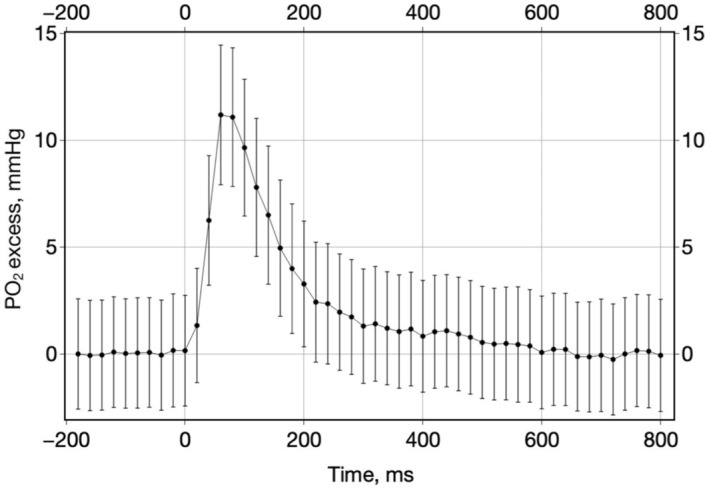
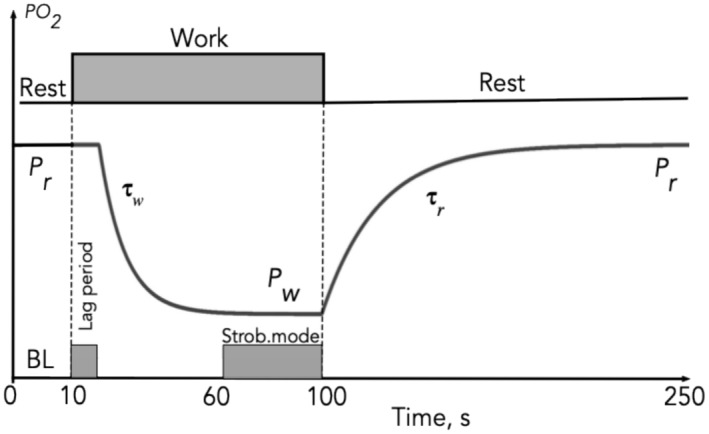
Muscle function declines with age. Since the primary energy source for contraction is aerobic, this study investigated age-related changes in muscle oxygenation dynamics to: characterize PO2 transients during rest-work transitions, identify age-specific differences in oxygen delivery/utilization balance, and examine the relationship between interstitial and arterial oxygen tension (PO2). Interstitial PO2 was measured with a high-resolution stroboscopic phosphorescence quenching technique to map intra-contractile dynamics during changes in muscle activity-rest-to-work (RtW) and work-to-rest (WtR) in rats aged three (young) and 23 (old) months. RtW (τw) and WtR (τr) PO2 transitions had lag periods and mono-exponential time constants. In young muscles, lag was 4 s, τw = 9.0 ± 3.7 s, and τr = 15.4 ± 3.9 s. For old, lag was also 4 s with increases to τw = 15.9 ± 3.5 s and τr = 41.4 ± 8.3 s. Resting PO2's were higher for young than for old (66.7 ± 13.7 vs. 60.2 ± 13.0 mmHg; p < 0.05). Work reduced PO2 with a greater effect on old (42.5 ± 14.0 vs. 28.3 ± 16.5 mmHg; p < 0.05). Intra-contractile measurements revealed a spike in PO2 (11 mmHg amplitude for >200 ms), which was absent in old. Further, sustained exercise in young showed a rising trend in PO2, while old remained at nadir. The missing PO2 spike in aged muscle contributes to reduced PO2 during work and may explain age-related loss of endurance.
期刊介绍:
Physiological Reports is an online only, open access journal that will publish peer reviewed research across all areas of basic, translational, and clinical physiology and allied disciplines. Physiological Reports is a collaboration between The Physiological Society and the American Physiological Society, and is therefore in a unique position to serve the international physiology community through quick time to publication while upholding a quality standard of sound research that constitutes a useful contribution to the field.






 京公网安备 11010802042870号
京ICP备2023020795号-1
京公网安备 11010802042870号
京ICP备2023020795号-1

 分享
分享
 求助内容:
求助内容: 应助结果提醒方式:
 扫码关注我们
