Erika Yue Lee MSc, MD, FRCPC , Jonny Peter MD, PhD
{"title":"在剩余的不确定性中诊断和管理DRESS。","authors":"Erika Yue Lee MSc, MD, FRCPC , Jonny Peter MD, PhD","doi":"10.1016/j.jaip.2025.02.019","DOIUrl":null,"url":null,"abstract":"<div><div>Drug reaction with eosinophilia and systemic symptoms (DRESS), a severe cutaneous adverse reaction, represents a diagnostic and therapeutic challenge due to its varied, evolving clinical presentation, complex pathophysiology, and potential for severe systemic involvement. This article explores DRESS syndrome through 3 illustrative cases from diverse populations and with different background comorbidities. Cases highlight different challenges in DRESS care, including (1) the need for early diagnosis and severity scoring, (2) identification of offending drugs and risk stratification to consider a possible drug challenge, and (3) best practice management including long-term monitoring for emergent autoimmunity. Recent developments in our understanding of clinical spectrum of disease, genomic and nongenomic biomarkers, severity groupings, and pharmacological and longer-term management strategies are described. Critical gaps remain in several of these domains, particularly in vulnerable groups such as the immune-compromised. In the absence of robust evidence, we aim in this article to assist attending clinicians with current expert opinion in DRESS management. Finally, we highlight areas for further research needed to improve the clinical care and outcomes of DRESS.</div></div>","PeriodicalId":51323,"journal":{"name":"Journal of Allergy and Clinical Immunology-In Practice","volume":"13 5","pages":"Pages 979-988"},"PeriodicalIF":7.2000,"publicationDate":"2025-05-01","publicationTypes":"Journal Article","fieldsOfStudy":null,"isOpenAccess":false,"openAccessPdf":"","citationCount":"0","resultStr":"{\"title\":\"Diagnosing and Managing Drug Reaction With Eosinophilia and Systemic Symptoms (DRESS) Amidst Remaining Uncertainty\",\"authors\":\"Erika Yue Lee MSc, MD, FRCPC , Jonny Peter MD, PhD\",\"doi\":\"10.1016/j.jaip.2025.02.019\",\"DOIUrl\":null,\"url\":null,\"abstract\":\"<div><div>Drug reaction with eosinophilia and systemic symptoms (DRESS), a severe cutaneous adverse reaction, represents a diagnostic and therapeutic challenge due to its varied, evolving clinical presentation, complex pathophysiology, and potential for severe systemic involvement. This article explores DRESS syndrome through 3 illustrative cases from diverse populations and with different background comorbidities. Cases highlight different challenges in DRESS care, including (1) the need for early diagnosis and severity scoring, (2) identification of offending drugs and risk stratification to consider a possible drug challenge, and (3) best practice management including long-term monitoring for emergent autoimmunity. Recent developments in our understanding of clinical spectrum of disease, genomic and nongenomic biomarkers, severity groupings, and pharmacological and longer-term management strategies are described. Critical gaps remain in several of these domains, particularly in vulnerable groups such as the immune-compromised. In the absence of robust evidence, we aim in this article to assist attending clinicians with current expert opinion in DRESS management. Finally, we highlight areas for further research needed to improve the clinical care and outcomes of DRESS.</div></div>\",\"PeriodicalId\":51323,\"journal\":{\"name\":\"Journal of Allergy and Clinical Immunology-In Practice\",\"volume\":\"13 5\",\"pages\":\"Pages 979-988\"},\"PeriodicalIF\":7.2000,\"publicationDate\":\"2025-05-01\",\"publicationTypes\":\"Journal Article\",\"fieldsOfStudy\":null,\"isOpenAccess\":false,\"openAccessPdf\":\"\",\"citationCount\":\"0\",\"resultStr\":null,\"platform\":\"Semanticscholar\",\"paperid\":null,\"PeriodicalName\":\"Journal of Allergy and Clinical Immunology-In Practice\",\"FirstCategoryId\":\"3\",\"ListUrlMain\":\"https://www.sciencedirect.com/science/article/pii/S2213219825001904\",\"RegionNum\":1,\"RegionCategory\":\"医学\",\"ArticlePicture\":[],\"TitleCN\":null,\"AbstractTextCN\":null,\"PMCID\":null,\"EPubDate\":\"2025/2/25 0:00:00\",\"PubModel\":\"Epub\",\"JCR\":\"Q1\",\"JCRName\":\"ALLERGY\",\"Score\":null,\"Total\":0}","platform":"Semanticscholar","paperid":null,"PeriodicalName":"Journal of Allergy and Clinical Immunology-In Practice","FirstCategoryId":"3","ListUrlMain":"https://www.sciencedirect.com/science/article/pii/S2213219825001904","RegionNum":1,"RegionCategory":"医学","ArticlePicture":[],"TitleCN":null,"AbstractTextCN":null,"PMCID":null,"EPubDate":"2025/2/25 0:00:00","PubModel":"Epub","JCR":"Q1","JCRName":"ALLERGY","Score":null,"Total":0}
Diagnosing and Managing Drug Reaction With Eosinophilia and Systemic Symptoms (DRESS) Amidst Remaining Uncertainty
Drug reaction with eosinophilia and systemic symptoms (DRESS), a severe cutaneous adverse reaction, represents a diagnostic and therapeutic challenge due to its varied, evolving clinical presentation, complex pathophysiology, and potential for severe systemic involvement. This article explores DRESS syndrome through 3 illustrative cases from diverse populations and with different background comorbidities. Cases highlight different challenges in DRESS care, including (1) the need for early diagnosis and severity scoring, (2) identification of offending drugs and risk stratification to consider a possible drug challenge, and (3) best practice management including long-term monitoring for emergent autoimmunity. Recent developments in our understanding of clinical spectrum of disease, genomic and nongenomic biomarkers, severity groupings, and pharmacological and longer-term management strategies are described. Critical gaps remain in several of these domains, particularly in vulnerable groups such as the immune-compromised. In the absence of robust evidence, we aim in this article to assist attending clinicians with current expert opinion in DRESS management. Finally, we highlight areas for further research needed to improve the clinical care and outcomes of DRESS.
期刊介绍:
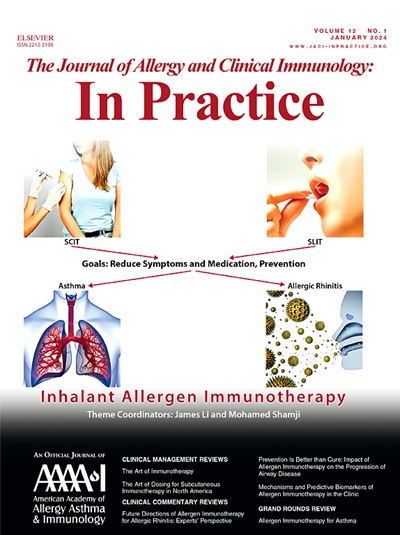
JACI: In Practice is an official publication of the American Academy of Allergy, Asthma & Immunology (AAAAI). It is a companion title to The Journal of Allergy and Clinical Immunology, and it aims to provide timely clinical papers, case reports, and management recommendations to clinical allergists and other physicians dealing with allergic and immunologic diseases in their practice. The mission of JACI: In Practice is to offer valid and impactful information that supports evidence-based clinical decisions in the diagnosis and management of asthma, allergies, immunologic conditions, and related diseases.
This journal publishes articles on various conditions treated by allergist-immunologists, including food allergy, respiratory disorders (such as asthma, rhinitis, nasal polyps, sinusitis, cough, ABPA, and hypersensitivity pneumonitis), drug allergy, insect sting allergy, anaphylaxis, dermatologic disorders (such as atopic dermatitis, contact dermatitis, urticaria, angioedema, and HAE), immunodeficiency, autoinflammatory syndromes, eosinophilic disorders, and mast cell disorders.
The focus of the journal is on providing cutting-edge clinical information that practitioners can use in their everyday practice or to acquire new knowledge and skills for the benefit of their patients. However, mechanistic or translational studies without immediate or near future clinical relevance, as well as animal studies, are not within the scope of the journal.




 京公网安备 11010802042870号
京ICP备2023020795号-1
京公网安备 11010802042870号
京ICP备2023020795号-1

 分享
分享
 求助内容:
求助内容: 应助结果提醒方式:
 扫码关注我们
