Xiaohui Miao , Pan Liu , Yangyang Liu , Wenying Zhang , Chunxin Li , Xiujiang Wang
{"title":"特发性肺纤维化治疗中的表观遗传学靶点及其抑制剂","authors":"Xiaohui Miao , Pan Liu , Yangyang Liu , Wenying Zhang , Chunxin Li , Xiujiang Wang","doi":"10.1016/j.ejmech.2025.117463","DOIUrl":null,"url":null,"abstract":"<div><div>Idiopathic pulmonary fibrosis (IPF) is a deadly lung disease characterized by fibroblast proliferation, excessive extracellular matrix buildup, inflammation, and tissue damage, resulting in respiratory failure and death. Recent studies suggest that impaired interactions among epithelial, mesenchymal, immune, and endothelial cells play a key role in IPF development. Advances in bioinformatics have also linked epigenetics, which bridges gene expression and environmental factors, to IPF. Despite the incomplete understanding of the pathogenic mechanisms underlying IPF, recent preclinical studies have identified several novel epigenetic therapeutic targets, including DNMT, EZH2, G9a/GLP, PRMT1/7, KDM6B, HDAC, CBP/p300, BRD4, METTL3, FTO, and ALKBH5, along with potential small-molecule inhibitors relevant for its treatment. This review explores the pathogenesis of IPF, emphasizing epigenetic therapeutic targets and potential small molecule drugs. It also analyzes the structure-activity relationships of these epigenetic drugs and summarizes their biological activities. The objective is to advance the development of innovative epigenetic therapies for IPF.</div></div>","PeriodicalId":314,"journal":{"name":"European Journal of Medicinal Chemistry","volume":"289 ","pages":"Article 117463"},"PeriodicalIF":5.9000,"publicationDate":"2025-05-05","publicationTypes":"Journal Article","fieldsOfStudy":null,"isOpenAccess":false,"openAccessPdf":"","citationCount":"0","resultStr":"{\"title\":\"Epigenetic targets and their inhibitors in the treatment of idiopathic pulmonary fibrosis\",\"authors\":\"Xiaohui Miao , Pan Liu , Yangyang Liu , Wenying Zhang , Chunxin Li , Xiujiang Wang\",\"doi\":\"10.1016/j.ejmech.2025.117463\",\"DOIUrl\":null,\"url\":null,\"abstract\":\"<div><div>Idiopathic pulmonary fibrosis (IPF) is a deadly lung disease characterized by fibroblast proliferation, excessive extracellular matrix buildup, inflammation, and tissue damage, resulting in respiratory failure and death. Recent studies suggest that impaired interactions among epithelial, mesenchymal, immune, and endothelial cells play a key role in IPF development. Advances in bioinformatics have also linked epigenetics, which bridges gene expression and environmental factors, to IPF. Despite the incomplete understanding of the pathogenic mechanisms underlying IPF, recent preclinical studies have identified several novel epigenetic therapeutic targets, including DNMT, EZH2, G9a/GLP, PRMT1/7, KDM6B, HDAC, CBP/p300, BRD4, METTL3, FTO, and ALKBH5, along with potential small-molecule inhibitors relevant for its treatment. This review explores the pathogenesis of IPF, emphasizing epigenetic therapeutic targets and potential small molecule drugs. It also analyzes the structure-activity relationships of these epigenetic drugs and summarizes their biological activities. The objective is to advance the development of innovative epigenetic therapies for IPF.</div></div>\",\"PeriodicalId\":314,\"journal\":{\"name\":\"European Journal of Medicinal Chemistry\",\"volume\":\"289 \",\"pages\":\"Article 117463\"},\"PeriodicalIF\":5.9000,\"publicationDate\":\"2025-05-05\",\"publicationTypes\":\"Journal Article\",\"fieldsOfStudy\":null,\"isOpenAccess\":false,\"openAccessPdf\":\"\",\"citationCount\":\"0\",\"resultStr\":null,\"platform\":\"Semanticscholar\",\"paperid\":null,\"PeriodicalName\":\"European Journal of Medicinal Chemistry\",\"FirstCategoryId\":\"3\",\"ListUrlMain\":\"https://www.sciencedirect.com/science/article/pii/S0223523425002284\",\"RegionNum\":2,\"RegionCategory\":\"医学\",\"ArticlePicture\":[],\"TitleCN\":null,\"AbstractTextCN\":null,\"PMCID\":null,\"EPubDate\":\"2025/3/1 0:00:00\",\"PubModel\":\"Epub\",\"JCR\":\"Q1\",\"JCRName\":\"CHEMISTRY, MEDICINAL\",\"Score\":null,\"Total\":0}","platform":"Semanticscholar","paperid":null,"PeriodicalName":"European Journal of Medicinal Chemistry","FirstCategoryId":"3","ListUrlMain":"https://www.sciencedirect.com/science/article/pii/S0223523425002284","RegionNum":2,"RegionCategory":"医学","ArticlePicture":[],"TitleCN":null,"AbstractTextCN":null,"PMCID":null,"EPubDate":"2025/3/1 0:00:00","PubModel":"Epub","JCR":"Q1","JCRName":"CHEMISTRY, MEDICINAL","Score":null,"Total":0}
Epigenetic targets and their inhibitors in the treatment of idiopathic pulmonary fibrosis
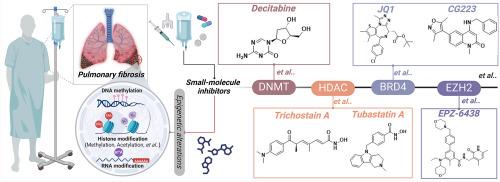
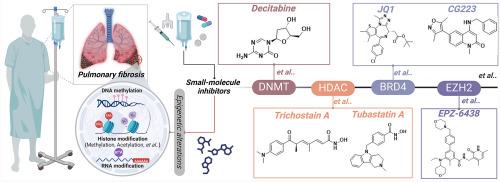
Idiopathic pulmonary fibrosis (IPF) is a deadly lung disease characterized by fibroblast proliferation, excessive extracellular matrix buildup, inflammation, and tissue damage, resulting in respiratory failure and death. Recent studies suggest that impaired interactions among epithelial, mesenchymal, immune, and endothelial cells play a key role in IPF development. Advances in bioinformatics have also linked epigenetics, which bridges gene expression and environmental factors, to IPF. Despite the incomplete understanding of the pathogenic mechanisms underlying IPF, recent preclinical studies have identified several novel epigenetic therapeutic targets, including DNMT, EZH2, G9a/GLP, PRMT1/7, KDM6B, HDAC, CBP/p300, BRD4, METTL3, FTO, and ALKBH5, along with potential small-molecule inhibitors relevant for its treatment. This review explores the pathogenesis of IPF, emphasizing epigenetic therapeutic targets and potential small molecule drugs. It also analyzes the structure-activity relationships of these epigenetic drugs and summarizes their biological activities. The objective is to advance the development of innovative epigenetic therapies for IPF.
期刊介绍:
The European Journal of Medicinal Chemistry is a global journal that publishes studies on all aspects of medicinal chemistry. It provides a medium for publication of original papers and also welcomes critical review papers.
A typical paper would report on the organic synthesis, characterization and pharmacological evaluation of compounds. Other topics of interest are drug design, QSAR, molecular modeling, drug-receptor interactions, molecular aspects of drug metabolism, prodrug synthesis and drug targeting. The journal expects manuscripts to present the rational for a study, provide insight into the design of compounds or understanding of mechanism, or clarify the targets.




 京公网安备 11010802042870号
京ICP备2023020795号-1
京公网安备 11010802042870号
京ICP备2023020795号-1

 分享
分享
 求助内容:
求助内容: 应助结果提醒方式:
 扫码关注我们
