Qi Hao , Wenzhe Zhao , Zhijia Li , Yue Lai , Yan Wang , Qianqian Yang , Lan Zhang
{"title":"基于细胞周期蛋白依赖激酶(CDKs)的联合治疗和双靶点抑制剂:癌症治疗的新策略","authors":"Qi Hao , Wenzhe Zhao , Zhijia Li , Yue Lai , Yan Wang , Qianqian Yang , Lan Zhang","doi":"10.1016/j.ejmech.2025.117465","DOIUrl":null,"url":null,"abstract":"<div><div>Cyclin-dependent kinases (CDKs) are pivotal regulators of the cell cycle and transcriptional machinery, making them attractive targets for cancer therapy. While CDK inhibitors have demonstrated promising clinical outcomes, they also face challenges in enhancing efficacy, particularly in overcoming drug resistance. Combination therapies have emerged as a key strategy to augment the effectiveness of CDK inhibitors when used alongside other kinase inhibitors or non-kinase-targeted agents. Dual-target inhibitors that simultaneously inhibit CDKs and other oncogenic drivers are gaining attention, offering novel avenues to optimize cancer therapy. Based on the structural characterization and biological functions of CDKs, this review comprehensively examines the structure-activity relationship (SAR) of existing dual-target CDK inhibitors from a drug design perspective. We also thoroughly investigate the preclinical studies and clinical translational potential of combination therapies and dual-target inhibitors. Tailoring CDK inhibitors to specific cancer subtypes and therapeutic settings will inspire innovative approaches for the next generation of CDK-related therapies, ultimately improving patient survival.</div></div>","PeriodicalId":314,"journal":{"name":"European Journal of Medicinal Chemistry","volume":"289 ","pages":"Article 117465"},"PeriodicalIF":6.7000,"publicationDate":"2025-05-05","publicationTypes":"Journal Article","fieldsOfStudy":null,"isOpenAccess":false,"openAccessPdf":"","citationCount":"0","resultStr":"{\"title\":\"Combination therapy and dual-target inhibitors based on cyclin-dependent kinases (CDKs): Emerging strategies for cancer therapy\",\"authors\":\"Qi Hao , Wenzhe Zhao , Zhijia Li , Yue Lai , Yan Wang , Qianqian Yang , Lan Zhang\",\"doi\":\"10.1016/j.ejmech.2025.117465\",\"DOIUrl\":null,\"url\":null,\"abstract\":\"<div><div>Cyclin-dependent kinases (CDKs) are pivotal regulators of the cell cycle and transcriptional machinery, making them attractive targets for cancer therapy. While CDK inhibitors have demonstrated promising clinical outcomes, they also face challenges in enhancing efficacy, particularly in overcoming drug resistance. Combination therapies have emerged as a key strategy to augment the effectiveness of CDK inhibitors when used alongside other kinase inhibitors or non-kinase-targeted agents. Dual-target inhibitors that simultaneously inhibit CDKs and other oncogenic drivers are gaining attention, offering novel avenues to optimize cancer therapy. Based on the structural characterization and biological functions of CDKs, this review comprehensively examines the structure-activity relationship (SAR) of existing dual-target CDK inhibitors from a drug design perspective. We also thoroughly investigate the preclinical studies and clinical translational potential of combination therapies and dual-target inhibitors. Tailoring CDK inhibitors to specific cancer subtypes and therapeutic settings will inspire innovative approaches for the next generation of CDK-related therapies, ultimately improving patient survival.</div></div>\",\"PeriodicalId\":314,\"journal\":{\"name\":\"European Journal of Medicinal Chemistry\",\"volume\":\"289 \",\"pages\":\"Article 117465\"},\"PeriodicalIF\":6.7000,\"publicationDate\":\"2025-05-05\",\"publicationTypes\":\"Journal Article\",\"fieldsOfStudy\":null,\"isOpenAccess\":false,\"openAccessPdf\":\"\",\"citationCount\":\"0\",\"resultStr\":null,\"platform\":\"Semanticscholar\",\"paperid\":null,\"PeriodicalName\":\"European Journal of Medicinal Chemistry\",\"FirstCategoryId\":\"3\",\"ListUrlMain\":\"https://www.sciencedirect.com/science/article/pii/S0223523425002302\",\"RegionNum\":2,\"RegionCategory\":\"医学\",\"ArticlePicture\":[],\"TitleCN\":null,\"AbstractTextCN\":null,\"PMCID\":null,\"EPubDate\":\"2025/3/1 0:00:00\",\"PubModel\":\"Epub\",\"JCR\":\"Q1\",\"JCRName\":\"CHEMISTRY, MEDICINAL\",\"Score\":null,\"Total\":0}","platform":"Semanticscholar","paperid":null,"PeriodicalName":"European Journal of Medicinal Chemistry","FirstCategoryId":"3","ListUrlMain":"https://www.sciencedirect.com/science/article/pii/S0223523425002302","RegionNum":2,"RegionCategory":"医学","ArticlePicture":[],"TitleCN":null,"AbstractTextCN":null,"PMCID":null,"EPubDate":"2025/3/1 0:00:00","PubModel":"Epub","JCR":"Q1","JCRName":"CHEMISTRY, MEDICINAL","Score":null,"Total":0}
Combination therapy and dual-target inhibitors based on cyclin-dependent kinases (CDKs): Emerging strategies for cancer therapy
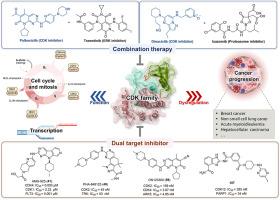
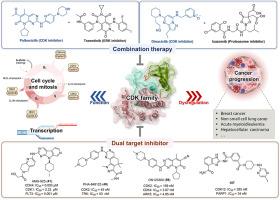
Cyclin-dependent kinases (CDKs) are pivotal regulators of the cell cycle and transcriptional machinery, making them attractive targets for cancer therapy. While CDK inhibitors have demonstrated promising clinical outcomes, they also face challenges in enhancing efficacy, particularly in overcoming drug resistance. Combination therapies have emerged as a key strategy to augment the effectiveness of CDK inhibitors when used alongside other kinase inhibitors or non-kinase-targeted agents. Dual-target inhibitors that simultaneously inhibit CDKs and other oncogenic drivers are gaining attention, offering novel avenues to optimize cancer therapy. Based on the structural characterization and biological functions of CDKs, this review comprehensively examines the structure-activity relationship (SAR) of existing dual-target CDK inhibitors from a drug design perspective. We also thoroughly investigate the preclinical studies and clinical translational potential of combination therapies and dual-target inhibitors. Tailoring CDK inhibitors to specific cancer subtypes and therapeutic settings will inspire innovative approaches for the next generation of CDK-related therapies, ultimately improving patient survival.
期刊介绍:
The European Journal of Medicinal Chemistry is a global journal that publishes studies on all aspects of medicinal chemistry. It provides a medium for publication of original papers and also welcomes critical review papers.
A typical paper would report on the organic synthesis, characterization and pharmacological evaluation of compounds. Other topics of interest are drug design, QSAR, molecular modeling, drug-receptor interactions, molecular aspects of drug metabolism, prodrug synthesis and drug targeting. The journal expects manuscripts to present the rational for a study, provide insight into the design of compounds or understanding of mechanism, or clarify the targets.




 京公网安备 11010802042870号
京ICP备2023020795号-1
京公网安备 11010802042870号
京ICP备2023020795号-1

 分享
分享
 求助内容:
求助内容: 应助结果提醒方式:
 扫码关注我们
