Predictors of bed bug-related stress in people who have experienced a recent infestation. Results from a cross-sectional survey in the city of Lyon, France
BACKGROUND
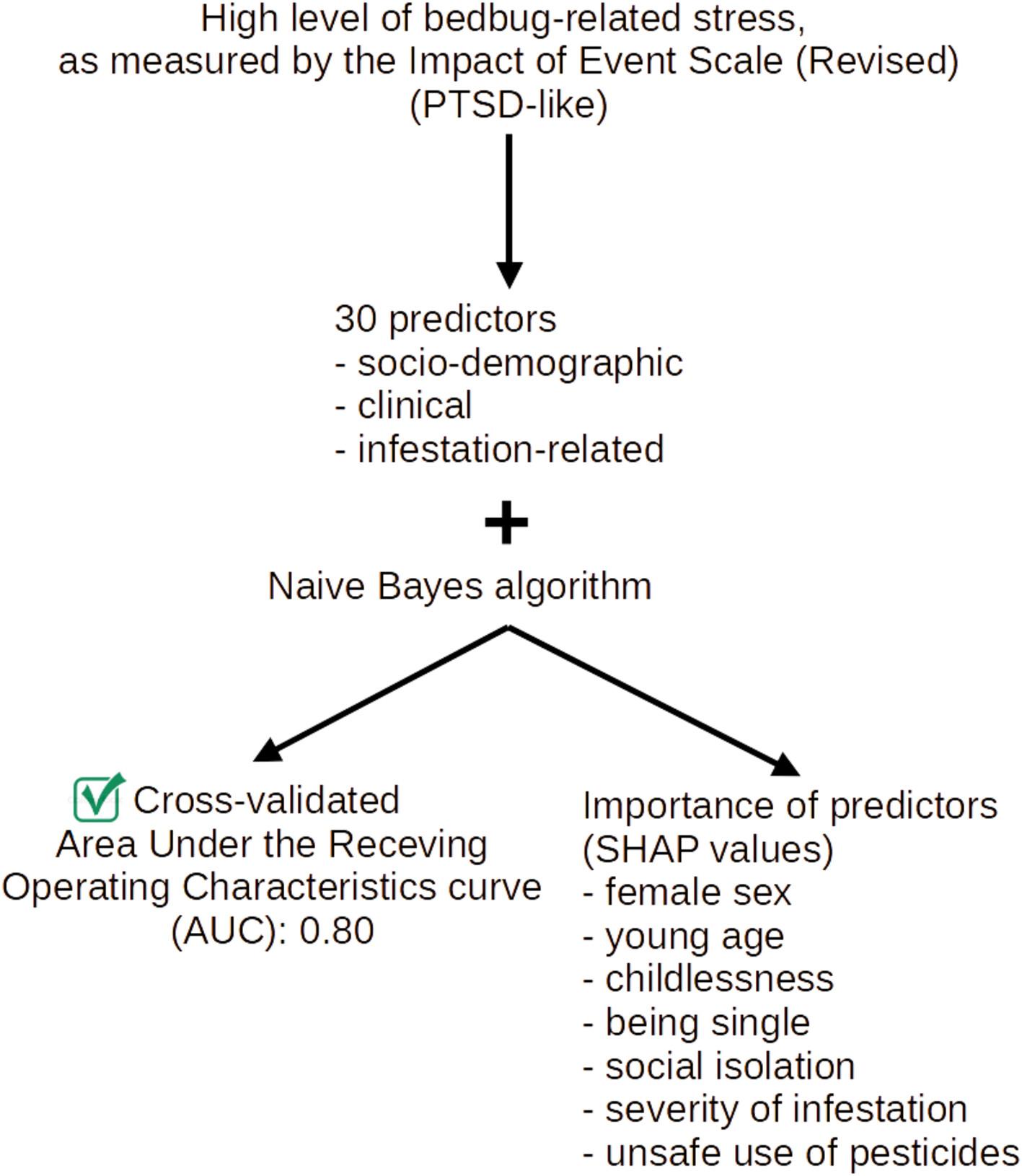
The number of bed bug infestations has risen dramatically in the past decades. Infestations are responsible for mental health issues such as lower quality of life, insomnia and symptoms that may resemble those of post-traumatic stress disorders. Here, we sought to investigate whether bed bug-related stress may be predicted by a range of sociodemographic, clinical and infestation-related characteristics. We collected data using a paper and online survey of 305 adults who had experienced a bed bug infestation.
RESULTS
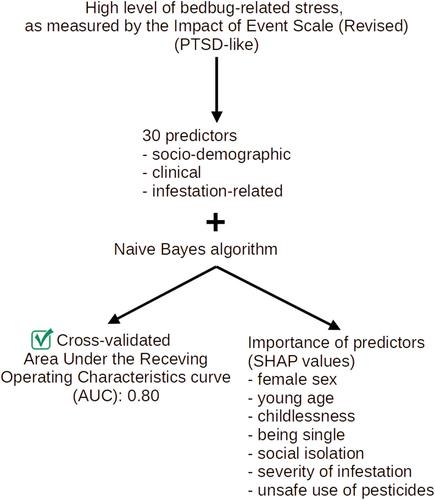
From the 167 individuals dealing with a recent (<1 year) bed bug infestation, about two-thirds were deemed to have a high level of bed bug-related stress. The cross-validated performance of a naive Bayes algorithm in predicting bed bug-related stress was good, with an area under the receiving operating characteristics curve (AUROC) of 0.80. We calculated SHAP values to determine the explanatory power of predictors. Factors associated with bed bug-related stress were young age, female sex, childlessness, being single, social isolation, severity of infestation and treatment by insecticides (especially when health issues had not been taken into account). We also found that the likelihood of bed bug-related stress based on the severity of the infestation decreased when participants felt they were socially supported.
期刊介绍:
Pest Management Science is the international journal of research and development in crop protection and pest control. Since its launch in 1970, the journal has become the premier forum for papers on the discovery, application, and impact on the environment of products and strategies designed for pest management.
Published for SCI by John Wiley & Sons Ltd.







 京公网安备 11010802042870号
京ICP备2023020795号-1
京公网安备 11010802042870号
京ICP备2023020795号-1

 分享
分享
 求助内容:
求助内容: 应助结果提醒方式:
 扫码关注我们
