{"title":"2021年,日本青森县武津大桥坍塌","authors":"Hiroshi Takebayashi, Masaharu Fujita","doi":"10.1111/jfr3.70025","DOIUrl":null,"url":null,"abstract":"<p>On August 9–10, 2021, the Koakagawa Bridge in Mutsu, Aomori Prefecture, Japan, collapsed owing to the flood caused by a tropical cyclone. In this study, the cause of the collapse was examined. The characteristics of flood inundation with bypassing flows and countermeasures for bank erosion due to channel blockage by driftwood were investigated based on field surveys and numerical simulations. The scouring of the bed around the bridge pier was found to be the cause leading to bridge failure. Channel blockage owing to driftwood would have caused flood inundation and damage to the left bank, the top of the bank is bare of sediment, by forming a bypassing flow. However, the surface of the right bank on which the bypassing flow with high velocity formed was covered with concrete; therefore, bank erosion did not occur. These results indicate that to prevent bank erosion caused by bypassing flows during floods, it is important to protect banks downstream of the bridge using non-erosive materials. Only a small area, where bypassing flows form and non-dimensional shear stress is larger than 0.05, is sufficient for protection. It is also important to predict bed degradation characteristics around piers and banks, especially when the bed material is small.</p>","PeriodicalId":49294,"journal":{"name":"Journal of Flood Risk Management","volume":"18 1","pages":""},"PeriodicalIF":3.7000,"publicationDate":"2025-03-03","publicationTypes":"Journal Article","fieldsOfStudy":null,"isOpenAccess":false,"openAccessPdf":"https://onlinelibrary.wiley.com/doi/epdf/10.1111/jfr3.70025","citationCount":"0","resultStr":"{\"title\":\"Bridge Collapse in Mutsu, Aomori Prefecture, Japan in 2021\",\"authors\":\"Hiroshi Takebayashi, Masaharu Fujita\",\"doi\":\"10.1111/jfr3.70025\",\"DOIUrl\":null,\"url\":null,\"abstract\":\"<p>On August 9–10, 2021, the Koakagawa Bridge in Mutsu, Aomori Prefecture, Japan, collapsed owing to the flood caused by a tropical cyclone. In this study, the cause of the collapse was examined. The characteristics of flood inundation with bypassing flows and countermeasures for bank erosion due to channel blockage by driftwood were investigated based on field surveys and numerical simulations. The scouring of the bed around the bridge pier was found to be the cause leading to bridge failure. Channel blockage owing to driftwood would have caused flood inundation and damage to the left bank, the top of the bank is bare of sediment, by forming a bypassing flow. However, the surface of the right bank on which the bypassing flow with high velocity formed was covered with concrete; therefore, bank erosion did not occur. These results indicate that to prevent bank erosion caused by bypassing flows during floods, it is important to protect banks downstream of the bridge using non-erosive materials. Only a small area, where bypassing flows form and non-dimensional shear stress is larger than 0.05, is sufficient for protection. It is also important to predict bed degradation characteristics around piers and banks, especially when the bed material is small.</p>\",\"PeriodicalId\":49294,\"journal\":{\"name\":\"Journal of Flood Risk Management\",\"volume\":\"18 1\",\"pages\":\"\"},\"PeriodicalIF\":3.7000,\"publicationDate\":\"2025-03-03\",\"publicationTypes\":\"Journal Article\",\"fieldsOfStudy\":null,\"isOpenAccess\":false,\"openAccessPdf\":\"https://onlinelibrary.wiley.com/doi/epdf/10.1111/jfr3.70025\",\"citationCount\":\"0\",\"resultStr\":null,\"platform\":\"Semanticscholar\",\"paperid\":null,\"PeriodicalName\":\"Journal of Flood Risk Management\",\"FirstCategoryId\":\"93\",\"ListUrlMain\":\"https://onlinelibrary.wiley.com/doi/10.1111/jfr3.70025\",\"RegionNum\":3,\"RegionCategory\":\"环境科学与生态学\",\"ArticlePicture\":[],\"TitleCN\":null,\"AbstractTextCN\":null,\"PMCID\":null,\"EPubDate\":\"\",\"PubModel\":\"\",\"JCR\":\"Q2\",\"JCRName\":\"ENVIRONMENTAL SCIENCES\",\"Score\":null,\"Total\":0}","platform":"Semanticscholar","paperid":null,"PeriodicalName":"Journal of Flood Risk Management","FirstCategoryId":"93","ListUrlMain":"https://onlinelibrary.wiley.com/doi/10.1111/jfr3.70025","RegionNum":3,"RegionCategory":"环境科学与生态学","ArticlePicture":[],"TitleCN":null,"AbstractTextCN":null,"PMCID":null,"EPubDate":"","PubModel":"","JCR":"Q2","JCRName":"ENVIRONMENTAL SCIENCES","Score":null,"Total":0}
Bridge Collapse in Mutsu, Aomori Prefecture, Japan in 2021
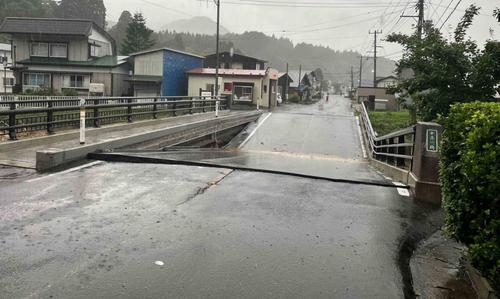
On August 9–10, 2021, the Koakagawa Bridge in Mutsu, Aomori Prefecture, Japan, collapsed owing to the flood caused by a tropical cyclone. In this study, the cause of the collapse was examined. The characteristics of flood inundation with bypassing flows and countermeasures for bank erosion due to channel blockage by driftwood were investigated based on field surveys and numerical simulations. The scouring of the bed around the bridge pier was found to be the cause leading to bridge failure. Channel blockage owing to driftwood would have caused flood inundation and damage to the left bank, the top of the bank is bare of sediment, by forming a bypassing flow. However, the surface of the right bank on which the bypassing flow with high velocity formed was covered with concrete; therefore, bank erosion did not occur. These results indicate that to prevent bank erosion caused by bypassing flows during floods, it is important to protect banks downstream of the bridge using non-erosive materials. Only a small area, where bypassing flows form and non-dimensional shear stress is larger than 0.05, is sufficient for protection. It is also important to predict bed degradation characteristics around piers and banks, especially when the bed material is small.
期刊介绍:
Journal of Flood Risk Management provides an international platform for knowledge sharing in all areas related to flood risk. Its explicit aim is to disseminate ideas across the range of disciplines where flood related research is carried out and it provides content ranging from leading edge academic papers to applied content with the practitioner in mind.
Readers and authors come from a wide background and include hydrologists, meteorologists, geographers, geomorphologists, conservationists, civil engineers, social scientists, policy makers, insurers and practitioners. They share an interest in managing the complex interactions between the many skills and disciplines that underpin the management of flood risk across the world.




 京公网安备 11010802042870号
京ICP备2023020795号-1
京公网安备 11010802042870号
京ICP备2023020795号-1

 分享
分享
 求助内容:
求助内容: 应助结果提醒方式:
 扫码关注我们
