Michael T. Tang, Joakim Halldin Stenlid, Jinyu Guo, Elizabeth Corson, William Tarpeh, Frank Abild-Pedersen
{"title":"酸性条件下含后期过渡金属的硝酸盐还原模型","authors":"Michael T. Tang, Joakim Halldin Stenlid, Jinyu Guo, Elizabeth Corson, William Tarpeh, Frank Abild-Pedersen","doi":"10.1021/acscatal.4c06394","DOIUrl":null,"url":null,"abstract":"The electrochemical reduction of nitrate (NO<sub>3</sub>R) to ammonia is a bold yet conceivable way of producing ammonia using renewable electricity. However, serious challenges remain in finding optimal electrocatalysts for the process. An atomistic understanding of the surface energetics behind the NO<sub>3</sub>R is needed in order to design an efficient catalyst. Herein, we combine energetics from density functional theory and microkinetic modeling to demonstrate how surface descriptors can help simplify the search for efficient NO<sub>3</sub>R electrocatalysts. We illustrate the strong correlations between transition-state energetics and O* binding energies for adsorbed nitrate and nitrite on transition metals. For intermediates from NO* and beyond, we compare the benefits of using either the N* or H* binding energies to predict reduction onset potentials. These insights enable us to develop a simple microkinetic model that elucidates the surface coverages of intermediates and the product selectivity of NO<sub>3</sub>R across a range of potentials and transition metals. We show that the model adequately corroborates with quasi-steady-state rates observed experimentally.","PeriodicalId":9,"journal":{"name":"ACS Catalysis ","volume":"39 1","pages":""},"PeriodicalIF":13.6000,"publicationDate":"2025-03-02","publicationTypes":"Journal Article","fieldsOfStudy":null,"isOpenAccess":false,"openAccessPdf":"","citationCount":"0","resultStr":"{\"title\":\"Nitrate Reduction Modeling under Acidic Conditions with Late Transition Metals\",\"authors\":\"Michael T. Tang, Joakim Halldin Stenlid, Jinyu Guo, Elizabeth Corson, William Tarpeh, Frank Abild-Pedersen\",\"doi\":\"10.1021/acscatal.4c06394\",\"DOIUrl\":null,\"url\":null,\"abstract\":\"The electrochemical reduction of nitrate (NO<sub>3</sub>R) to ammonia is a bold yet conceivable way of producing ammonia using renewable electricity. However, serious challenges remain in finding optimal electrocatalysts for the process. An atomistic understanding of the surface energetics behind the NO<sub>3</sub>R is needed in order to design an efficient catalyst. Herein, we combine energetics from density functional theory and microkinetic modeling to demonstrate how surface descriptors can help simplify the search for efficient NO<sub>3</sub>R electrocatalysts. We illustrate the strong correlations between transition-state energetics and O* binding energies for adsorbed nitrate and nitrite on transition metals. For intermediates from NO* and beyond, we compare the benefits of using either the N* or H* binding energies to predict reduction onset potentials. These insights enable us to develop a simple microkinetic model that elucidates the surface coverages of intermediates and the product selectivity of NO<sub>3</sub>R across a range of potentials and transition metals. We show that the model adequately corroborates with quasi-steady-state rates observed experimentally.\",\"PeriodicalId\":9,\"journal\":{\"name\":\"ACS Catalysis \",\"volume\":\"39 1\",\"pages\":\"\"},\"PeriodicalIF\":13.6000,\"publicationDate\":\"2025-03-02\",\"publicationTypes\":\"Journal Article\",\"fieldsOfStudy\":null,\"isOpenAccess\":false,\"openAccessPdf\":\"\",\"citationCount\":\"0\",\"resultStr\":null,\"platform\":\"Semanticscholar\",\"paperid\":null,\"PeriodicalName\":\"ACS Catalysis \",\"FirstCategoryId\":\"92\",\"ListUrlMain\":\"https://doi.org/10.1021/acscatal.4c06394\",\"RegionNum\":1,\"RegionCategory\":\"化学\",\"ArticlePicture\":[],\"TitleCN\":null,\"AbstractTextCN\":null,\"PMCID\":null,\"EPubDate\":\"\",\"PubModel\":\"\",\"JCR\":\"Q1\",\"JCRName\":\"CHEMISTRY, PHYSICAL\",\"Score\":null,\"Total\":0}","platform":"Semanticscholar","paperid":null,"PeriodicalName":"ACS Catalysis ","FirstCategoryId":"92","ListUrlMain":"https://doi.org/10.1021/acscatal.4c06394","RegionNum":1,"RegionCategory":"化学","ArticlePicture":[],"TitleCN":null,"AbstractTextCN":null,"PMCID":null,"EPubDate":"","PubModel":"","JCR":"Q1","JCRName":"CHEMISTRY, PHYSICAL","Score":null,"Total":0}
Nitrate Reduction Modeling under Acidic Conditions with Late Transition Metals
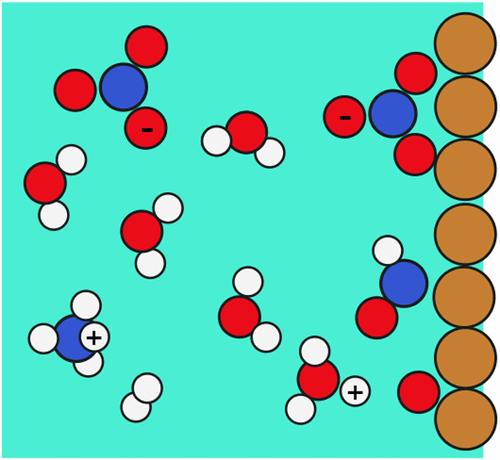
The electrochemical reduction of nitrate (NO3R) to ammonia is a bold yet conceivable way of producing ammonia using renewable electricity. However, serious challenges remain in finding optimal electrocatalysts for the process. An atomistic understanding of the surface energetics behind the NO3R is needed in order to design an efficient catalyst. Herein, we combine energetics from density functional theory and microkinetic modeling to demonstrate how surface descriptors can help simplify the search for efficient NO3R electrocatalysts. We illustrate the strong correlations between transition-state energetics and O* binding energies for adsorbed nitrate and nitrite on transition metals. For intermediates from NO* and beyond, we compare the benefits of using either the N* or H* binding energies to predict reduction onset potentials. These insights enable us to develop a simple microkinetic model that elucidates the surface coverages of intermediates and the product selectivity of NO3R across a range of potentials and transition metals. We show that the model adequately corroborates with quasi-steady-state rates observed experimentally.
期刊介绍:
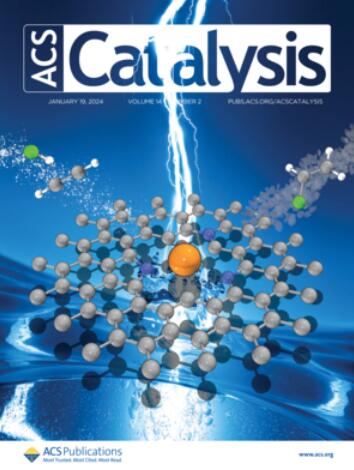
ACS Catalysis is an esteemed journal that publishes original research in the fields of heterogeneous catalysis, molecular catalysis, and biocatalysis. It offers broad coverage across diverse areas such as life sciences, organometallics and synthesis, photochemistry and electrochemistry, drug discovery and synthesis, materials science, environmental protection, polymer discovery and synthesis, and energy and fuels.
The scope of the journal is to showcase innovative work in various aspects of catalysis. This includes new reactions and novel synthetic approaches utilizing known catalysts, the discovery or modification of new catalysts, elucidation of catalytic mechanisms through cutting-edge investigations, practical enhancements of existing processes, as well as conceptual advances in the field. Contributions to ACS Catalysis can encompass both experimental and theoretical research focused on catalytic molecules, macromolecules, and materials that exhibit catalytic turnover.




 京公网安备 11010802042870号
京ICP备2023020795号-1
京公网安备 11010802042870号
京ICP备2023020795号-1

 分享
分享
 求助内容:
求助内容: 应助结果提醒方式:
 扫码关注我们
