Belal Y. Belal, Gesheng Li, Zunhua Zhang, Junjie Liang, Mengni Zhou, Shaimaa M. Masoud, Ali M. A. Attia, Radwan M. El-Zoheiry, Ahmed I. El-Seesy
{"title":"超声波辅助优化蒸煮废生物柴油生产工艺,研究其与柴油混合在柴油机中的燃烧特性。","authors":"Belal Y. Belal, Gesheng Li, Zunhua Zhang, Junjie Liang, Mengni Zhou, Shaimaa M. Masoud, Ali M. A. Attia, Radwan M. El-Zoheiry, Ahmed I. El-Seesy","doi":"10.1007/s11356-025-36101-3","DOIUrl":null,"url":null,"abstract":"<div><p>This study aimed to optimize biodiesel production from waste cooking oil using ultrasonic-assisted transesterification and evaluate the combustion characteristics of a diesel engine powered by various biodiesel blends. The effects of transesterification parameters, including reaction time, alcohol-to-oil molar ratio, catalyst concentration, and ultrasonic amplitude, were experimentally investigated. The optimal conditions for achieving a biodiesel yield of 96.65% were found to be a reaction time of 6 min, an alcohol-to-oil molar ratio of 6:1, a catalyst concentration of 1.0 wt.%, and an ultrasonic amplitude of 75% with a duty cycle of 0.7. In the subsequent phase, engine performance and emissions were evaluated for biodiesel–diesel blends at volume ratios of 0:100 (B0), 10:90 (B10), 20:80 (B20), 30:70 (B30), 40:60 (B40), and 100:0 (B100) under varying load conditions at a constant speed of 1500 rpm. The results indicated that biodiesel blends exhibited similar engine performance to diesel, with a slight increase in brake-specific fuel consumption and a minor decrease in brake thermal efficiency. Emission analysis revealed significant improvements, with B100 reducing carbon monoxide (CO), unburned hydrocarbons (HC), and smoke opacity by 42.9%, 29.9%, and 42.1%, respectively, compared to B0. Notably, B40 showed the highest reduction in nitrogen oxide (NO<sub>x</sub>) emissions, achieving a 4.94% decrease. These findings suggested that B40 can serve as a viable diesel substitute without requiring fuel system modifications, offering comparable mechanical performance and enhanced emission characteristics.</p></div>","PeriodicalId":545,"journal":{"name":"Environmental Science and Pollution Research","volume":"32 11","pages":"6984 - 7001"},"PeriodicalIF":5.8000,"publicationDate":"2025-03-02","publicationTypes":"Journal Article","fieldsOfStudy":null,"isOpenAccess":false,"openAccessPdf":"","citationCount":"0","resultStr":"{\"title\":\"Optimizing waste cooking biodiesel production using ultrasonic-assisted and studying its combustion characteristics blended with diesel in diesel engine\",\"authors\":\"Belal Y. Belal, Gesheng Li, Zunhua Zhang, Junjie Liang, Mengni Zhou, Shaimaa M. Masoud, Ali M. A. Attia, Radwan M. El-Zoheiry, Ahmed I. El-Seesy\",\"doi\":\"10.1007/s11356-025-36101-3\",\"DOIUrl\":null,\"url\":null,\"abstract\":\"<div><p>This study aimed to optimize biodiesel production from waste cooking oil using ultrasonic-assisted transesterification and evaluate the combustion characteristics of a diesel engine powered by various biodiesel blends. The effects of transesterification parameters, including reaction time, alcohol-to-oil molar ratio, catalyst concentration, and ultrasonic amplitude, were experimentally investigated. The optimal conditions for achieving a biodiesel yield of 96.65% were found to be a reaction time of 6 min, an alcohol-to-oil molar ratio of 6:1, a catalyst concentration of 1.0 wt.%, and an ultrasonic amplitude of 75% with a duty cycle of 0.7. In the subsequent phase, engine performance and emissions were evaluated for biodiesel–diesel blends at volume ratios of 0:100 (B0), 10:90 (B10), 20:80 (B20), 30:70 (B30), 40:60 (B40), and 100:0 (B100) under varying load conditions at a constant speed of 1500 rpm. The results indicated that biodiesel blends exhibited similar engine performance to diesel, with a slight increase in brake-specific fuel consumption and a minor decrease in brake thermal efficiency. Emission analysis revealed significant improvements, with B100 reducing carbon monoxide (CO), unburned hydrocarbons (HC), and smoke opacity by 42.9%, 29.9%, and 42.1%, respectively, compared to B0. Notably, B40 showed the highest reduction in nitrogen oxide (NO<sub>x</sub>) emissions, achieving a 4.94% decrease. These findings suggested that B40 can serve as a viable diesel substitute without requiring fuel system modifications, offering comparable mechanical performance and enhanced emission characteristics.</p></div>\",\"PeriodicalId\":545,\"journal\":{\"name\":\"Environmental Science and Pollution Research\",\"volume\":\"32 11\",\"pages\":\"6984 - 7001\"},\"PeriodicalIF\":5.8000,\"publicationDate\":\"2025-03-02\",\"publicationTypes\":\"Journal Article\",\"fieldsOfStudy\":null,\"isOpenAccess\":false,\"openAccessPdf\":\"\",\"citationCount\":\"0\",\"resultStr\":null,\"platform\":\"Semanticscholar\",\"paperid\":null,\"PeriodicalName\":\"Environmental Science and Pollution Research\",\"FirstCategoryId\":\"93\",\"ListUrlMain\":\"https://link.springer.com/article/10.1007/s11356-025-36101-3\",\"RegionNum\":3,\"RegionCategory\":\"环境科学与生态学\",\"ArticlePicture\":[],\"TitleCN\":null,\"AbstractTextCN\":null,\"PMCID\":null,\"EPubDate\":\"\",\"PubModel\":\"\",\"JCR\":\"0\",\"JCRName\":\"ENVIRONMENTAL SCIENCES\",\"Score\":null,\"Total\":0}","platform":"Semanticscholar","paperid":null,"PeriodicalName":"Environmental Science and Pollution Research","FirstCategoryId":"93","ListUrlMain":"https://link.springer.com/article/10.1007/s11356-025-36101-3","RegionNum":3,"RegionCategory":"环境科学与生态学","ArticlePicture":[],"TitleCN":null,"AbstractTextCN":null,"PMCID":null,"EPubDate":"","PubModel":"","JCR":"0","JCRName":"ENVIRONMENTAL SCIENCES","Score":null,"Total":0}
Optimizing waste cooking biodiesel production using ultrasonic-assisted and studying its combustion characteristics blended with diesel in diesel engine
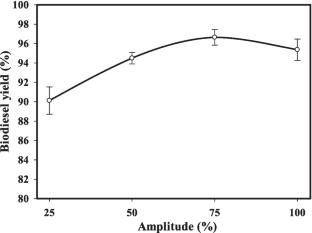
This study aimed to optimize biodiesel production from waste cooking oil using ultrasonic-assisted transesterification and evaluate the combustion characteristics of a diesel engine powered by various biodiesel blends. The effects of transesterification parameters, including reaction time, alcohol-to-oil molar ratio, catalyst concentration, and ultrasonic amplitude, were experimentally investigated. The optimal conditions for achieving a biodiesel yield of 96.65% were found to be a reaction time of 6 min, an alcohol-to-oil molar ratio of 6:1, a catalyst concentration of 1.0 wt.%, and an ultrasonic amplitude of 75% with a duty cycle of 0.7. In the subsequent phase, engine performance and emissions were evaluated for biodiesel–diesel blends at volume ratios of 0:100 (B0), 10:90 (B10), 20:80 (B20), 30:70 (B30), 40:60 (B40), and 100:0 (B100) under varying load conditions at a constant speed of 1500 rpm. The results indicated that biodiesel blends exhibited similar engine performance to diesel, with a slight increase in brake-specific fuel consumption and a minor decrease in brake thermal efficiency. Emission analysis revealed significant improvements, with B100 reducing carbon monoxide (CO), unburned hydrocarbons (HC), and smoke opacity by 42.9%, 29.9%, and 42.1%, respectively, compared to B0. Notably, B40 showed the highest reduction in nitrogen oxide (NOx) emissions, achieving a 4.94% decrease. These findings suggested that B40 can serve as a viable diesel substitute without requiring fuel system modifications, offering comparable mechanical performance and enhanced emission characteristics.
期刊介绍:
Environmental Science and Pollution Research (ESPR) serves the international community in all areas of Environmental Science and related subjects with emphasis on chemical compounds. This includes:
- Terrestrial Biology and Ecology
- Aquatic Biology and Ecology
- Atmospheric Chemistry
- Environmental Microbiology/Biobased Energy Sources
- Phytoremediation and Ecosystem Restoration
- Environmental Analyses and Monitoring
- Assessment of Risks and Interactions of Pollutants in the Environment
- Conservation Biology and Sustainable Agriculture
- Impact of Chemicals/Pollutants on Human and Animal Health
It reports from a broad interdisciplinary outlook.




 京公网安备 11010802042870号
京ICP备2023020795号-1
京公网安备 11010802042870号
京ICP备2023020795号-1

 分享
分享
 求助内容:
求助内容: 应助结果提醒方式:
 扫码关注我们
