{"title":"黄附藤内生细菌PPDHMP对抗人类细菌病原体的研究——从原始到单分子的产品开发方法。","authors":"Manas Manam, Sankalp Srivatsa, W. Jabez Osborne","doi":"10.1016/j.micpath.2025.107431","DOIUrl":null,"url":null,"abstract":"<div><div>Resistance in human bacterial pathogens and lack of novel antibiotic development has led to the need for new antibiotics. Therefore, the current study was focused on endophytic bacteria from <em>Gracilaria edulis,</em> an edible seaweed, capable of synthesizing novel bioactive compounds with potential applications in the inhibition of human pathogens. The endophyte, identified as <em>Bacillus subtilis</em> through 16S rRNA gene sequencing, exhibited significant antibacterial activity against bacterial human pathogens. Using GC-MS, FTIR and NMR the lead compound was identified as Pyrrolo[1,2-α] pyrazine-1,4-dione, hexahydro-3-(2-methylpropyl) (PPDHMP). Optimized media composition using glucose, proline and valine significantly enhanced the production of PPDHMP which was observed by the increase in zone of inhibition. Molecular docking of PPDHMP indicated a high binding affinity to beta-lactamase, suggesting its potential as a beta-lactamase inhibitor. PPDHMP exhibited cell wall inhibitory activity and ADMET analysis revealed promising pharmacokinetic and toxicity profiles indicating its potential for further evaluation as an oral antibiotic candidate. Phytotoxicity assessments and hemolytic assay confirmed the non-toxic nature of the metabolites produced. This research highlights the immense potential of marine endophytes in addressing the escalating issue of antibiotic resistance and paves the way for innovative solutions in antimicrobial therapy.</div></div>","PeriodicalId":18599,"journal":{"name":"Microbial pathogenesis","volume":"202 ","pages":"Article 107431"},"PeriodicalIF":3.9000,"publicationDate":"2025-05-01","publicationTypes":"Journal Article","fieldsOfStudy":null,"isOpenAccess":false,"openAccessPdf":"","citationCount":"0","resultStr":"{\"title\":\"Endophytic bacteria of Gracilaria edulis in combating human bacterial pathogens by PPDHMP – A crude to single molecule product development approach\",\"authors\":\"Manas Manam, Sankalp Srivatsa, W. Jabez Osborne\",\"doi\":\"10.1016/j.micpath.2025.107431\",\"DOIUrl\":null,\"url\":null,\"abstract\":\"<div><div>Resistance in human bacterial pathogens and lack of novel antibiotic development has led to the need for new antibiotics. Therefore, the current study was focused on endophytic bacteria from <em>Gracilaria edulis,</em> an edible seaweed, capable of synthesizing novel bioactive compounds with potential applications in the inhibition of human pathogens. The endophyte, identified as <em>Bacillus subtilis</em> through 16S rRNA gene sequencing, exhibited significant antibacterial activity against bacterial human pathogens. Using GC-MS, FTIR and NMR the lead compound was identified as Pyrrolo[1,2-α] pyrazine-1,4-dione, hexahydro-3-(2-methylpropyl) (PPDHMP). Optimized media composition using glucose, proline and valine significantly enhanced the production of PPDHMP which was observed by the increase in zone of inhibition. Molecular docking of PPDHMP indicated a high binding affinity to beta-lactamase, suggesting its potential as a beta-lactamase inhibitor. PPDHMP exhibited cell wall inhibitory activity and ADMET analysis revealed promising pharmacokinetic and toxicity profiles indicating its potential for further evaluation as an oral antibiotic candidate. Phytotoxicity assessments and hemolytic assay confirmed the non-toxic nature of the metabolites produced. This research highlights the immense potential of marine endophytes in addressing the escalating issue of antibiotic resistance and paves the way for innovative solutions in antimicrobial therapy.</div></div>\",\"PeriodicalId\":18599,\"journal\":{\"name\":\"Microbial pathogenesis\",\"volume\":\"202 \",\"pages\":\"Article 107431\"},\"PeriodicalIF\":3.9000,\"publicationDate\":\"2025-05-01\",\"publicationTypes\":\"Journal Article\",\"fieldsOfStudy\":null,\"isOpenAccess\":false,\"openAccessPdf\":\"\",\"citationCount\":\"0\",\"resultStr\":null,\"platform\":\"Semanticscholar\",\"paperid\":null,\"PeriodicalName\":\"Microbial pathogenesis\",\"FirstCategoryId\":\"3\",\"ListUrlMain\":\"https://www.sciencedirect.com/science/article/pii/S0882401025001561\",\"RegionNum\":3,\"RegionCategory\":\"医学\",\"ArticlePicture\":[],\"TitleCN\":null,\"AbstractTextCN\":null,\"PMCID\":null,\"EPubDate\":\"2025/2/28 0:00:00\",\"PubModel\":\"Epub\",\"JCR\":\"Q3\",\"JCRName\":\"IMMUNOLOGY\",\"Score\":null,\"Total\":0}","platform":"Semanticscholar","paperid":null,"PeriodicalName":"Microbial pathogenesis","FirstCategoryId":"3","ListUrlMain":"https://www.sciencedirect.com/science/article/pii/S0882401025001561","RegionNum":3,"RegionCategory":"医学","ArticlePicture":[],"TitleCN":null,"AbstractTextCN":null,"PMCID":null,"EPubDate":"2025/2/28 0:00:00","PubModel":"Epub","JCR":"Q3","JCRName":"IMMUNOLOGY","Score":null,"Total":0}
Endophytic bacteria of Gracilaria edulis in combating human bacterial pathogens by PPDHMP – A crude to single molecule product development approach
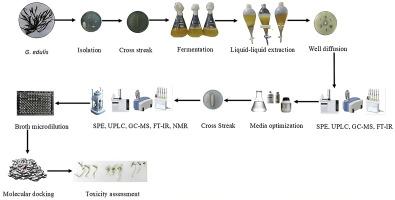
Resistance in human bacterial pathogens and lack of novel antibiotic development has led to the need for new antibiotics. Therefore, the current study was focused on endophytic bacteria from Gracilaria edulis, an edible seaweed, capable of synthesizing novel bioactive compounds with potential applications in the inhibition of human pathogens. The endophyte, identified as Bacillus subtilis through 16S rRNA gene sequencing, exhibited significant antibacterial activity against bacterial human pathogens. Using GC-MS, FTIR and NMR the lead compound was identified as Pyrrolo[1,2-α] pyrazine-1,4-dione, hexahydro-3-(2-methylpropyl) (PPDHMP). Optimized media composition using glucose, proline and valine significantly enhanced the production of PPDHMP which was observed by the increase in zone of inhibition. Molecular docking of PPDHMP indicated a high binding affinity to beta-lactamase, suggesting its potential as a beta-lactamase inhibitor. PPDHMP exhibited cell wall inhibitory activity and ADMET analysis revealed promising pharmacokinetic and toxicity profiles indicating its potential for further evaluation as an oral antibiotic candidate. Phytotoxicity assessments and hemolytic assay confirmed the non-toxic nature of the metabolites produced. This research highlights the immense potential of marine endophytes in addressing the escalating issue of antibiotic resistance and paves the way for innovative solutions in antimicrobial therapy.
期刊介绍:
Microbial Pathogenesis publishes original contributions and reviews about the molecular and cellular mechanisms of infectious diseases. It covers microbiology, host-pathogen interaction and immunology related to infectious agents, including bacteria, fungi, viruses and protozoa. It also accepts papers in the field of clinical microbiology, with the exception of case reports.
Research Areas Include:
-Pathogenesis
-Virulence factors
-Host susceptibility or resistance
-Immune mechanisms
-Identification, cloning and sequencing of relevant genes
-Genetic studies
-Viruses, prokaryotic organisms and protozoa
-Microbiota
-Systems biology related to infectious diseases
-Targets for vaccine design (pre-clinical studies)




 京公网安备 11010802042870号
京ICP备2023020795号-1
京公网安备 11010802042870号
京ICP备2023020795号-1

 分享
分享
 求助内容:
求助内容: 应助结果提醒方式:
 扫码关注我们
