{"title":"工业化学品和生产场所附近环境中新型四溴双酚A副产物的鉴定:一种被忽视的新型污染物来源。","authors":"Weihao Xu, Xiaoxuan Han, Yong Tian, Jiakui Liang and Yanfeng Zhang","doi":"10.1039/D5EM00030K","DOIUrl":null,"url":null,"abstract":"<p >To evaluate the migration, transformation, and fate of tetrabromobisphenol A (TBBPA) in the environment, the transformation/degradation (T/D) products of TBBPA and byproducts of industrial production should be distinguished. Herein, 7 reported T/D products (R1–R7) and 7 novel byproducts (N1–N7) of TBBPA were identified in industrial-grade TBBPA chemicals by using high-performance liquid chromatography coupled ion trap mass spectrometry and high-resolution mass spectrometry with a suspect screening strategy. The possible formation pathways of these byproducts were attributed to the bromination, debromination, methylation, demethylation, hydroxylation, substitution, and radical coupling reactions of bisphenol A (BPA), BPA impurities, and TBBPA. The detection frequencies of R1–R7 and N3 (80–100%) were higher than those of N1, N2, and N4–N7 (20–60%) in industrial-grade TBBPA chemicals, with contents extended to 2.29% and 0.0989%, respectively. In the soils and sediments near the TBBPA plants, R1–R4 and N1 were detected with the highest concentration of 1.56 × 10<small><sup>2</sup></small> ng g<small><sup>−1</sup></small> dry weight, while in the river waters, only R1–R4 were detected with the highest concentration of 4.57 × 10<small><sup>2</sup></small> ng L<small><sup>−1</sup></small>. An <em>in silico</em> analysis indicated the potential toxicity of these compounds, including their hepatotoxicity and carcinogenicity. To accurately estimate the environmental effects of the T/D products of TBBPA, the contributions of byproducts in industrial-grade TBBPA chemicals should be considered separately.</p>","PeriodicalId":74,"journal":{"name":"Environmental Science: Processes & Impacts","volume":" 4","pages":" 950-959"},"PeriodicalIF":3.9000,"publicationDate":"2025-02-20","publicationTypes":"Journal Article","fieldsOfStudy":null,"isOpenAccess":false,"openAccessPdf":"","citationCount":"0","resultStr":"{\"title\":\"Identification of novel tetrabromobisphenol A byproducts in industrial chemicals and the environment near a manufacturing site: an overlooked source of novel pollutants†\",\"authors\":\"Weihao Xu, Xiaoxuan Han, Yong Tian, Jiakui Liang and Yanfeng Zhang\",\"doi\":\"10.1039/D5EM00030K\",\"DOIUrl\":null,\"url\":null,\"abstract\":\"<p >To evaluate the migration, transformation, and fate of tetrabromobisphenol A (TBBPA) in the environment, the transformation/degradation (T/D) products of TBBPA and byproducts of industrial production should be distinguished. Herein, 7 reported T/D products (R1–R7) and 7 novel byproducts (N1–N7) of TBBPA were identified in industrial-grade TBBPA chemicals by using high-performance liquid chromatography coupled ion trap mass spectrometry and high-resolution mass spectrometry with a suspect screening strategy. The possible formation pathways of these byproducts were attributed to the bromination, debromination, methylation, demethylation, hydroxylation, substitution, and radical coupling reactions of bisphenol A (BPA), BPA impurities, and TBBPA. The detection frequencies of R1–R7 and N3 (80–100%) were higher than those of N1, N2, and N4–N7 (20–60%) in industrial-grade TBBPA chemicals, with contents extended to 2.29% and 0.0989%, respectively. In the soils and sediments near the TBBPA plants, R1–R4 and N1 were detected with the highest concentration of 1.56 × 10<small><sup>2</sup></small> ng g<small><sup>−1</sup></small> dry weight, while in the river waters, only R1–R4 were detected with the highest concentration of 4.57 × 10<small><sup>2</sup></small> ng L<small><sup>−1</sup></small>. An <em>in silico</em> analysis indicated the potential toxicity of these compounds, including their hepatotoxicity and carcinogenicity. To accurately estimate the environmental effects of the T/D products of TBBPA, the contributions of byproducts in industrial-grade TBBPA chemicals should be considered separately.</p>\",\"PeriodicalId\":74,\"journal\":{\"name\":\"Environmental Science: Processes & Impacts\",\"volume\":\" 4\",\"pages\":\" 950-959\"},\"PeriodicalIF\":3.9000,\"publicationDate\":\"2025-02-20\",\"publicationTypes\":\"Journal Article\",\"fieldsOfStudy\":null,\"isOpenAccess\":false,\"openAccessPdf\":\"\",\"citationCount\":\"0\",\"resultStr\":null,\"platform\":\"Semanticscholar\",\"paperid\":null,\"PeriodicalName\":\"Environmental Science: Processes & Impacts\",\"FirstCategoryId\":\"93\",\"ListUrlMain\":\"https://pubs.rsc.org/en/content/articlelanding/2025/em/d5em00030k\",\"RegionNum\":3,\"RegionCategory\":\"环境科学与生态学\",\"ArticlePicture\":[],\"TitleCN\":null,\"AbstractTextCN\":null,\"PMCID\":null,\"EPubDate\":\"\",\"PubModel\":\"\",\"JCR\":\"Q1\",\"JCRName\":\"CHEMISTRY, ANALYTICAL\",\"Score\":null,\"Total\":0}","platform":"Semanticscholar","paperid":null,"PeriodicalName":"Environmental Science: Processes & Impacts","FirstCategoryId":"93","ListUrlMain":"https://pubs.rsc.org/en/content/articlelanding/2025/em/d5em00030k","RegionNum":3,"RegionCategory":"环境科学与生态学","ArticlePicture":[],"TitleCN":null,"AbstractTextCN":null,"PMCID":null,"EPubDate":"","PubModel":"","JCR":"Q1","JCRName":"CHEMISTRY, ANALYTICAL","Score":null,"Total":0}
引用次数: 0
摘要
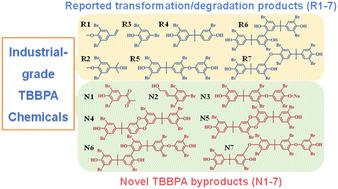
为了评估四溴双酚A (TBBPA)在环境中的迁移、转化和命运,应该区分TBBPA的转化/降解(T/D)产物和工业生产副产物。本文采用高效液相色谱耦合离子阱质谱法和高分辨率质谱法,采用可疑筛选策略,在工业级TBBPA化学品中鉴定了7种已知的TBBPA T/D产物(R1-R7)和7种新型副产物(N1-N7)。这些副产物的可能形成途径是双酚A (BPA)、BPA杂质和TBBPA的溴化、脱溴化、甲基化、去甲基化、羟基化、取代和自由基偶联反应。工业级TBBPA化学品中,R1-R7和N3的检测频率(80-100%)高于N1、N2和N4-N7的检测频率(20-60%),含量分别达到2.29%和0.0989%。在TBBPA植物附近的土壤和沉积物中,R1-R4和N1的浓度最高,为1.56 × 10² ng g-1干重,而在河流水域中,只有R1-R4的浓度最高,为4.57 × 10² ng L-1。硅分析表明这些化合物的潜在毒性,包括肝毒性和致癌性。为了准确估计TBBPA的T/D产物的环境影响,应单独考虑工业级TBBPA化学品中副产物的贡献。
Identification of novel tetrabromobisphenol A byproducts in industrial chemicals and the environment near a manufacturing site: an overlooked source of novel pollutants†
To evaluate the migration, transformation, and fate of tetrabromobisphenol A (TBBPA) in the environment, the transformation/degradation (T/D) products of TBBPA and byproducts of industrial production should be distinguished. Herein, 7 reported T/D products (R1–R7) and 7 novel byproducts (N1–N7) of TBBPA were identified in industrial-grade TBBPA chemicals by using high-performance liquid chromatography coupled ion trap mass spectrometry and high-resolution mass spectrometry with a suspect screening strategy. The possible formation pathways of these byproducts were attributed to the bromination, debromination, methylation, demethylation, hydroxylation, substitution, and radical coupling reactions of bisphenol A (BPA), BPA impurities, and TBBPA. The detection frequencies of R1–R7 and N3 (80–100%) were higher than those of N1, N2, and N4–N7 (20–60%) in industrial-grade TBBPA chemicals, with contents extended to 2.29% and 0.0989%, respectively. In the soils and sediments near the TBBPA plants, R1–R4 and N1 were detected with the highest concentration of 1.56 × 10² ng g−1 dry weight, while in the river waters, only R1–R4 were detected with the highest concentration of 4.57 × 10² ng L−1. An in silico analysis indicated the potential toxicity of these compounds, including their hepatotoxicity and carcinogenicity. To accurately estimate the environmental effects of the T/D products of TBBPA, the contributions of byproducts in industrial-grade TBBPA chemicals should be considered separately.
期刊介绍:
Environmental Science: Processes & Impacts publishes high quality papers in all areas of the environmental chemical sciences, including chemistry of the air, water, soil and sediment. We welcome studies on the environmental fate and effects of anthropogenic and naturally occurring contaminants, both chemical and microbiological, as well as related natural element cycling processes.



 京公网安备 11010802042870号
京ICP备2023020795号-1
京公网安备 11010802042870号
京ICP备2023020795号-1

 分享
分享
 求助内容:
求助内容: 应助结果提醒方式:
 扫码关注我们
