{"title":"小檗碱干预减轻大鼠心肌缺血再灌注损伤模型:通过miR-184信号传导的机制见解","authors":"Haichen Yang, Gang Cao, Xia Li, Zhikun Zhao, Yong Wang, Fei Xu","doi":"10.2147/BTT.S479430","DOIUrl":null,"url":null,"abstract":"<p><strong>Background: </strong>Ischemia-reperfusion (I/R) injury is a major contributor to myocardial dysfunction and tissue damage. A natural alkaloid-Berberine having a wide range of pharmacological properties, has garnered interest for its potential cardioprotective properties. This study aimed to investigate the protective effects of berberine on myocardial tissue in a rat model of myocardial ischemia-reperfusion (I/R) injury. Additionally, the study explored the role of the miR-184/NOTCH1 signaling pathway in mediating these effects.</p><p><strong>Methods: </strong>Male Wistar rats were randomly assigned to five groups: sham-operated control, I/R injury, I/R treated with berberine, I/R treated with inhibitor NC and I/R treated with a miR-184 inhibitor. The I/R injury was induced by ligating the left anterior descending (LAD) coronary artery for 30 minutes, followed by 2 hours of reperfusion. Berberine was administered orally at 100 mg/kg/day for 2 weeks, and the miR-184 inhibitor was administered via intraperitoneal injection. Hemodynamic parameters were recorded using a pressure sensor connected to a catheter inserted into the left ventricle. Myocardial infarct size was assessed using TTC staining, while histological and molecular changes were evaluated through H&E staining, TUNEL assay, and Western blotting. The expression levels of target genes were analyzed using quantitative real-time PCR (qRT-PCR).</p><p><strong>Results: </strong>Berberine significantly reduced myocardial infarct size and improved hemodynamic parameters compared to the untreated I/R group. Additionally, berberine treatment attenuated apoptosis as evidenced by decreased TUNEL-positive cells. The miR-184 inhibitor also demonstrated protective effects by modulating key signaling pathways involved in myocardial injury. Western blot analysis revealed downregulation of NOTCH1 and HES1 expression in treated groups, indicating a potential mechanism for the observed cardio protection.</p><p><strong>Conclusion: </strong>Berberine and miR-184 inhibition offer significant protection against myocardial ischemia-reperfusion injury. These findings suggest that targeting miR-184 and associated pathways may be a promising therapeutic strategy for reducing cardiac damage following ischemia-reperfusion.</p>","PeriodicalId":9025,"journal":{"name":"Biologics : Targets & Therapy","volume":"19 ","pages":"31-42"},"PeriodicalIF":3.4000,"publicationDate":"2025-02-25","publicationTypes":"Journal Article","fieldsOfStudy":null,"isOpenAccess":false,"openAccessPdf":"https://www.ncbi.nlm.nih.gov/pmc/articles/PMC11871928/pdf/","citationCount":"0","resultStr":"{\"title\":\"Berberine Intervention Mitigates Myocardial Ischemia-Reperfusion Injury in a Rat Model: Mechanistic Insights via miR-184 Signaling.\",\"authors\":\"Haichen Yang, Gang Cao, Xia Li, Zhikun Zhao, Yong Wang, Fei Xu\",\"doi\":\"10.2147/BTT.S479430\",\"DOIUrl\":null,\"url\":null,\"abstract\":\"<p><strong>Background: </strong>Ischemia-reperfusion (I/R) injury is a major contributor to myocardial dysfunction and tissue damage. A natural alkaloid-Berberine having a wide range of pharmacological properties, has garnered interest for its potential cardioprotective properties. This study aimed to investigate the protective effects of berberine on myocardial tissue in a rat model of myocardial ischemia-reperfusion (I/R) injury. Additionally, the study explored the role of the miR-184/NOTCH1 signaling pathway in mediating these effects.</p><p><strong>Methods: </strong>Male Wistar rats were randomly assigned to five groups: sham-operated control, I/R injury, I/R treated with berberine, I/R treated with inhibitor NC and I/R treated with a miR-184 inhibitor. The I/R injury was induced by ligating the left anterior descending (LAD) coronary artery for 30 minutes, followed by 2 hours of reperfusion. Berberine was administered orally at 100 mg/kg/day for 2 weeks, and the miR-184 inhibitor was administered via intraperitoneal injection. Hemodynamic parameters were recorded using a pressure sensor connected to a catheter inserted into the left ventricle. Myocardial infarct size was assessed using TTC staining, while histological and molecular changes were evaluated through H&E staining, TUNEL assay, and Western blotting. The expression levels of target genes were analyzed using quantitative real-time PCR (qRT-PCR).</p><p><strong>Results: </strong>Berberine significantly reduced myocardial infarct size and improved hemodynamic parameters compared to the untreated I/R group. Additionally, berberine treatment attenuated apoptosis as evidenced by decreased TUNEL-positive cells. The miR-184 inhibitor also demonstrated protective effects by modulating key signaling pathways involved in myocardial injury. Western blot analysis revealed downregulation of NOTCH1 and HES1 expression in treated groups, indicating a potential mechanism for the observed cardio protection.</p><p><strong>Conclusion: </strong>Berberine and miR-184 inhibition offer significant protection against myocardial ischemia-reperfusion injury. These findings suggest that targeting miR-184 and associated pathways may be a promising therapeutic strategy for reducing cardiac damage following ischemia-reperfusion.</p>\",\"PeriodicalId\":9025,\"journal\":{\"name\":\"Biologics : Targets & Therapy\",\"volume\":\"19 \",\"pages\":\"31-42\"},\"PeriodicalIF\":3.4000,\"publicationDate\":\"2025-02-25\",\"publicationTypes\":\"Journal Article\",\"fieldsOfStudy\":null,\"isOpenAccess\":false,\"openAccessPdf\":\"https://www.ncbi.nlm.nih.gov/pmc/articles/PMC11871928/pdf/\",\"citationCount\":\"0\",\"resultStr\":null,\"platform\":\"Semanticscholar\",\"paperid\":null,\"PeriodicalName\":\"Biologics : Targets & Therapy\",\"FirstCategoryId\":\"1085\",\"ListUrlMain\":\"https://doi.org/10.2147/BTT.S479430\",\"RegionNum\":0,\"RegionCategory\":null,\"ArticlePicture\":[],\"TitleCN\":null,\"AbstractTextCN\":null,\"PMCID\":null,\"EPubDate\":\"2025/1/1 0:00:00\",\"PubModel\":\"eCollection\",\"JCR\":\"Q1\",\"JCRName\":\"MEDICINE, RESEARCH & EXPERIMENTAL\",\"Score\":null,\"Total\":0}","platform":"Semanticscholar","paperid":null,"PeriodicalName":"Biologics : Targets & Therapy","FirstCategoryId":"1085","ListUrlMain":"https://doi.org/10.2147/BTT.S479430","RegionNum":0,"RegionCategory":null,"ArticlePicture":[],"TitleCN":null,"AbstractTextCN":null,"PMCID":null,"EPubDate":"2025/1/1 0:00:00","PubModel":"eCollection","JCR":"Q1","JCRName":"MEDICINE, RESEARCH & EXPERIMENTAL","Score":null,"Total":0}
Berberine Intervention Mitigates Myocardial Ischemia-Reperfusion Injury in a Rat Model: Mechanistic Insights via miR-184 Signaling.
Background: Ischemia-reperfusion (I/R) injury is a major contributor to myocardial dysfunction and tissue damage. A natural alkaloid-Berberine having a wide range of pharmacological properties, has garnered interest for its potential cardioprotective properties. This study aimed to investigate the protective effects of berberine on myocardial tissue in a rat model of myocardial ischemia-reperfusion (I/R) injury. Additionally, the study explored the role of the miR-184/NOTCH1 signaling pathway in mediating these effects.
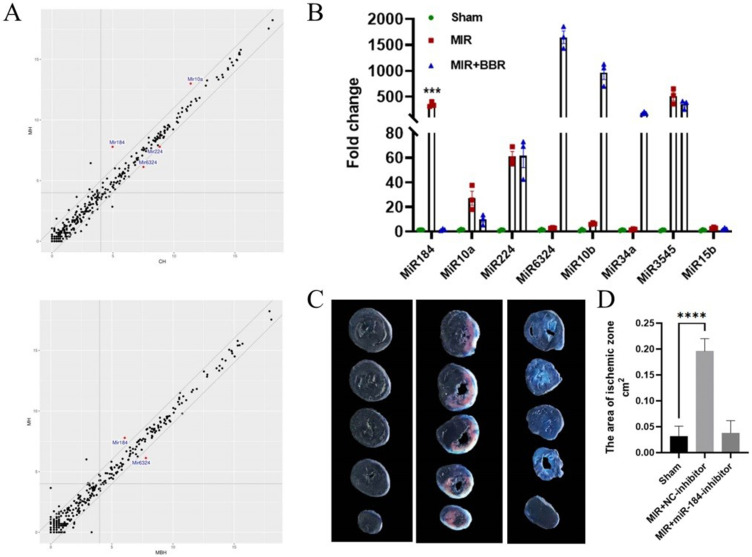
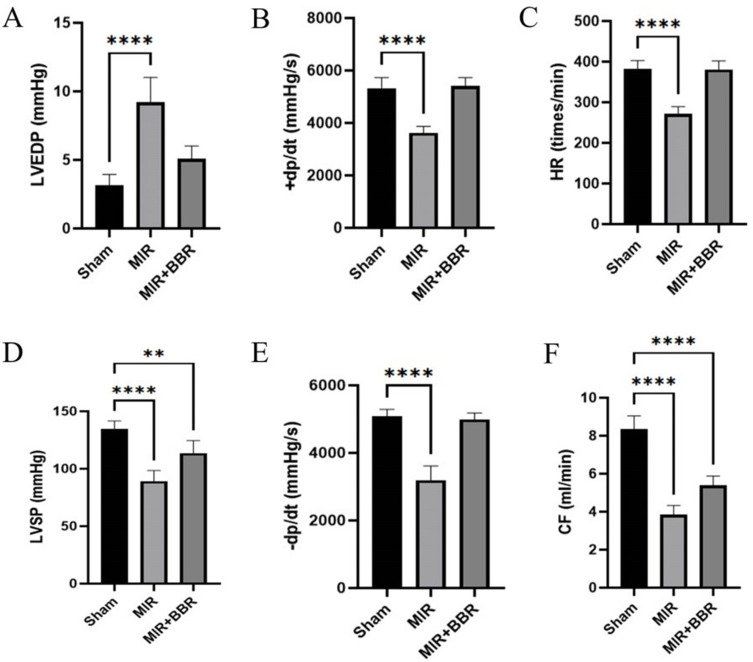
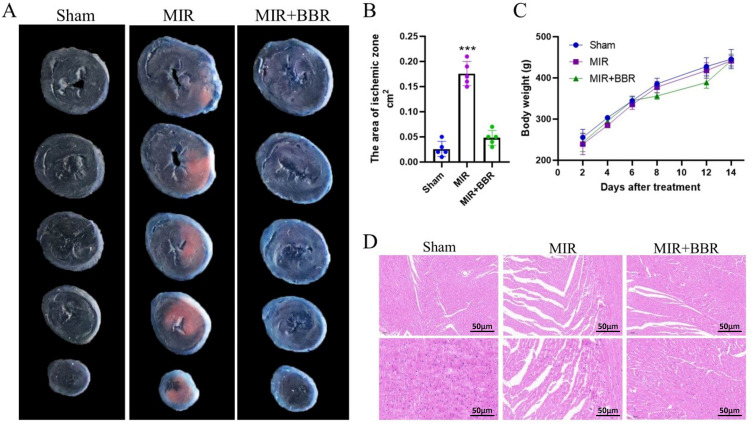
Methods: Male Wistar rats were randomly assigned to five groups: sham-operated control, I/R injury, I/R treated with berberine, I/R treated with inhibitor NC and I/R treated with a miR-184 inhibitor. The I/R injury was induced by ligating the left anterior descending (LAD) coronary artery for 30 minutes, followed by 2 hours of reperfusion. Berberine was administered orally at 100 mg/kg/day for 2 weeks, and the miR-184 inhibitor was administered via intraperitoneal injection. Hemodynamic parameters were recorded using a pressure sensor connected to a catheter inserted into the left ventricle. Myocardial infarct size was assessed using TTC staining, while histological and molecular changes were evaluated through H&E staining, TUNEL assay, and Western blotting. The expression levels of target genes were analyzed using quantitative real-time PCR (qRT-PCR).
Results: Berberine significantly reduced myocardial infarct size and improved hemodynamic parameters compared to the untreated I/R group. Additionally, berberine treatment attenuated apoptosis as evidenced by decreased TUNEL-positive cells. The miR-184 inhibitor also demonstrated protective effects by modulating key signaling pathways involved in myocardial injury. Western blot analysis revealed downregulation of NOTCH1 and HES1 expression in treated groups, indicating a potential mechanism for the observed cardio protection.
Conclusion: Berberine and miR-184 inhibition offer significant protection against myocardial ischemia-reperfusion injury. These findings suggest that targeting miR-184 and associated pathways may be a promising therapeutic strategy for reducing cardiac damage following ischemia-reperfusion.





 京公网安备 11010802042870号
京ICP备2023020795号-1
京公网安备 11010802042870号
京ICP备2023020795号-1

 分享
分享
 求助内容:
求助内容: 应助结果提醒方式:
 扫码关注我们
