{"title":"基于下一代元基因组测序的鹦鹉热衣原体感染的临床特征和疾病严重程度预测。","authors":"Mingzhu Huang, Yuefeng Wang, Yun Lu, Wenxin Qu, Qianda Zou, Dan Zhang, Yifei Shen, Dongsheng Han, Fei Yu, Shufa Zheng","doi":"10.2147/IDR.S509879","DOIUrl":null,"url":null,"abstract":"<p><strong>Introduction: </strong>Psittacosis pneumonia, as a zoonotic infection, is induced by the pathogen <i>Chlamydia psittaci</i>. In the present study, we sought to characterize the clinical manifestations and prognosticate the severity of psittacosis pneumonia.</p><p><strong>Methods: </strong>We retrospectively verified instances of psittacosis pneumonia in Zhejiang province, China, from January 2021 to April 2024. Relevant data pertaining to epidemiological, clinical, and laboratory aspects were compiled and evaluated.</p><p><strong>Results: </strong>Among a total of 110 individuals enrolled who were diagnosed with psittacosis pneumonia, the median age being 62.0 years (IQR, 53-69 years). The most common comorbidities were hypertension (36.4%) and diabetes mellitus (17.3%). Patients categorized as having severe disease (n=68) were significantly older than those with mild disease (n=42). Most patients had notable elevations in aspartate aminotransferase (AST), creatine kinase (CK), creatine kinase-MB (CK-MB), lactate dehydrogenase (LDH), D-dimer, C-reactive protein (CRP), procalcitonin, total bilirubin (TBil), and interleukin-6, as along with significant reductions in lymphocytes, monocytes, albumin, and interleukin-4. Chest CT scans showed bilateral lung involvement in 70 cases. In the cohort of patients having received empirical antibiotic therapy, 57.3% had their antibacterial medication adjusted in light of the mNGS findings. mNGS results indicated that 31.8% (35/110) had suspected coinfections. The random forest classifiers based upon the clinical and laboratory characteristics attained AUC values of 0.822.</p><p><strong>Discussion: </strong>The study underscores the efficacy of mNGS as a robust diagnostic tool for detecting Chlamydia psittaci, which can simultaneously detect other pathogens and guide clinical treatment. Severe patients exhibit significant inflammatory imbalances and lymphocyte depletion. A predictive model based on clinical and laboratory data at admission can effectively guide early clinical intervention.</p>","PeriodicalId":13577,"journal":{"name":"Infection and Drug Resistance","volume":"18 ","pages":"1171-1181"},"PeriodicalIF":2.9000,"publicationDate":"2025-02-26","publicationTypes":"Journal Article","fieldsOfStudy":null,"isOpenAccess":false,"openAccessPdf":"https://www.ncbi.nlm.nih.gov/pmc/articles/PMC11872090/pdf/","citationCount":"0","resultStr":"{\"title\":\"Clinical Characteristics and Predicting Disease Severity in Chlamydia psittaci Infection Based on Metagenomic Next-Generation Sequencing.\",\"authors\":\"Mingzhu Huang, Yuefeng Wang, Yun Lu, Wenxin Qu, Qianda Zou, Dan Zhang, Yifei Shen, Dongsheng Han, Fei Yu, Shufa Zheng\",\"doi\":\"10.2147/IDR.S509879\",\"DOIUrl\":null,\"url\":null,\"abstract\":\"<p><strong>Introduction: </strong>Psittacosis pneumonia, as a zoonotic infection, is induced by the pathogen <i>Chlamydia psittaci</i>. In the present study, we sought to characterize the clinical manifestations and prognosticate the severity of psittacosis pneumonia.</p><p><strong>Methods: </strong>We retrospectively verified instances of psittacosis pneumonia in Zhejiang province, China, from January 2021 to April 2024. Relevant data pertaining to epidemiological, clinical, and laboratory aspects were compiled and evaluated.</p><p><strong>Results: </strong>Among a total of 110 individuals enrolled who were diagnosed with psittacosis pneumonia, the median age being 62.0 years (IQR, 53-69 years). The most common comorbidities were hypertension (36.4%) and diabetes mellitus (17.3%). Patients categorized as having severe disease (n=68) were significantly older than those with mild disease (n=42). Most patients had notable elevations in aspartate aminotransferase (AST), creatine kinase (CK), creatine kinase-MB (CK-MB), lactate dehydrogenase (LDH), D-dimer, C-reactive protein (CRP), procalcitonin, total bilirubin (TBil), and interleukin-6, as along with significant reductions in lymphocytes, monocytes, albumin, and interleukin-4. Chest CT scans showed bilateral lung involvement in 70 cases. In the cohort of patients having received empirical antibiotic therapy, 57.3% had their antibacterial medication adjusted in light of the mNGS findings. mNGS results indicated that 31.8% (35/110) had suspected coinfections. The random forest classifiers based upon the clinical and laboratory characteristics attained AUC values of 0.822.</p><p><strong>Discussion: </strong>The study underscores the efficacy of mNGS as a robust diagnostic tool for detecting Chlamydia psittaci, which can simultaneously detect other pathogens and guide clinical treatment. Severe patients exhibit significant inflammatory imbalances and lymphocyte depletion. A predictive model based on clinical and laboratory data at admission can effectively guide early clinical intervention.</p>\",\"PeriodicalId\":13577,\"journal\":{\"name\":\"Infection and Drug Resistance\",\"volume\":\"18 \",\"pages\":\"1171-1181\"},\"PeriodicalIF\":2.9000,\"publicationDate\":\"2025-02-26\",\"publicationTypes\":\"Journal Article\",\"fieldsOfStudy\":null,\"isOpenAccess\":false,\"openAccessPdf\":\"https://www.ncbi.nlm.nih.gov/pmc/articles/PMC11872090/pdf/\",\"citationCount\":\"0\",\"resultStr\":null,\"platform\":\"Semanticscholar\",\"paperid\":null,\"PeriodicalName\":\"Infection and Drug Resistance\",\"FirstCategoryId\":\"3\",\"ListUrlMain\":\"https://doi.org/10.2147/IDR.S509879\",\"RegionNum\":3,\"RegionCategory\":\"医学\",\"ArticlePicture\":[],\"TitleCN\":null,\"AbstractTextCN\":null,\"PMCID\":null,\"EPubDate\":\"2025/1/1 0:00:00\",\"PubModel\":\"eCollection\",\"JCR\":\"Q2\",\"JCRName\":\"INFECTIOUS DISEASES\",\"Score\":null,\"Total\":0}","platform":"Semanticscholar","paperid":null,"PeriodicalName":"Infection and Drug Resistance","FirstCategoryId":"3","ListUrlMain":"https://doi.org/10.2147/IDR.S509879","RegionNum":3,"RegionCategory":"医学","ArticlePicture":[],"TitleCN":null,"AbstractTextCN":null,"PMCID":null,"EPubDate":"2025/1/1 0:00:00","PubModel":"eCollection","JCR":"Q2","JCRName":"INFECTIOUS DISEASES","Score":null,"Total":0}
Clinical Characteristics and Predicting Disease Severity in Chlamydia psittaci Infection Based on Metagenomic Next-Generation Sequencing.
Introduction: Psittacosis pneumonia, as a zoonotic infection, is induced by the pathogen Chlamydia psittaci. In the present study, we sought to characterize the clinical manifestations and prognosticate the severity of psittacosis pneumonia.
Methods: We retrospectively verified instances of psittacosis pneumonia in Zhejiang province, China, from January 2021 to April 2024. Relevant data pertaining to epidemiological, clinical, and laboratory aspects were compiled and evaluated.
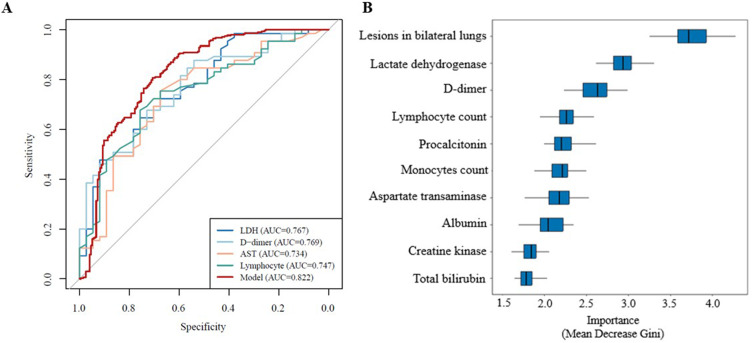
Results: Among a total of 110 individuals enrolled who were diagnosed with psittacosis pneumonia, the median age being 62.0 years (IQR, 53-69 years). The most common comorbidities were hypertension (36.4%) and diabetes mellitus (17.3%). Patients categorized as having severe disease (n=68) were significantly older than those with mild disease (n=42). Most patients had notable elevations in aspartate aminotransferase (AST), creatine kinase (CK), creatine kinase-MB (CK-MB), lactate dehydrogenase (LDH), D-dimer, C-reactive protein (CRP), procalcitonin, total bilirubin (TBil), and interleukin-6, as along with significant reductions in lymphocytes, monocytes, albumin, and interleukin-4. Chest CT scans showed bilateral lung involvement in 70 cases. In the cohort of patients having received empirical antibiotic therapy, 57.3% had their antibacterial medication adjusted in light of the mNGS findings. mNGS results indicated that 31.8% (35/110) had suspected coinfections. The random forest classifiers based upon the clinical and laboratory characteristics attained AUC values of 0.822.
Discussion: The study underscores the efficacy of mNGS as a robust diagnostic tool for detecting Chlamydia psittaci, which can simultaneously detect other pathogens and guide clinical treatment. Severe patients exhibit significant inflammatory imbalances and lymphocyte depletion. A predictive model based on clinical and laboratory data at admission can effectively guide early clinical intervention.
期刊介绍:
About Journal
Editors
Peer Reviewers
Articles
Article Publishing Charges
Aims and Scope
Call For Papers
ISSN: 1178-6973
Editor-in-Chief: Professor Suresh Antony
An international, peer-reviewed, open access journal that focuses on the optimal treatment of infection (bacterial, fungal and viral) and the development and institution of preventative strategies to minimize the development and spread of resistance.






 京公网安备 11010802042870号
京ICP备2023020795号-1
京公网安备 11010802042870号
京ICP备2023020795号-1

 分享
分享
 求助内容:
求助内容: 应助结果提醒方式:
 扫码关注我们
