F G Carranza, B Waldrup, Y Jin, Y Amzaleg, M Postel, D W Craig, J D Carpten, B Salhia, D Hernandez, N Gutierrez, C N Ricker, J O Culver, C E Chavez, M C Stern, L Baezconde-Garbanati, H J Lenz, E Velazquez-Villarreal
{"title":"使用综合多组学方法评估西班牙/拉丁裔患者早发性结直肠癌中MYC基因和WNT通路的改变","authors":"F G Carranza, B Waldrup, Y Jin, Y Amzaleg, M Postel, D W Craig, J D Carpten, B Salhia, D Hernandez, N Gutierrez, C N Ricker, J O Culver, C E Chavez, M C Stern, L Baezconde-Garbanati, H J Lenz, E Velazquez-Villarreal","doi":"10.1101/2024.12.05.24318588","DOIUrl":null,"url":null,"abstract":"<p><p>Colorectal cancer (CRC) has increased at an alarming rate amongst younger (< 50 years) individuals. Such early-onset colorectal cancer (EOCRC) has been particularly notable within the Hispanic/Latino population. Yet, this population has not been sufficiently profiled in terms of two critical elements of CRC -- the MYC proto-oncogene and WNT signaling pathway. Here, we performed a comprehensive multi-omics analysis on 30 early-onset and 37 late-onset CRC (≥ 50 years) samples from Hispanic/Latino patients. Our analysis included DNA exome sequencing for somatic mutations, somatic copy number alterations, and global and local genetic similarity. Using RNA sequencing, we also assessed differential gene expression, cellular pathways, and gene fusions. We then compared our findings from early-onset Hispanic/Latino patient samples with publicly available data from Non-Hispanic White cohorts. Across all early-onset patients, which had a median 1000 Genomes Project Peruvian-in-Lima-like (1KG-PEL-like) genetic similarity proportion of 60%, we identified 41 WNT pathway genes with significant mutations. Six important examples were APC, TCF7L2, DKK1, DKK2, FZD10, and LRP5. Notably, patients with mutations in DKK1 and DKK2 had the highest 1KG-PEL-like proportion (79%). When we compared the Hispanic/Latino cohort to the Non-Hispanic White cohorts, four of these key genes -- DKK1, DKK2, FZD10, and LRP5 -- were significant in both risk association analyses and differential gene expression. Interestingly, early-onset tumors (vs. late-onset) exhibited distinct somatic copy number alterations and gene expression profiles; the differences included MYC and drug-targetable WNT pathway genes. We also identified a novel WNT gene fusion, RSPO3, in early-onset tumors; it was associated with enhanced WNT signaling. This integrative analysis underscores the distinct molecular features of EOCRC cancer in the Hispanic/Latino population; reveals potential avenues for tailored precision medicine therapies; and emphasizes the importance of multi-omics approaches in studying colorectal carcinogenesis. We expect this data to help contribute towards reducing cancer health disparities.</p><p><strong>Significance: </strong>This study offers multi-omics profiling analysis of early-onset colorectal cancer (EOCRC) in an underserved community, explores the implications of <i>MYC</i> gene and WNT pathway alterations, and provides critical insights into cancer health disparities.</p>","PeriodicalId":94281,"journal":{"name":"medRxiv : the preprint server for health sciences","volume":" ","pages":""},"PeriodicalIF":0.0000,"publicationDate":"2025-02-22","publicationTypes":"Journal Article","fieldsOfStudy":null,"isOpenAccess":false,"openAccessPdf":"https://www.ncbi.nlm.nih.gov/pmc/articles/PMC11875251/pdf/","citationCount":"0","resultStr":"{\"title\":\"Assessment of MYC Gene and WNT Pathway Alterations in Early-Onset Colorectal Cancer Among Hispanic/Latino Patients Using Integrated Multi-Omics Approaches.\",\"authors\":\"F G Carranza, B Waldrup, Y Jin, Y Amzaleg, M Postel, D W Craig, J D Carpten, B Salhia, D Hernandez, N Gutierrez, C N Ricker, J O Culver, C E Chavez, M C Stern, L Baezconde-Garbanati, H J Lenz, E Velazquez-Villarreal\",\"doi\":\"10.1101/2024.12.05.24318588\",\"DOIUrl\":null,\"url\":null,\"abstract\":\"<p><p>Colorectal cancer (CRC) has increased at an alarming rate amongst younger (< 50 years) individuals. Such early-onset colorectal cancer (EOCRC) has been particularly notable within the Hispanic/Latino population. Yet, this population has not been sufficiently profiled in terms of two critical elements of CRC -- the MYC proto-oncogene and WNT signaling pathway. Here, we performed a comprehensive multi-omics analysis on 30 early-onset and 37 late-onset CRC (≥ 50 years) samples from Hispanic/Latino patients. Our analysis included DNA exome sequencing for somatic mutations, somatic copy number alterations, and global and local genetic similarity. Using RNA sequencing, we also assessed differential gene expression, cellular pathways, and gene fusions. We then compared our findings from early-onset Hispanic/Latino patient samples with publicly available data from Non-Hispanic White cohorts. Across all early-onset patients, which had a median 1000 Genomes Project Peruvian-in-Lima-like (1KG-PEL-like) genetic similarity proportion of 60%, we identified 41 WNT pathway genes with significant mutations. Six important examples were APC, TCF7L2, DKK1, DKK2, FZD10, and LRP5. Notably, patients with mutations in DKK1 and DKK2 had the highest 1KG-PEL-like proportion (79%). When we compared the Hispanic/Latino cohort to the Non-Hispanic White cohorts, four of these key genes -- DKK1, DKK2, FZD10, and LRP5 -- were significant in both risk association analyses and differential gene expression. Interestingly, early-onset tumors (vs. late-onset) exhibited distinct somatic copy number alterations and gene expression profiles; the differences included MYC and drug-targetable WNT pathway genes. We also identified a novel WNT gene fusion, RSPO3, in early-onset tumors; it was associated with enhanced WNT signaling. This integrative analysis underscores the distinct molecular features of EOCRC cancer in the Hispanic/Latino population; reveals potential avenues for tailored precision medicine therapies; and emphasizes the importance of multi-omics approaches in studying colorectal carcinogenesis. We expect this data to help contribute towards reducing cancer health disparities.</p><p><strong>Significance: </strong>This study offers multi-omics profiling analysis of early-onset colorectal cancer (EOCRC) in an underserved community, explores the implications of <i>MYC</i> gene and WNT pathway alterations, and provides critical insights into cancer health disparities.</p>\",\"PeriodicalId\":94281,\"journal\":{\"name\":\"medRxiv : the preprint server for health sciences\",\"volume\":\" \",\"pages\":\"\"},\"PeriodicalIF\":0.0000,\"publicationDate\":\"2025-02-22\",\"publicationTypes\":\"Journal Article\",\"fieldsOfStudy\":null,\"isOpenAccess\":false,\"openAccessPdf\":\"https://www.ncbi.nlm.nih.gov/pmc/articles/PMC11875251/pdf/\",\"citationCount\":\"0\",\"resultStr\":null,\"platform\":\"Semanticscholar\",\"paperid\":null,\"PeriodicalName\":\"medRxiv : the preprint server for health sciences\",\"FirstCategoryId\":\"1085\",\"ListUrlMain\":\"https://doi.org/10.1101/2024.12.05.24318588\",\"RegionNum\":0,\"RegionCategory\":null,\"ArticlePicture\":[],\"TitleCN\":null,\"AbstractTextCN\":null,\"PMCID\":null,\"EPubDate\":\"\",\"PubModel\":\"\",\"JCR\":\"\",\"JCRName\":\"\",\"Score\":null,\"Total\":0}","platform":"Semanticscholar","paperid":null,"PeriodicalName":"medRxiv : the preprint server for health sciences","FirstCategoryId":"1085","ListUrlMain":"https://doi.org/10.1101/2024.12.05.24318588","RegionNum":0,"RegionCategory":null,"ArticlePicture":[],"TitleCN":null,"AbstractTextCN":null,"PMCID":null,"EPubDate":"","PubModel":"","JCR":"","JCRName":"","Score":null,"Total":0}
Assessment of MYC Gene and WNT Pathway Alterations in Early-Onset Colorectal Cancer Among Hispanic/Latino Patients Using Integrated Multi-Omics Approaches.
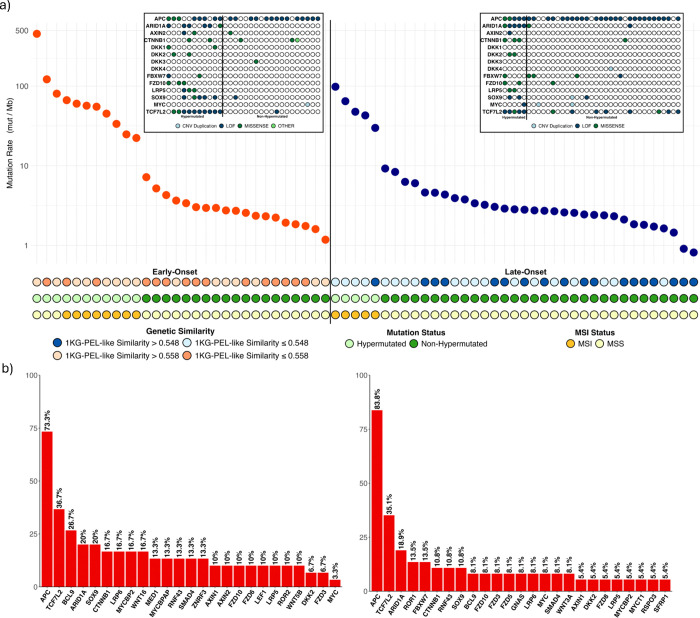
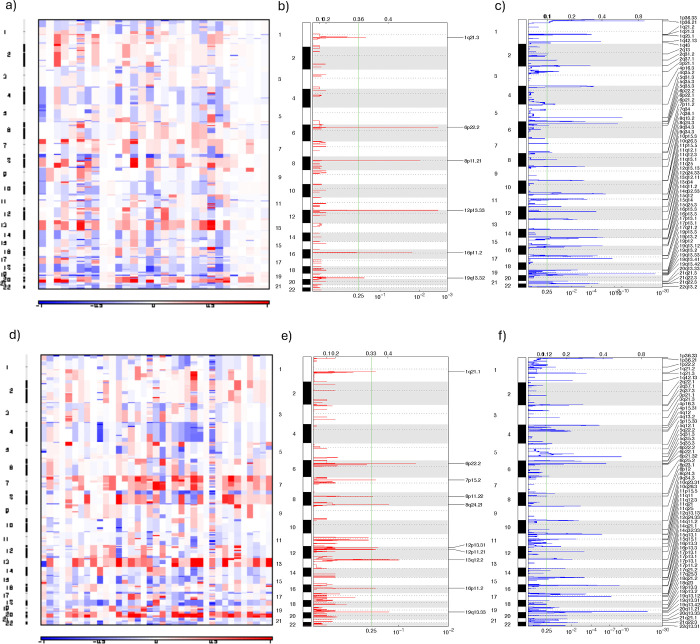
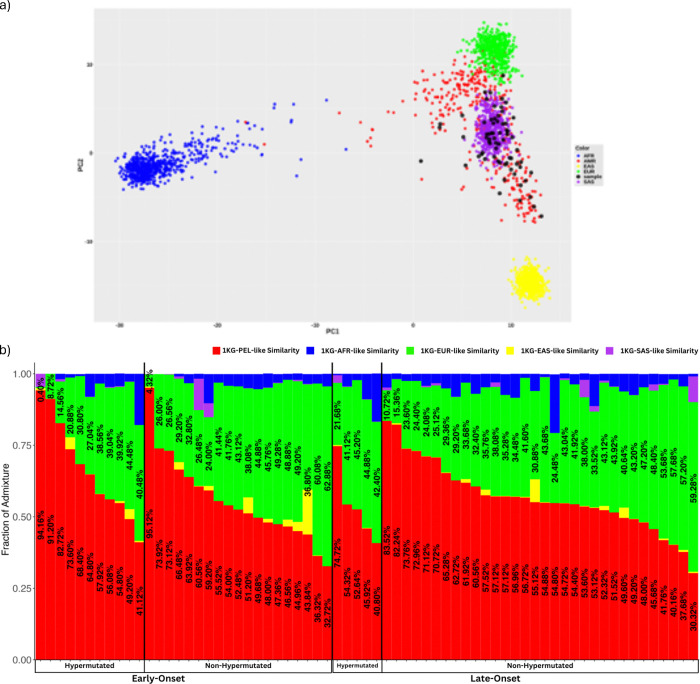
Colorectal cancer (CRC) has increased at an alarming rate amongst younger (< 50 years) individuals. Such early-onset colorectal cancer (EOCRC) has been particularly notable within the Hispanic/Latino population. Yet, this population has not been sufficiently profiled in terms of two critical elements of CRC -- the MYC proto-oncogene and WNT signaling pathway. Here, we performed a comprehensive multi-omics analysis on 30 early-onset and 37 late-onset CRC (≥ 50 years) samples from Hispanic/Latino patients. Our analysis included DNA exome sequencing for somatic mutations, somatic copy number alterations, and global and local genetic similarity. Using RNA sequencing, we also assessed differential gene expression, cellular pathways, and gene fusions. We then compared our findings from early-onset Hispanic/Latino patient samples with publicly available data from Non-Hispanic White cohorts. Across all early-onset patients, which had a median 1000 Genomes Project Peruvian-in-Lima-like (1KG-PEL-like) genetic similarity proportion of 60%, we identified 41 WNT pathway genes with significant mutations. Six important examples were APC, TCF7L2, DKK1, DKK2, FZD10, and LRP5. Notably, patients with mutations in DKK1 and DKK2 had the highest 1KG-PEL-like proportion (79%). When we compared the Hispanic/Latino cohort to the Non-Hispanic White cohorts, four of these key genes -- DKK1, DKK2, FZD10, and LRP5 -- were significant in both risk association analyses and differential gene expression. Interestingly, early-onset tumors (vs. late-onset) exhibited distinct somatic copy number alterations and gene expression profiles; the differences included MYC and drug-targetable WNT pathway genes. We also identified a novel WNT gene fusion, RSPO3, in early-onset tumors; it was associated with enhanced WNT signaling. This integrative analysis underscores the distinct molecular features of EOCRC cancer in the Hispanic/Latino population; reveals potential avenues for tailored precision medicine therapies; and emphasizes the importance of multi-omics approaches in studying colorectal carcinogenesis. We expect this data to help contribute towards reducing cancer health disparities.
Significance: This study offers multi-omics profiling analysis of early-onset colorectal cancer (EOCRC) in an underserved community, explores the implications of MYC gene and WNT pathway alterations, and provides critical insights into cancer health disparities.




 京公网安备 11010802042870号
京ICP备2023020795号-1
京公网安备 11010802042870号
京ICP备2023020795号-1

 分享
分享

 求助内容:
求助内容: 应助结果提醒方式:
 扫码关注我们
