Patrícia C.G. Pereira , Cláudio E.T. Parente , Yago Guida , Raquel Capella , Gabriel O. Carvalho , Pavlína Karásková , Jiří Kohoutek , Karla Pozo , Petra Přibylová , Jana Klánová , João P.M. Torres , Paulo R. Dorneles , Rodrigo O. Meire
{"title":"巴西国家公园原始山区湖泊和泥炭地沉积物岩心中当前使用农药的发生","authors":"Patrícia C.G. Pereira , Cláudio E.T. Parente , Yago Guida , Raquel Capella , Gabriel O. Carvalho , Pavlína Karásková , Jiří Kohoutek , Karla Pozo , Petra Přibylová , Jana Klánová , João P.M. Torres , Paulo R. Dorneles , Rodrigo O. Meire","doi":"10.1016/j.envpol.2025.126005","DOIUrl":null,"url":null,"abstract":"<div><div>This study assessed the occurrence of current-use pesticides in sediment cores from six lakes and peatlands in high-altitude (1952–2374 m) pristine areas within two southeastern Brazilian National Parks: Itatiaia National Park (IT-NP) and Serra dos Órgãos National Park (SO-NP). We sampled three sediment cores from lakes at IT-NP and three from peatlands at SO-NP, totaling 60 subsamples. Among the 38 current-use pesticides assessed, 17 were found in at least one sample, with 14 - including herbicides, insecticides, fungicides, and acaricides - identified in both parks. The most frequently detected pesticides were carbendazim and carbaryl (75–95%), followed by acetochlor, chlorpyrifos, diuron, metolachlor and tebuconazole (40–70%) and, to a lesser extent, terbuthylazine and malathion (10–30%). The organophosphates disulfoton (6.83 ± 20.18 ng g<sup>−1</sup> dry weight) and chlorpyrifos (4.34 ± 6.81 ng g<sup>−1</sup> dw) registered the highest concentrations across all compounds in the sediment layers, with chlorpyrifos showing the greatest relative abundance (65.9–92.8%) in four out of six sites. Risk characterization results revealed highest risk quotient (RQ) values (416–14,589) for chlorpyrifos, indicating potential ecological risks. High RQs were also obtained for acetochlor (5.76–94.6), carbaryl (0.4–4.08), carbendazim (0.09–3.46), diazinon (2048), disulfoton (34–569), diuron (1.45–35.0) and malathion (10.94). These results highlight the threat posed by long-range pesticide transport to pristine areas at National Parks. Urgent regulatory measures are needed to mitigate their impact and safeguard these ecosystems from degradation.</div></div>","PeriodicalId":311,"journal":{"name":"Environmental Pollution","volume":"372 ","pages":"Article 126005"},"PeriodicalIF":7.3000,"publicationDate":"2025-05-01","publicationTypes":"Journal Article","fieldsOfStudy":null,"isOpenAccess":false,"openAccessPdf":"","citationCount":"0","resultStr":"{\"title\":\"Occurrence of current-use pesticides in sediment cores from lakes and peatlands in pristine mountain areas of Brazilian national parks\",\"authors\":\"Patrícia C.G. Pereira , Cláudio E.T. Parente , Yago Guida , Raquel Capella , Gabriel O. Carvalho , Pavlína Karásková , Jiří Kohoutek , Karla Pozo , Petra Přibylová , Jana Klánová , João P.M. Torres , Paulo R. Dorneles , Rodrigo O. Meire\",\"doi\":\"10.1016/j.envpol.2025.126005\",\"DOIUrl\":null,\"url\":null,\"abstract\":\"<div><div>This study assessed the occurrence of current-use pesticides in sediment cores from six lakes and peatlands in high-altitude (1952–2374 m) pristine areas within two southeastern Brazilian National Parks: Itatiaia National Park (IT-NP) and Serra dos Órgãos National Park (SO-NP). We sampled three sediment cores from lakes at IT-NP and three from peatlands at SO-NP, totaling 60 subsamples. Among the 38 current-use pesticides assessed, 17 were found in at least one sample, with 14 - including herbicides, insecticides, fungicides, and acaricides - identified in both parks. The most frequently detected pesticides were carbendazim and carbaryl (75–95%), followed by acetochlor, chlorpyrifos, diuron, metolachlor and tebuconazole (40–70%) and, to a lesser extent, terbuthylazine and malathion (10–30%). The organophosphates disulfoton (6.83 ± 20.18 ng g<sup>−1</sup> dry weight) and chlorpyrifos (4.34 ± 6.81 ng g<sup>−1</sup> dw) registered the highest concentrations across all compounds in the sediment layers, with chlorpyrifos showing the greatest relative abundance (65.9–92.8%) in four out of six sites. Risk characterization results revealed highest risk quotient (RQ) values (416–14,589) for chlorpyrifos, indicating potential ecological risks. High RQs were also obtained for acetochlor (5.76–94.6), carbaryl (0.4–4.08), carbendazim (0.09–3.46), diazinon (2048), disulfoton (34–569), diuron (1.45–35.0) and malathion (10.94). These results highlight the threat posed by long-range pesticide transport to pristine areas at National Parks. Urgent regulatory measures are needed to mitigate their impact and safeguard these ecosystems from degradation.</div></div>\",\"PeriodicalId\":311,\"journal\":{\"name\":\"Environmental Pollution\",\"volume\":\"372 \",\"pages\":\"Article 126005\"},\"PeriodicalIF\":7.3000,\"publicationDate\":\"2025-05-01\",\"publicationTypes\":\"Journal Article\",\"fieldsOfStudy\":null,\"isOpenAccess\":false,\"openAccessPdf\":\"\",\"citationCount\":\"0\",\"resultStr\":null,\"platform\":\"Semanticscholar\",\"paperid\":null,\"PeriodicalName\":\"Environmental Pollution\",\"FirstCategoryId\":\"93\",\"ListUrlMain\":\"https://www.sciencedirect.com/science/article/pii/S0269749125003781\",\"RegionNum\":2,\"RegionCategory\":\"环境科学与生态学\",\"ArticlePicture\":[],\"TitleCN\":null,\"AbstractTextCN\":null,\"PMCID\":null,\"EPubDate\":\"2025/3/5 0:00:00\",\"PubModel\":\"Epub\",\"JCR\":\"Q1\",\"JCRName\":\"ENVIRONMENTAL SCIENCES\",\"Score\":null,\"Total\":0}","platform":"Semanticscholar","paperid":null,"PeriodicalName":"Environmental Pollution","FirstCategoryId":"93","ListUrlMain":"https://www.sciencedirect.com/science/article/pii/S0269749125003781","RegionNum":2,"RegionCategory":"环境科学与生态学","ArticlePicture":[],"TitleCN":null,"AbstractTextCN":null,"PMCID":null,"EPubDate":"2025/3/5 0:00:00","PubModel":"Epub","JCR":"Q1","JCRName":"ENVIRONMENTAL SCIENCES","Score":null,"Total":0}
引用次数: 0
摘要
本研究评估了巴西东南部两个国家公园(Itatiaia国家公园(IT-NP)和Serra dos Órgãos国家公园(SO-NP)高海拔(19552 - 2374米)原始地区六个湖泊和泥炭地沉积物岩心中当前使用农药的情况。我们从IT-NP的湖泊和SO-NP的泥炭地取样了三个沉积物岩心,共计60个亚样本。在评估的38种当前使用的农药中,有17种至少在一个样本中被发现,其中14种——包括除草剂、杀虫剂、杀菌剂和杀螨剂——在两个公园中都被发现。检出最多的农药是多菌灵和西威因(75-95%),其次是乙草胺、毒死蜱、二脲、甲草胺和戊唑唑(40-70%),其次是特丁拉西嗪和马拉硫磷(10-30%)。有机磷二硫顿(6.83±20.18 ng g-1干重)和毒死蜱(4.34±6.81 ng g-1 dw)在沉积物层中含量最高,毒死蜱在6个地点中的4个显示出最大的相对丰度(65.9 - 92.8%)。风险表征结果显示,毒死蜱的风险商数(RQ)最高,为416 ~ 14589,表明毒死蜱具有潜在的生态风险。对乙草胺(5.76 ~ 94.6)、西威因(0.4 ~ 4.08)、多菌灵(0.09 ~ 3.46)、二嗪农(2048)、二硫磷(34 ~ 569)、迪乌隆(1.45 ~ 35.0)和马拉硫磷(10.94)也有较高的rq。这些结果突出了农药远距离运输对国家公园原始地区造成的威胁。需要采取紧急监管措施,以减轻其影响并保护这些生态系统免遭退化。
Occurrence of current-use pesticides in sediment cores from lakes and peatlands in pristine mountain areas of Brazilian national parks
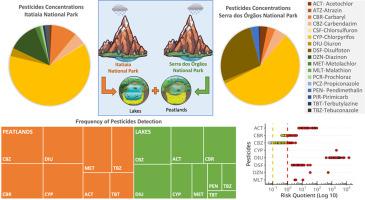
This study assessed the occurrence of current-use pesticides in sediment cores from six lakes and peatlands in high-altitude (1952–2374 m) pristine areas within two southeastern Brazilian National Parks: Itatiaia National Park (IT-NP) and Serra dos Órgãos National Park (SO-NP). We sampled three sediment cores from lakes at IT-NP and three from peatlands at SO-NP, totaling 60 subsamples. Among the 38 current-use pesticides assessed, 17 were found in at least one sample, with 14 - including herbicides, insecticides, fungicides, and acaricides - identified in both parks. The most frequently detected pesticides were carbendazim and carbaryl (75–95%), followed by acetochlor, chlorpyrifos, diuron, metolachlor and tebuconazole (40–70%) and, to a lesser extent, terbuthylazine and malathion (10–30%). The organophosphates disulfoton (6.83 ± 20.18 ng g−1 dry weight) and chlorpyrifos (4.34 ± 6.81 ng g−1 dw) registered the highest concentrations across all compounds in the sediment layers, with chlorpyrifos showing the greatest relative abundance (65.9–92.8%) in four out of six sites. Risk characterization results revealed highest risk quotient (RQ) values (416–14,589) for chlorpyrifos, indicating potential ecological risks. High RQs were also obtained for acetochlor (5.76–94.6), carbaryl (0.4–4.08), carbendazim (0.09–3.46), diazinon (2048), disulfoton (34–569), diuron (1.45–35.0) and malathion (10.94). These results highlight the threat posed by long-range pesticide transport to pristine areas at National Parks. Urgent regulatory measures are needed to mitigate their impact and safeguard these ecosystems from degradation.
期刊介绍:
Environmental Pollution is an international peer-reviewed journal that publishes high-quality research papers and review articles covering all aspects of environmental pollution and its impacts on ecosystems and human health.
Subject areas include, but are not limited to:
• Sources and occurrences of pollutants that are clearly defined and measured in environmental compartments, food and food-related items, and human bodies;
• Interlinks between contaminant exposure and biological, ecological, and human health effects, including those of climate change;
• Contaminants of emerging concerns (including but not limited to antibiotic resistant microorganisms or genes, microplastics/nanoplastics, electronic wastes, light, and noise) and/or their biological, ecological, or human health effects;
• Laboratory and field studies on the remediation/mitigation of environmental pollution via new techniques and with clear links to biological, ecological, or human health effects;
• Modeling of pollution processes, patterns, or trends that is of clear environmental and/or human health interest;
• New techniques that measure and examine environmental occurrences, transport, behavior, and effects of pollutants within the environment or the laboratory, provided that they can be clearly used to address problems within regional or global environmental compartments.





 京公网安备 11010802042870号
京ICP备2023020795号-1
京公网安备 11010802042870号
京ICP备2023020795号-1

 分享
分享
 求助内容:
求助内容: 应助结果提醒方式:
 扫码关注我们
