Zhou Ye , Manman Zhu , Shaojie Li , Fan Zhang , Yingqi Ran , Cong Liu , Xiangchang Xu , Shujiao Liu , Xiang Xie , Yingchen Wang , Lan Yao
{"title":"用于心肌炎免疫调节和氧化应激缓解的多功能纳米颗粒","authors":"Zhou Ye , Manman Zhu , Shaojie Li , Fan Zhang , Yingqi Ran , Cong Liu , Xiangchang Xu , Shujiao Liu , Xiang Xie , Yingchen Wang , Lan Yao","doi":"10.1016/j.jconrel.2025.113607","DOIUrl":null,"url":null,"abstract":"<div><div>Cardiac autoimmune injury and oxidative stress play critical roles in the development of myocarditis. Promising approaches for treating this condition include suppressing excessive immune responses and reducing oxidative stress in the myocardium. The programmed cell death protein 1/programmed cell death ligand 1 (PD-1/PD-L1) axis is known to regulate immune responses and prevent damage caused by T-cell overactivation, while elevated reactive oxygen species (ROS) contribute to the progression of myocarditis. In this study, we developed multifunctional nanoparticles (PMN@EDR) that overexpress PD-L1 and are loaded with edaravone (EDR). The PMN@EDR NPs were successfully synthesized and comprehensively characterized. PMN@EDR effectively targeted inflammation-stimulated CD4<sup>+</sup> T cells and damaged myocardial cells, inhibiting CD4<sup>+</sup> T-cell proliferation, activation, and the release of pro-inflammatory cytokines via the PD-1/PD-L1 pathway. Additionally, PMN@EDR further suppressed CD4<sup>+</sup> T-cell activation and alleviated HL-1 cardiomyocyte damage by releasing EDR to eliminate free radicals. For the in vivo treatment of myocarditis, compared to traditional single-target anti-inflammatory and antioxidant drugs, PMN@EDR not only reduced inflammation and the release of inflammatory mediators but also decreased ROS levels, thereby minimizing cardiomyocyte apoptosis and improving cardiac function. In conclusion, the PMN@EDR-based modulation of immune responses and oxidative stress offers a promising therapeutic strategy for myocarditis.</div></div>","PeriodicalId":15450,"journal":{"name":"Journal of Controlled Release","volume":"381 ","pages":"Article 113607"},"PeriodicalIF":12.4000,"publicationDate":"2025-05-10","publicationTypes":"Journal Article","fieldsOfStudy":null,"isOpenAccess":false,"openAccessPdf":"","citationCount":"0","resultStr":"{\"title\":\"Multifunctional nanoparticles for immune regulation and oxidative stress alleviation in myocarditis\",\"authors\":\"Zhou Ye , Manman Zhu , Shaojie Li , Fan Zhang , Yingqi Ran , Cong Liu , Xiangchang Xu , Shujiao Liu , Xiang Xie , Yingchen Wang , Lan Yao\",\"doi\":\"10.1016/j.jconrel.2025.113607\",\"DOIUrl\":null,\"url\":null,\"abstract\":\"<div><div>Cardiac autoimmune injury and oxidative stress play critical roles in the development of myocarditis. Promising approaches for treating this condition include suppressing excessive immune responses and reducing oxidative stress in the myocardium. The programmed cell death protein 1/programmed cell death ligand 1 (PD-1/PD-L1) axis is known to regulate immune responses and prevent damage caused by T-cell overactivation, while elevated reactive oxygen species (ROS) contribute to the progression of myocarditis. In this study, we developed multifunctional nanoparticles (PMN@EDR) that overexpress PD-L1 and are loaded with edaravone (EDR). The PMN@EDR NPs were successfully synthesized and comprehensively characterized. PMN@EDR effectively targeted inflammation-stimulated CD4<sup>+</sup> T cells and damaged myocardial cells, inhibiting CD4<sup>+</sup> T-cell proliferation, activation, and the release of pro-inflammatory cytokines via the PD-1/PD-L1 pathway. Additionally, PMN@EDR further suppressed CD4<sup>+</sup> T-cell activation and alleviated HL-1 cardiomyocyte damage by releasing EDR to eliminate free radicals. For the in vivo treatment of myocarditis, compared to traditional single-target anti-inflammatory and antioxidant drugs, PMN@EDR not only reduced inflammation and the release of inflammatory mediators but also decreased ROS levels, thereby minimizing cardiomyocyte apoptosis and improving cardiac function. In conclusion, the PMN@EDR-based modulation of immune responses and oxidative stress offers a promising therapeutic strategy for myocarditis.</div></div>\",\"PeriodicalId\":15450,\"journal\":{\"name\":\"Journal of Controlled Release\",\"volume\":\"381 \",\"pages\":\"Article 113607\"},\"PeriodicalIF\":12.4000,\"publicationDate\":\"2025-05-10\",\"publicationTypes\":\"Journal Article\",\"fieldsOfStudy\":null,\"isOpenAccess\":false,\"openAccessPdf\":\"\",\"citationCount\":\"0\",\"resultStr\":null,\"platform\":\"Semanticscholar\",\"paperid\":null,\"PeriodicalName\":\"Journal of Controlled Release\",\"FirstCategoryId\":\"3\",\"ListUrlMain\":\"https://www.sciencedirect.com/science/article/pii/S0168365925002160\",\"RegionNum\":1,\"RegionCategory\":\"医学\",\"ArticlePicture\":[],\"TitleCN\":null,\"AbstractTextCN\":null,\"PMCID\":null,\"EPubDate\":\"2025/3/5 0:00:00\",\"PubModel\":\"Epub\",\"JCR\":\"Q1\",\"JCRName\":\"CHEMISTRY, MULTIDISCIPLINARY\",\"Score\":null,\"Total\":0}","platform":"Semanticscholar","paperid":null,"PeriodicalName":"Journal of Controlled Release","FirstCategoryId":"3","ListUrlMain":"https://www.sciencedirect.com/science/article/pii/S0168365925002160","RegionNum":1,"RegionCategory":"医学","ArticlePicture":[],"TitleCN":null,"AbstractTextCN":null,"PMCID":null,"EPubDate":"2025/3/5 0:00:00","PubModel":"Epub","JCR":"Q1","JCRName":"CHEMISTRY, MULTIDISCIPLINARY","Score":null,"Total":0}
Multifunctional nanoparticles for immune regulation and oxidative stress alleviation in myocarditis
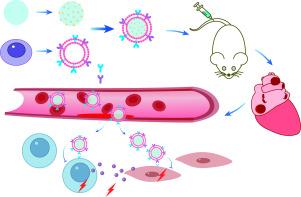
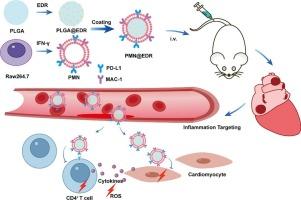
Cardiac autoimmune injury and oxidative stress play critical roles in the development of myocarditis. Promising approaches for treating this condition include suppressing excessive immune responses and reducing oxidative stress in the myocardium. The programmed cell death protein 1/programmed cell death ligand 1 (PD-1/PD-L1) axis is known to regulate immune responses and prevent damage caused by T-cell overactivation, while elevated reactive oxygen species (ROS) contribute to the progression of myocarditis. In this study, we developed multifunctional nanoparticles (PMN@EDR) that overexpress PD-L1 and are loaded with edaravone (EDR). The PMN@EDR NPs were successfully synthesized and comprehensively characterized. PMN@EDR effectively targeted inflammation-stimulated CD4+ T cells and damaged myocardial cells, inhibiting CD4+ T-cell proliferation, activation, and the release of pro-inflammatory cytokines via the PD-1/PD-L1 pathway. Additionally, PMN@EDR further suppressed CD4+ T-cell activation and alleviated HL-1 cardiomyocyte damage by releasing EDR to eliminate free radicals. For the in vivo treatment of myocarditis, compared to traditional single-target anti-inflammatory and antioxidant drugs, PMN@EDR not only reduced inflammation and the release of inflammatory mediators but also decreased ROS levels, thereby minimizing cardiomyocyte apoptosis and improving cardiac function. In conclusion, the PMN@EDR-based modulation of immune responses and oxidative stress offers a promising therapeutic strategy for myocarditis.
期刊介绍:
The Journal of Controlled Release (JCR) proudly serves as the Official Journal of the Controlled Release Society and the Japan Society of Drug Delivery System.
Dedicated to the broad field of delivery science and technology, JCR publishes high-quality research articles covering drug delivery systems and all facets of formulations. This includes the physicochemical and biological properties of drugs, design and characterization of dosage forms, release mechanisms, in vivo testing, and formulation research and development across pharmaceutical, diagnostic, agricultural, environmental, cosmetic, and food industries.
Priority is given to manuscripts that contribute to the fundamental understanding of principles or demonstrate the advantages of novel technologies in terms of safety and efficacy over current clinical standards. JCR strives to be a leading platform for advancements in delivery science and technology.




 京公网安备 11010802042870号
京ICP备2023020795号-1
京公网安备 11010802042870号
京ICP备2023020795号-1

 分享
分享
 求助内容:
求助内容: 应助结果提醒方式:
 扫码关注我们
