{"title":"用于免疫治疗的无细胞dna清除纳米/微系统","authors":"Wenhan Zhao , Yang Zhou , Lichen Yin","doi":"10.1016/j.jconrel.2025.113609","DOIUrl":null,"url":null,"abstract":"<div><div>In the context of inflammation, autoimmune diseases, infections, and cancers, cfDNA plays a pivotal role in disease progression through various mechanisms. Immunotherapies based on cfDNA scavenging has emerged as a promising approach for treating these conditions. This review offers a comprehensive exploration of cfDNA-binding and degradation strategies, providing detailed insights into the corresponding nano/microsystems for each approach. Nano/microsystems used for cfDNA binding include cationic polymers, nanoparticles, nanogels, and other materials that physically capture cfDNA <em>via</em> electrostatic interactions or other affinity mechanisms, thereby mitigating the immunological effects of cfDNA. Nano/microsystems designed for cfDNA degradation primarily involve DNase delivery systems and artificial enzymes with DNase-like activity, which degrade cfDNA through chemical cleavage. Furthermore, this review discusses the potential synergy between cfDNA-scavenging therapies and other treatment modalities, aiming to achieve more effective and comprehensive immunotherapy. By thoroughly analyzing these strategies, we aim to emphasize the transformative potential of cfDNA-scavenging nano/microsystems in advancing immunotherapy, and offer valuable perspectives for future research in this emerging field.</div></div>","PeriodicalId":15450,"journal":{"name":"Journal of Controlled Release","volume":"381 ","pages":"Article 113609"},"PeriodicalIF":12.4000,"publicationDate":"2025-05-10","publicationTypes":"Journal Article","fieldsOfStudy":null,"isOpenAccess":false,"openAccessPdf":"","citationCount":"0","resultStr":"{\"title\":\"Cell-free DNA-scavenging nano/microsystems for immunotherapy\",\"authors\":\"Wenhan Zhao , Yang Zhou , Lichen Yin\",\"doi\":\"10.1016/j.jconrel.2025.113609\",\"DOIUrl\":null,\"url\":null,\"abstract\":\"<div><div>In the context of inflammation, autoimmune diseases, infections, and cancers, cfDNA plays a pivotal role in disease progression through various mechanisms. Immunotherapies based on cfDNA scavenging has emerged as a promising approach for treating these conditions. This review offers a comprehensive exploration of cfDNA-binding and degradation strategies, providing detailed insights into the corresponding nano/microsystems for each approach. Nano/microsystems used for cfDNA binding include cationic polymers, nanoparticles, nanogels, and other materials that physically capture cfDNA <em>via</em> electrostatic interactions or other affinity mechanisms, thereby mitigating the immunological effects of cfDNA. Nano/microsystems designed for cfDNA degradation primarily involve DNase delivery systems and artificial enzymes with DNase-like activity, which degrade cfDNA through chemical cleavage. Furthermore, this review discusses the potential synergy between cfDNA-scavenging therapies and other treatment modalities, aiming to achieve more effective and comprehensive immunotherapy. By thoroughly analyzing these strategies, we aim to emphasize the transformative potential of cfDNA-scavenging nano/microsystems in advancing immunotherapy, and offer valuable perspectives for future research in this emerging field.</div></div>\",\"PeriodicalId\":15450,\"journal\":{\"name\":\"Journal of Controlled Release\",\"volume\":\"381 \",\"pages\":\"Article 113609\"},\"PeriodicalIF\":12.4000,\"publicationDate\":\"2025-05-10\",\"publicationTypes\":\"Journal Article\",\"fieldsOfStudy\":null,\"isOpenAccess\":false,\"openAccessPdf\":\"\",\"citationCount\":\"0\",\"resultStr\":null,\"platform\":\"Semanticscholar\",\"paperid\":null,\"PeriodicalName\":\"Journal of Controlled Release\",\"FirstCategoryId\":\"3\",\"ListUrlMain\":\"https://www.sciencedirect.com/science/article/pii/S0168365925002184\",\"RegionNum\":1,\"RegionCategory\":\"医学\",\"ArticlePicture\":[],\"TitleCN\":null,\"AbstractTextCN\":null,\"PMCID\":null,\"EPubDate\":\"2025/3/5 0:00:00\",\"PubModel\":\"Epub\",\"JCR\":\"Q1\",\"JCRName\":\"CHEMISTRY, MULTIDISCIPLINARY\",\"Score\":null,\"Total\":0}","platform":"Semanticscholar","paperid":null,"PeriodicalName":"Journal of Controlled Release","FirstCategoryId":"3","ListUrlMain":"https://www.sciencedirect.com/science/article/pii/S0168365925002184","RegionNum":1,"RegionCategory":"医学","ArticlePicture":[],"TitleCN":null,"AbstractTextCN":null,"PMCID":null,"EPubDate":"2025/3/5 0:00:00","PubModel":"Epub","JCR":"Q1","JCRName":"CHEMISTRY, MULTIDISCIPLINARY","Score":null,"Total":0}
Cell-free DNA-scavenging nano/microsystems for immunotherapy
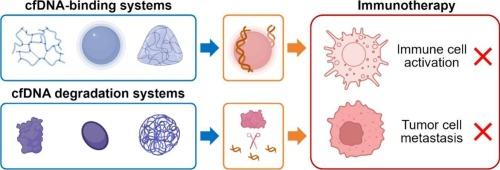
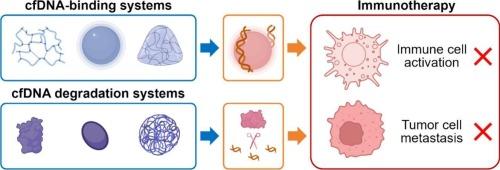
In the context of inflammation, autoimmune diseases, infections, and cancers, cfDNA plays a pivotal role in disease progression through various mechanisms. Immunotherapies based on cfDNA scavenging has emerged as a promising approach for treating these conditions. This review offers a comprehensive exploration of cfDNA-binding and degradation strategies, providing detailed insights into the corresponding nano/microsystems for each approach. Nano/microsystems used for cfDNA binding include cationic polymers, nanoparticles, nanogels, and other materials that physically capture cfDNA via electrostatic interactions or other affinity mechanisms, thereby mitigating the immunological effects of cfDNA. Nano/microsystems designed for cfDNA degradation primarily involve DNase delivery systems and artificial enzymes with DNase-like activity, which degrade cfDNA through chemical cleavage. Furthermore, this review discusses the potential synergy between cfDNA-scavenging therapies and other treatment modalities, aiming to achieve more effective and comprehensive immunotherapy. By thoroughly analyzing these strategies, we aim to emphasize the transformative potential of cfDNA-scavenging nano/microsystems in advancing immunotherapy, and offer valuable perspectives for future research in this emerging field.
期刊介绍:
The Journal of Controlled Release (JCR) proudly serves as the Official Journal of the Controlled Release Society and the Japan Society of Drug Delivery System.
Dedicated to the broad field of delivery science and technology, JCR publishes high-quality research articles covering drug delivery systems and all facets of formulations. This includes the physicochemical and biological properties of drugs, design and characterization of dosage forms, release mechanisms, in vivo testing, and formulation research and development across pharmaceutical, diagnostic, agricultural, environmental, cosmetic, and food industries.
Priority is given to manuscripts that contribute to the fundamental understanding of principles or demonstrate the advantages of novel technologies in terms of safety and efficacy over current clinical standards. JCR strives to be a leading platform for advancements in delivery science and technology.




 京公网安备 11010802042870号
京ICP备2023020795号-1
京公网安备 11010802042870号
京ICP备2023020795号-1

 分享
分享
 求助内容:
求助内容: 应助结果提醒方式:
 扫码关注我们
