Şeref Turhan, Ergin Murat Altuner, Aytaç Ayata, Ferhat Gezer, Aybaba Hançerlioğulları, Aslı Kurnaz, Muhammet Karataşlı
{"title":"氧化物、重金属和天然放射性核素在日本磷酸盐工业磷石膏库存中的分散。","authors":"Şeref Turhan, Ergin Murat Altuner, Aytaç Ayata, Ferhat Gezer, Aybaba Hançerlioğulları, Aslı Kurnaz, Muhammet Karataşlı","doi":"10.1007/s11356-025-36180-2","DOIUrl":null,"url":null,"abstract":"<div><p>Heavy metal (HM) and naturally occurring radioactive materials (NORM) pollution is continuously increasing due to anthropogenic activities, and it is one of the global problems that pose a threat to human and environmental health. Phosphogypsum (PG), a by-product of phosphate fertilizer (PF) production, is an industrial solid waste produced in large quantities worldwide, and much of it is stockpiled. PG contains enhanced levels of toxic substances such as HMs and NORMs. The first detailed study on the determination of major-minor oxides, HMs, and NORMs contents of PGs collected from waste stockpiles at phosphate fertilizer factories (PFFs) in Türkiye was carried out using energy-dispersive X-ray fluorescence spectrometry to obtain data for the reuse of these wastes and a better characterization of the waste deposit. The major-minor oxides analyzed in the PG samples were ranked as SO<sub>3</sub> (53.22%) > CaO (36.84%) > SiO<sub>2</sub> (2.08%) > P<sub>2</sub>O<sub>5</sub> (1.21%) > Al<sub>2</sub>O<sub>3</sub> (0.13%) > Fe<sub>2</sub>O<sub>3</sub> (0.11%) according to their average contents. The average contents (mg/kg) of HMs and NORMs analyzed in the PG samples were listed as follows: Fe (744.2) > Ti (102.1) > Zn (59.2) > Mn (28.9) > Ni (18.4) > Cr (15.2) > Co (14.6) > Cu (13.5) > Zr (10.8) > Pb (8.8) > Cd (8.5) > V (7.4) > U (4.9) > Th (4.2). The results revealed that HMs, except Cd and U, were lower than the Earth’s crust averages and maximum soil contaminant levels recommended in the Turkish Regulation on Control of Soil Pollution.</p></div>","PeriodicalId":545,"journal":{"name":"Environmental Science and Pollution Research","volume":"32 12","pages":"7692 - 7704"},"PeriodicalIF":5.8000,"publicationDate":"2025-03-05","publicationTypes":"Journal Article","fieldsOfStudy":null,"isOpenAccess":false,"openAccessPdf":"https://www.ncbi.nlm.nih.gov/pmc/articles/PMC11950078/pdf/","citationCount":"0","resultStr":"{\"title\":\"Dispersion of oxides, heavy metals, and natural radionuclides in phosphogypsum stockpiles of the phosphate industries in Türkiye\",\"authors\":\"Şeref Turhan, Ergin Murat Altuner, Aytaç Ayata, Ferhat Gezer, Aybaba Hançerlioğulları, Aslı Kurnaz, Muhammet Karataşlı\",\"doi\":\"10.1007/s11356-025-36180-2\",\"DOIUrl\":null,\"url\":null,\"abstract\":\"<div><p>Heavy metal (HM) and naturally occurring radioactive materials (NORM) pollution is continuously increasing due to anthropogenic activities, and it is one of the global problems that pose a threat to human and environmental health. Phosphogypsum (PG), a by-product of phosphate fertilizer (PF) production, is an industrial solid waste produced in large quantities worldwide, and much of it is stockpiled. PG contains enhanced levels of toxic substances such as HMs and NORMs. The first detailed study on the determination of major-minor oxides, HMs, and NORMs contents of PGs collected from waste stockpiles at phosphate fertilizer factories (PFFs) in Türkiye was carried out using energy-dispersive X-ray fluorescence spectrometry to obtain data for the reuse of these wastes and a better characterization of the waste deposit. The major-minor oxides analyzed in the PG samples were ranked as SO<sub>3</sub> (53.22%) > CaO (36.84%) > SiO<sub>2</sub> (2.08%) > P<sub>2</sub>O<sub>5</sub> (1.21%) > Al<sub>2</sub>O<sub>3</sub> (0.13%) > Fe<sub>2</sub>O<sub>3</sub> (0.11%) according to their average contents. The average contents (mg/kg) of HMs and NORMs analyzed in the PG samples were listed as follows: Fe (744.2) > Ti (102.1) > Zn (59.2) > Mn (28.9) > Ni (18.4) > Cr (15.2) > Co (14.6) > Cu (13.5) > Zr (10.8) > Pb (8.8) > Cd (8.5) > V (7.4) > U (4.9) > Th (4.2). The results revealed that HMs, except Cd and U, were lower than the Earth’s crust averages and maximum soil contaminant levels recommended in the Turkish Regulation on Control of Soil Pollution.</p></div>\",\"PeriodicalId\":545,\"journal\":{\"name\":\"Environmental Science and Pollution Research\",\"volume\":\"32 12\",\"pages\":\"7692 - 7704\"},\"PeriodicalIF\":5.8000,\"publicationDate\":\"2025-03-05\",\"publicationTypes\":\"Journal Article\",\"fieldsOfStudy\":null,\"isOpenAccess\":false,\"openAccessPdf\":\"https://www.ncbi.nlm.nih.gov/pmc/articles/PMC11950078/pdf/\",\"citationCount\":\"0\",\"resultStr\":null,\"platform\":\"Semanticscholar\",\"paperid\":null,\"PeriodicalName\":\"Environmental Science and Pollution Research\",\"FirstCategoryId\":\"93\",\"ListUrlMain\":\"https://link.springer.com/article/10.1007/s11356-025-36180-2\",\"RegionNum\":3,\"RegionCategory\":\"环境科学与生态学\",\"ArticlePicture\":[],\"TitleCN\":null,\"AbstractTextCN\":null,\"PMCID\":null,\"EPubDate\":\"\",\"PubModel\":\"\",\"JCR\":\"0\",\"JCRName\":\"ENVIRONMENTAL SCIENCES\",\"Score\":null,\"Total\":0}","platform":"Semanticscholar","paperid":null,"PeriodicalName":"Environmental Science and Pollution Research","FirstCategoryId":"93","ListUrlMain":"https://link.springer.com/article/10.1007/s11356-025-36180-2","RegionNum":3,"RegionCategory":"环境科学与生态学","ArticlePicture":[],"TitleCN":null,"AbstractTextCN":null,"PMCID":null,"EPubDate":"","PubModel":"","JCR":"0","JCRName":"ENVIRONMENTAL SCIENCES","Score":null,"Total":0}
Dispersion of oxides, heavy metals, and natural radionuclides in phosphogypsum stockpiles of the phosphate industries in Türkiye
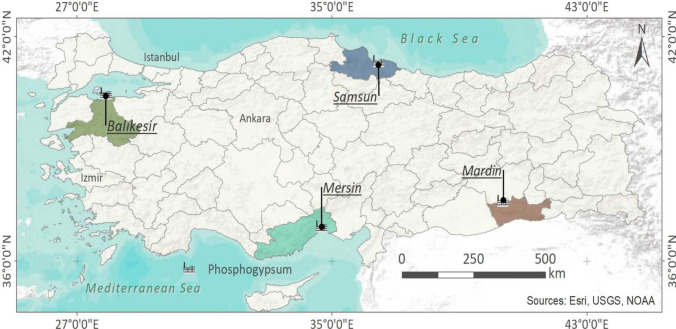
Heavy metal (HM) and naturally occurring radioactive materials (NORM) pollution is continuously increasing due to anthropogenic activities, and it is one of the global problems that pose a threat to human and environmental health. Phosphogypsum (PG), a by-product of phosphate fertilizer (PF) production, is an industrial solid waste produced in large quantities worldwide, and much of it is stockpiled. PG contains enhanced levels of toxic substances such as HMs and NORMs. The first detailed study on the determination of major-minor oxides, HMs, and NORMs contents of PGs collected from waste stockpiles at phosphate fertilizer factories (PFFs) in Türkiye was carried out using energy-dispersive X-ray fluorescence spectrometry to obtain data for the reuse of these wastes and a better characterization of the waste deposit. The major-minor oxides analyzed in the PG samples were ranked as SO3 (53.22%) > CaO (36.84%) > SiO2 (2.08%) > P2O5 (1.21%) > Al2O3 (0.13%) > Fe2O3 (0.11%) according to their average contents. The average contents (mg/kg) of HMs and NORMs analyzed in the PG samples were listed as follows: Fe (744.2) > Ti (102.1) > Zn (59.2) > Mn (28.9) > Ni (18.4) > Cr (15.2) > Co (14.6) > Cu (13.5) > Zr (10.8) > Pb (8.8) > Cd (8.5) > V (7.4) > U (4.9) > Th (4.2). The results revealed that HMs, except Cd and U, were lower than the Earth’s crust averages and maximum soil contaminant levels recommended in the Turkish Regulation on Control of Soil Pollution.
期刊介绍:
Environmental Science and Pollution Research (ESPR) serves the international community in all areas of Environmental Science and related subjects with emphasis on chemical compounds. This includes:
- Terrestrial Biology and Ecology
- Aquatic Biology and Ecology
- Atmospheric Chemistry
- Environmental Microbiology/Biobased Energy Sources
- Phytoremediation and Ecosystem Restoration
- Environmental Analyses and Monitoring
- Assessment of Risks and Interactions of Pollutants in the Environment
- Conservation Biology and Sustainable Agriculture
- Impact of Chemicals/Pollutants on Human and Animal Health
It reports from a broad interdisciplinary outlook.






 京公网安备 11010802042870号
京ICP备2023020795号-1
京公网安备 11010802042870号
京ICP备2023020795号-1

 分享
分享
 求助内容:
求助内容: 应助结果提醒方式:
 扫码关注我们
