{"title":"USP家族在自噬调节和癌症进展中的作用。","authors":"Congcong Liu, Yalin Yuan, Yuxin Zhan, Mi Zou, Linqian Wu, Chunfang Zhang, Bofan Chen, Haimin Zeng, Ruhui Yang, Tianheng Hu, Jie Peng, Liang Hao","doi":"10.1007/s10495-025-02095-z","DOIUrl":null,"url":null,"abstract":"<div><p>Autophagy is a vital pathway for recycling and degrading intracellular materials, closely linked to tumorigenesis and progression. The ubiquitin-specific protease (USP) family, as a critical group of deubiquitinating enzymes, plays a complex part in regulating autophagy, metabolism, immune responses, and tumor cells’ resistance to drugs. By modifying autophagy-associated proteins through deubiquitination, the USP family influences tumor cell proliferation, survival, and metabolism. Additionally, these enzymes are involved in modulating immune responses within the tumor microenvironment, thereby impacting tumor immune escape. Regarding drug resistance, the USP family enhances the tolerance of tumor cells to chemotherapeutic agents by promoting autophagy. Therefore, targeting USP family members and their regulated autophagy processes may offer new avenues for cancer therapy. This review examines the function of the USP family in tumor autophagy regulation and its implications for tumor progression. The goal of future studies should be to clarify the molecular mechanisms underlying USP-autophagy interactions and their specific roles in various tumor types to establish a theoretical framework for developing novel cancer therapeutic strategies.</p></div>","PeriodicalId":8062,"journal":{"name":"Apoptosis","volume":"30 5-6","pages":"1133 - 1151"},"PeriodicalIF":8.1000,"publicationDate":"2025-03-05","publicationTypes":"Journal Article","fieldsOfStudy":null,"isOpenAccess":false,"openAccessPdf":"","citationCount":"0","resultStr":"{\"title\":\"Role of the USP family in autophagy regulation and cancer progression\",\"authors\":\"Congcong Liu, Yalin Yuan, Yuxin Zhan, Mi Zou, Linqian Wu, Chunfang Zhang, Bofan Chen, Haimin Zeng, Ruhui Yang, Tianheng Hu, Jie Peng, Liang Hao\",\"doi\":\"10.1007/s10495-025-02095-z\",\"DOIUrl\":null,\"url\":null,\"abstract\":\"<div><p>Autophagy is a vital pathway for recycling and degrading intracellular materials, closely linked to tumorigenesis and progression. The ubiquitin-specific protease (USP) family, as a critical group of deubiquitinating enzymes, plays a complex part in regulating autophagy, metabolism, immune responses, and tumor cells’ resistance to drugs. By modifying autophagy-associated proteins through deubiquitination, the USP family influences tumor cell proliferation, survival, and metabolism. Additionally, these enzymes are involved in modulating immune responses within the tumor microenvironment, thereby impacting tumor immune escape. Regarding drug resistance, the USP family enhances the tolerance of tumor cells to chemotherapeutic agents by promoting autophagy. Therefore, targeting USP family members and their regulated autophagy processes may offer new avenues for cancer therapy. This review examines the function of the USP family in tumor autophagy regulation and its implications for tumor progression. The goal of future studies should be to clarify the molecular mechanisms underlying USP-autophagy interactions and their specific roles in various tumor types to establish a theoretical framework for developing novel cancer therapeutic strategies.</p></div>\",\"PeriodicalId\":8062,\"journal\":{\"name\":\"Apoptosis\",\"volume\":\"30 5-6\",\"pages\":\"1133 - 1151\"},\"PeriodicalIF\":8.1000,\"publicationDate\":\"2025-03-05\",\"publicationTypes\":\"Journal Article\",\"fieldsOfStudy\":null,\"isOpenAccess\":false,\"openAccessPdf\":\"\",\"citationCount\":\"0\",\"resultStr\":null,\"platform\":\"Semanticscholar\",\"paperid\":null,\"PeriodicalName\":\"Apoptosis\",\"FirstCategoryId\":\"99\",\"ListUrlMain\":\"https://link.springer.com/article/10.1007/s10495-025-02095-z\",\"RegionNum\":2,\"RegionCategory\":\"生物学\",\"ArticlePicture\":[],\"TitleCN\":null,\"AbstractTextCN\":null,\"PMCID\":null,\"EPubDate\":\"\",\"PubModel\":\"\",\"JCR\":\"Q1\",\"JCRName\":\"BIOCHEMISTRY & MOLECULAR BIOLOGY\",\"Score\":null,\"Total\":0}","platform":"Semanticscholar","paperid":null,"PeriodicalName":"Apoptosis","FirstCategoryId":"99","ListUrlMain":"https://link.springer.com/article/10.1007/s10495-025-02095-z","RegionNum":2,"RegionCategory":"生物学","ArticlePicture":[],"TitleCN":null,"AbstractTextCN":null,"PMCID":null,"EPubDate":"","PubModel":"","JCR":"Q1","JCRName":"BIOCHEMISTRY & MOLECULAR BIOLOGY","Score":null,"Total":0}
Role of the USP family in autophagy regulation and cancer progression
Autophagy is a vital pathway for recycling and degrading intracellular materials, closely linked to tumorigenesis and progression. The ubiquitin-specific protease (USP) family, as a critical group of deubiquitinating enzymes, plays a complex part in regulating autophagy, metabolism, immune responses, and tumor cells’ resistance to drugs. By modifying autophagy-associated proteins through deubiquitination, the USP family influences tumor cell proliferation, survival, and metabolism. Additionally, these enzymes are involved in modulating immune responses within the tumor microenvironment, thereby impacting tumor immune escape. Regarding drug resistance, the USP family enhances the tolerance of tumor cells to chemotherapeutic agents by promoting autophagy. Therefore, targeting USP family members and their regulated autophagy processes may offer new avenues for cancer therapy. This review examines the function of the USP family in tumor autophagy regulation and its implications for tumor progression. The goal of future studies should be to clarify the molecular mechanisms underlying USP-autophagy interactions and their specific roles in various tumor types to establish a theoretical framework for developing novel cancer therapeutic strategies.
期刊介绍:
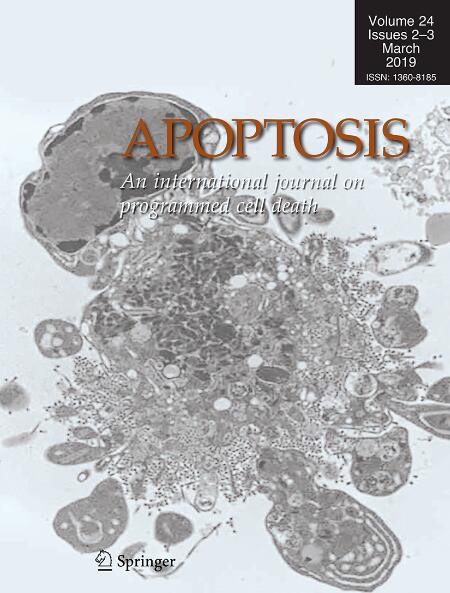
Apoptosis, a monthly international peer-reviewed journal, focuses on the rapid publication of innovative investigations into programmed cell death. The journal aims to stimulate research on the mechanisms and role of apoptosis in various human diseases, such as cancer, autoimmune disease, viral infection, AIDS, cardiovascular disease, neurodegenerative disorders, osteoporosis, and aging. The Editor-In-Chief acknowledges the importance of advancing clinical therapies for apoptosis-related diseases. Apoptosis considers Original Articles, Reviews, Short Communications, Letters to the Editor, and Book Reviews for publication.




 京公网安备 11010802042870号
京ICP备2023020795号-1
京公网安备 11010802042870号
京ICP备2023020795号-1

 分享
分享
 求助内容:
求助内容: 应助结果提醒方式:
 扫码关注我们
