{"title":"伊朗寻求治疗人群中ICD-11复杂PTSD症状的网络分析","authors":"Zahra Mohammadi, Mahmood Dehghani, Fahimeh Fathali Lavasani, Hojjatollah Farahani, Ahmad Ashouri, Zahra Omidbakhsh","doi":"10.1186/s12888-024-06444-1","DOIUrl":null,"url":null,"abstract":"<p><strong>Introduction: </strong>The 11th revision of the World Health Organization's International Classification of Diseases (ICD-11) introduces a new disorder called complex posttraumatic stress disorder. This disorder is heterogeneous, and identifying its core symptoms is important for understanding its different aspects. The network approach to psychopathology allows for examining the structure of Complex PTSD at a symptom level, which helps in analyzing direct interactions between symptoms. This study aimed to explore the symptom structure of complex PTSD and identify critical symptoms in the treatment-seeking population in Iran.</p><p><strong>Methods: </strong>Participants consisted of 463 people referred to comprehensive health centers in Tehran from September to December 2023 with psychopathological syndromes who had a history of trauma at different developmental stages. Complex PTSD symptoms were assessed using the International Trauma Questionnaire (ITQ) and International Measurement of Exposure to Traumatic Event checklist. Network analysis was applied to identify the most central symptoms (nodes) and associations between symptoms (edges) by the graphical LASSO algorithm and the EBCglasso method for network estimation.</p><p><strong>Results: </strong>The result showed that the network of estimated symptoms for Complex PTSD in Iranian culture was highly accurate and stable. The most central symptoms in this network were feelings of failure and worthlessness. Additionally, \"long-term upset\" was identified as the connection between PTSD symptoms and DSO.</p><p><strong>Conclusions: </strong>The study determined that feelings of failure and worthlessness are the most central symptoms in the Complex PTSD network. It was suggested that these symptoms should be given priority in theoretical and treatment models of Complex PTSD.</p>","PeriodicalId":9029,"journal":{"name":"BMC Psychiatry","volume":"25 1","pages":"200"},"PeriodicalIF":4.6000,"publicationDate":"2025-03-04","publicationTypes":"Journal Article","fieldsOfStudy":null,"isOpenAccess":false,"openAccessPdf":"https://www.ncbi.nlm.nih.gov/pmc/articles/PMC11881451/pdf/","citationCount":"0","resultStr":"{\"title\":\"A network analysis of ICD-11 complex PTSD symptoms in the treatment-seeking population in Iran.\",\"authors\":\"Zahra Mohammadi, Mahmood Dehghani, Fahimeh Fathali Lavasani, Hojjatollah Farahani, Ahmad Ashouri, Zahra Omidbakhsh\",\"doi\":\"10.1186/s12888-024-06444-1\",\"DOIUrl\":null,\"url\":null,\"abstract\":\"<p><strong>Introduction: </strong>The 11th revision of the World Health Organization's International Classification of Diseases (ICD-11) introduces a new disorder called complex posttraumatic stress disorder. This disorder is heterogeneous, and identifying its core symptoms is important for understanding its different aspects. The network approach to psychopathology allows for examining the structure of Complex PTSD at a symptom level, which helps in analyzing direct interactions between symptoms. This study aimed to explore the symptom structure of complex PTSD and identify critical symptoms in the treatment-seeking population in Iran.</p><p><strong>Methods: </strong>Participants consisted of 463 people referred to comprehensive health centers in Tehran from September to December 2023 with psychopathological syndromes who had a history of trauma at different developmental stages. Complex PTSD symptoms were assessed using the International Trauma Questionnaire (ITQ) and International Measurement of Exposure to Traumatic Event checklist. Network analysis was applied to identify the most central symptoms (nodes) and associations between symptoms (edges) by the graphical LASSO algorithm and the EBCglasso method for network estimation.</p><p><strong>Results: </strong>The result showed that the network of estimated symptoms for Complex PTSD in Iranian culture was highly accurate and stable. The most central symptoms in this network were feelings of failure and worthlessness. Additionally, \\\"long-term upset\\\" was identified as the connection between PTSD symptoms and DSO.</p><p><strong>Conclusions: </strong>The study determined that feelings of failure and worthlessness are the most central symptoms in the Complex PTSD network. It was suggested that these symptoms should be given priority in theoretical and treatment models of Complex PTSD.</p>\",\"PeriodicalId\":9029,\"journal\":{\"name\":\"BMC Psychiatry\",\"volume\":\"25 1\",\"pages\":\"200\"},\"PeriodicalIF\":4.6000,\"publicationDate\":\"2025-03-04\",\"publicationTypes\":\"Journal Article\",\"fieldsOfStudy\":null,\"isOpenAccess\":false,\"openAccessPdf\":\"https://www.ncbi.nlm.nih.gov/pmc/articles/PMC11881451/pdf/\",\"citationCount\":\"0\",\"resultStr\":null,\"platform\":\"Semanticscholar\",\"paperid\":null,\"PeriodicalName\":\"BMC Psychiatry\",\"FirstCategoryId\":\"3\",\"ListUrlMain\":\"https://doi.org/10.1186/s12888-024-06444-1\",\"RegionNum\":2,\"RegionCategory\":\"医学\",\"ArticlePicture\":[],\"TitleCN\":null,\"AbstractTextCN\":null,\"PMCID\":null,\"EPubDate\":\"\",\"PubModel\":\"\",\"JCR\":\"Q2\",\"JCRName\":\"PSYCHIATRY\",\"Score\":null,\"Total\":0}","platform":"Semanticscholar","paperid":null,"PeriodicalName":"BMC Psychiatry","FirstCategoryId":"3","ListUrlMain":"https://doi.org/10.1186/s12888-024-06444-1","RegionNum":2,"RegionCategory":"医学","ArticlePicture":[],"TitleCN":null,"AbstractTextCN":null,"PMCID":null,"EPubDate":"","PubModel":"","JCR":"Q2","JCRName":"PSYCHIATRY","Score":null,"Total":0}
A network analysis of ICD-11 complex PTSD symptoms in the treatment-seeking population in Iran.
Introduction: The 11th revision of the World Health Organization's International Classification of Diseases (ICD-11) introduces a new disorder called complex posttraumatic stress disorder. This disorder is heterogeneous, and identifying its core symptoms is important for understanding its different aspects. The network approach to psychopathology allows for examining the structure of Complex PTSD at a symptom level, which helps in analyzing direct interactions between symptoms. This study aimed to explore the symptom structure of complex PTSD and identify critical symptoms in the treatment-seeking population in Iran.
Methods: Participants consisted of 463 people referred to comprehensive health centers in Tehran from September to December 2023 with psychopathological syndromes who had a history of trauma at different developmental stages. Complex PTSD symptoms were assessed using the International Trauma Questionnaire (ITQ) and International Measurement of Exposure to Traumatic Event checklist. Network analysis was applied to identify the most central symptoms (nodes) and associations between symptoms (edges) by the graphical LASSO algorithm and the EBCglasso method for network estimation.
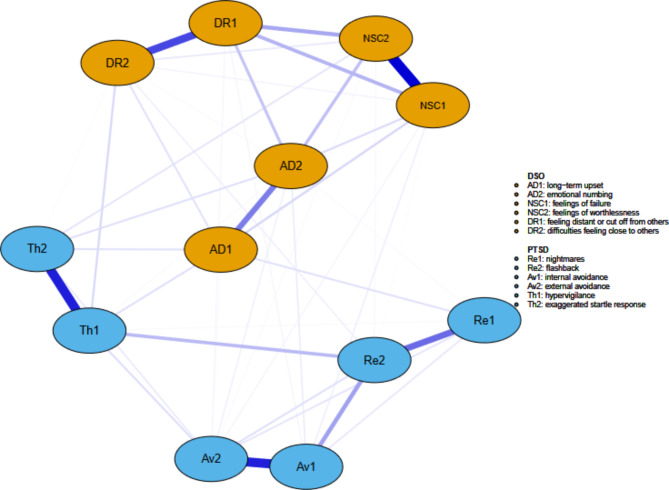
Results: The result showed that the network of estimated symptoms for Complex PTSD in Iranian culture was highly accurate and stable. The most central symptoms in this network were feelings of failure and worthlessness. Additionally, "long-term upset" was identified as the connection between PTSD symptoms and DSO.
Conclusions: The study determined that feelings of failure and worthlessness are the most central symptoms in the Complex PTSD network. It was suggested that these symptoms should be given priority in theoretical and treatment models of Complex PTSD.
期刊介绍:
BMC Psychiatry is an open access, peer-reviewed journal that considers articles on all aspects of the prevention, diagnosis and management of psychiatric disorders, as well as related molecular genetics, pathophysiology, and epidemiology.





 京公网安备 11010802042870号
京ICP备2023020795号-1
京公网安备 11010802042870号
京ICP备2023020795号-1

 分享
分享
 求助内容:
求助内容: 应助结果提醒方式:
 扫码关注我们
