Hongfei Shi, Long Wang, Guoguang Li, Dandan Li, Hongyue Zhai, Shidong Ji, Yun Hu, Tingting Lv, Lunguang Yao
{"title":"中国山羊乳腺炎金黄色葡萄球菌分离株的分子类型、耐药性、耐药基因和毒力基因特征","authors":"Hongfei Shi, Long Wang, Guoguang Li, Dandan Li, Hongyue Zhai, Shidong Ji, Yun Hu, Tingting Lv, Lunguang Yao","doi":"10.3389/fcimb.2025.1533844","DOIUrl":null,"url":null,"abstract":"<p><p><i>Staphylococcus aureus</i> is a significant pathogen in dairy animals, particularly when it infects the mammary gland; however, its prevalence among dairy goats in China remains poorly understood. This study aimed to investigate the distribution and characteristics of <i>S. aureus</i> isolates in dairy goats across China. A total of 515 milk samples were collected from goats diagnosed with mastitis in 14 provinces. These samples underwent bacterial isolation and identification, capsular polysaccharides typing, spa typing, antimicrobial susceptibility testing, and assessment of antimicrobial resistance and virulence gene. The findings revealed the isolation of 61 <i>S. aureus</i> strains. The highest prevalence rate was recorded in 2018, at 20.4% (11 out of 54 samples), while the lowest prevalence rate was noted in 2023, at 5.2% (3 out of 58 samples). Among the five regions studied, southern China exhibited the highest prevalence rate of 17.5% (10 out of 57 samples), whereas northeastern China showed the lowest rate at 8.2% (8 out of 97 samples). Capsular polysaccharide type 5 emerged as the most prevalent, accounting for 52.5%, and spa type t521 was identified most frequently, at 19.7%. Notably, 52 isolates (85.2%) demonstrated multidrug resistance, displaying resistance to three or more antibiotics. The resistance rates of <i>S. aureus</i> isolates were significantly high to penicillin (95.1%), followed by enrofloxacin (82.0%), kanamycin (78.7%), and levofloxacin (77.0%). Trimethoprim-sulfamethoxazole exhibited the lowest resistance rate at 11.5%. Resistance rates varied across the five different regions. Additionally, eight genes associated with resistance to six classes of antimicrobials were detected, with the <i>blaZ</i> gene (93.4%) being the most prevalent at 93.4%. Furthermore, nine virulence-associated genes were identified, with clfA being the most common virulence gene, present in all isolates. In conclusion, most <i>S. aureus</i> isolates were multiresistant with diverse resistance patterns. Those diverse antimicrobial resistance profiles associated with corresponding resistance genes (<i>p</i> < 0.05) were reported for the first time in <i>S. aureus</i> from caprine mastitis. Sulfonamides could be prioritized preferentially for the treatment of <i>S. aureus</i> mastitis.</p>","PeriodicalId":12458,"journal":{"name":"Frontiers in Cellular and Infection Microbiology","volume":"15 ","pages":"1533844"},"PeriodicalIF":4.8000,"publicationDate":"2025-02-18","publicationTypes":"Journal Article","fieldsOfStudy":null,"isOpenAccess":false,"openAccessPdf":"https://www.ncbi.nlm.nih.gov/pmc/articles/PMC11876158/pdf/","citationCount":"0","resultStr":"{\"title\":\"Characteristic profiles of molecular types, antibiotic resistance, antibiotic resistance genes, and virulence genes of <i>Staphylococcus aureus</i> isolates from caprine mastitis in China.\",\"authors\":\"Hongfei Shi, Long Wang, Guoguang Li, Dandan Li, Hongyue Zhai, Shidong Ji, Yun Hu, Tingting Lv, Lunguang Yao\",\"doi\":\"10.3389/fcimb.2025.1533844\",\"DOIUrl\":null,\"url\":null,\"abstract\":\"<p><p><i>Staphylococcus aureus</i> is a significant pathogen in dairy animals, particularly when it infects the mammary gland; however, its prevalence among dairy goats in China remains poorly understood. This study aimed to investigate the distribution and characteristics of <i>S. aureus</i> isolates in dairy goats across China. A total of 515 milk samples were collected from goats diagnosed with mastitis in 14 provinces. These samples underwent bacterial isolation and identification, capsular polysaccharides typing, spa typing, antimicrobial susceptibility testing, and assessment of antimicrobial resistance and virulence gene. The findings revealed the isolation of 61 <i>S. aureus</i> strains. The highest prevalence rate was recorded in 2018, at 20.4% (11 out of 54 samples), while the lowest prevalence rate was noted in 2023, at 5.2% (3 out of 58 samples). Among the five regions studied, southern China exhibited the highest prevalence rate of 17.5% (10 out of 57 samples), whereas northeastern China showed the lowest rate at 8.2% (8 out of 97 samples). Capsular polysaccharide type 5 emerged as the most prevalent, accounting for 52.5%, and spa type t521 was identified most frequently, at 19.7%. Notably, 52 isolates (85.2%) demonstrated multidrug resistance, displaying resistance to three or more antibiotics. The resistance rates of <i>S. aureus</i> isolates were significantly high to penicillin (95.1%), followed by enrofloxacin (82.0%), kanamycin (78.7%), and levofloxacin (77.0%). Trimethoprim-sulfamethoxazole exhibited the lowest resistance rate at 11.5%. Resistance rates varied across the five different regions. Additionally, eight genes associated with resistance to six classes of antimicrobials were detected, with the <i>blaZ</i> gene (93.4%) being the most prevalent at 93.4%. Furthermore, nine virulence-associated genes were identified, with clfA being the most common virulence gene, present in all isolates. In conclusion, most <i>S. aureus</i> isolates were multiresistant with diverse resistance patterns. Those diverse antimicrobial resistance profiles associated with corresponding resistance genes (<i>p</i> < 0.05) were reported for the first time in <i>S. aureus</i> from caprine mastitis. Sulfonamides could be prioritized preferentially for the treatment of <i>S. aureus</i> mastitis.</p>\",\"PeriodicalId\":12458,\"journal\":{\"name\":\"Frontiers in Cellular and Infection Microbiology\",\"volume\":\"15 \",\"pages\":\"1533844\"},\"PeriodicalIF\":4.8000,\"publicationDate\":\"2025-02-18\",\"publicationTypes\":\"Journal Article\",\"fieldsOfStudy\":null,\"isOpenAccess\":false,\"openAccessPdf\":\"https://www.ncbi.nlm.nih.gov/pmc/articles/PMC11876158/pdf/\",\"citationCount\":\"0\",\"resultStr\":null,\"platform\":\"Semanticscholar\",\"paperid\":null,\"PeriodicalName\":\"Frontiers in Cellular and Infection Microbiology\",\"FirstCategoryId\":\"3\",\"ListUrlMain\":\"https://doi.org/10.3389/fcimb.2025.1533844\",\"RegionNum\":2,\"RegionCategory\":\"医学\",\"ArticlePicture\":[],\"TitleCN\":null,\"AbstractTextCN\":null,\"PMCID\":null,\"EPubDate\":\"2025/1/1 0:00:00\",\"PubModel\":\"eCollection\",\"JCR\":\"Q2\",\"JCRName\":\"IMMUNOLOGY\",\"Score\":null,\"Total\":0}","platform":"Semanticscholar","paperid":null,"PeriodicalName":"Frontiers in Cellular and Infection Microbiology","FirstCategoryId":"3","ListUrlMain":"https://doi.org/10.3389/fcimb.2025.1533844","RegionNum":2,"RegionCategory":"医学","ArticlePicture":[],"TitleCN":null,"AbstractTextCN":null,"PMCID":null,"EPubDate":"2025/1/1 0:00:00","PubModel":"eCollection","JCR":"Q2","JCRName":"IMMUNOLOGY","Score":null,"Total":0}
Characteristic profiles of molecular types, antibiotic resistance, antibiotic resistance genes, and virulence genes of Staphylococcus aureus isolates from caprine mastitis in China.
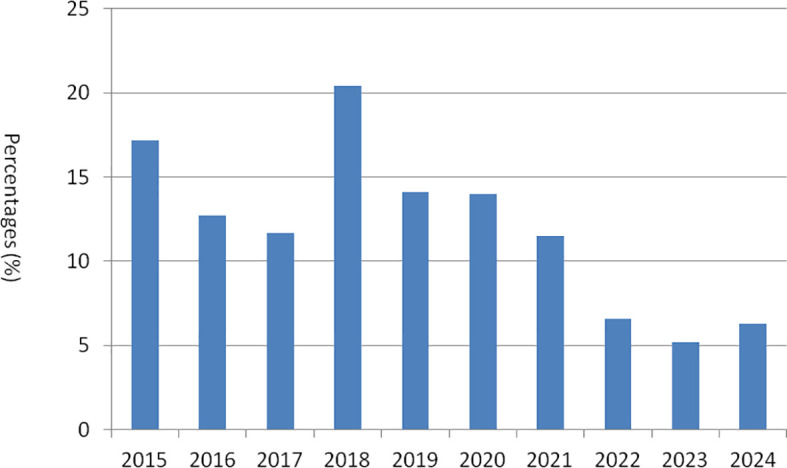
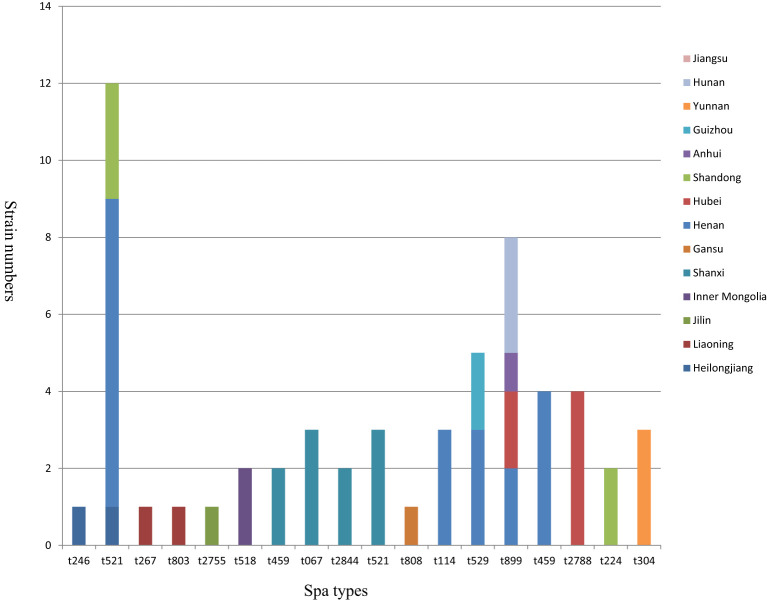
Staphylococcus aureus is a significant pathogen in dairy animals, particularly when it infects the mammary gland; however, its prevalence among dairy goats in China remains poorly understood. This study aimed to investigate the distribution and characteristics of S. aureus isolates in dairy goats across China. A total of 515 milk samples were collected from goats diagnosed with mastitis in 14 provinces. These samples underwent bacterial isolation and identification, capsular polysaccharides typing, spa typing, antimicrobial susceptibility testing, and assessment of antimicrobial resistance and virulence gene. The findings revealed the isolation of 61 S. aureus strains. The highest prevalence rate was recorded in 2018, at 20.4% (11 out of 54 samples), while the lowest prevalence rate was noted in 2023, at 5.2% (3 out of 58 samples). Among the five regions studied, southern China exhibited the highest prevalence rate of 17.5% (10 out of 57 samples), whereas northeastern China showed the lowest rate at 8.2% (8 out of 97 samples). Capsular polysaccharide type 5 emerged as the most prevalent, accounting for 52.5%, and spa type t521 was identified most frequently, at 19.7%. Notably, 52 isolates (85.2%) demonstrated multidrug resistance, displaying resistance to three or more antibiotics. The resistance rates of S. aureus isolates were significantly high to penicillin (95.1%), followed by enrofloxacin (82.0%), kanamycin (78.7%), and levofloxacin (77.0%). Trimethoprim-sulfamethoxazole exhibited the lowest resistance rate at 11.5%. Resistance rates varied across the five different regions. Additionally, eight genes associated with resistance to six classes of antimicrobials were detected, with the blaZ gene (93.4%) being the most prevalent at 93.4%. Furthermore, nine virulence-associated genes were identified, with clfA being the most common virulence gene, present in all isolates. In conclusion, most S. aureus isolates were multiresistant with diverse resistance patterns. Those diverse antimicrobial resistance profiles associated with corresponding resistance genes (p < 0.05) were reported for the first time in S. aureus from caprine mastitis. Sulfonamides could be prioritized preferentially for the treatment of S. aureus mastitis.
期刊介绍:
Frontiers in Cellular and Infection Microbiology is a leading specialty journal, publishing rigorously peer-reviewed research across all pathogenic microorganisms and their interaction with their hosts. Chief Editor Yousef Abu Kwaik, University of Louisville is supported by an outstanding Editorial Board of international experts. This multidisciplinary open-access journal is at the forefront of disseminating and communicating scientific knowledge and impactful discoveries to researchers, academics, clinicians and the public worldwide.
Frontiers in Cellular and Infection Microbiology includes research on bacteria, fungi, parasites, viruses, endosymbionts, prions and all microbial pathogens as well as the microbiota and its effect on health and disease in various hosts. The research approaches include molecular microbiology, cellular microbiology, gene regulation, proteomics, signal transduction, pathogenic evolution, genomics, structural biology, and virulence factors as well as model hosts. Areas of research to counteract infectious agents by the host include the host innate and adaptive immune responses as well as metabolic restrictions to various pathogenic microorganisms, vaccine design and development against various pathogenic microorganisms, and the mechanisms of antibiotic resistance and its countermeasures.






 京公网安备 11010802042870号
京ICP备2023020795号-1
京公网安备 11010802042870号
京ICP备2023020795号-1

 分享
分享
 求助内容:
求助内容: 应助结果提醒方式:
 扫码关注我们
