{"title":"总结了40年来对鲨鱼和鳐鱼的洗胃效率和存活率的研究。","authors":"Jaelen Myers, Marcus Sheaves, Adam Barnett","doi":"10.1111/jfb.70006","DOIUrl":null,"url":null,"abstract":"<p>Traditionally, lethal stomach dissection has been used to study the diets of sharks and rays, but conservation and animal welfare concerns necessitate non-lethal alternatives, such as gastric lavage (stomach or gut flushing). In this study, we summarised gastric lavage studies on elasmobranchs to identify which species/groups it has been effective for, the difficulties encountered and if post-release survival has been evaluated. Secondly, we used a field study to (1) demonstrate how to perform gastric lavage on juvenile rays, (2) assess its effectiveness and (3) verify post-release survival using mark-recapture techniques. Only 23 published studies have used gastric lavage on either sharks or rays, indicating that this technique is still highly underutilised in ecological research. Effectiveness at obtaining stomach contents varied but often exceeded 50%, particularly for rays. Captivity studies provided greater evidence of survival than field studies, and only one field study assessed long-term survival using tag-recapture methods. In this field study, gastric lavage was highly effective for young juvenile rays, and recaptures verified survival for various periods after release. More research is needed to adapt gastric lavage across a wider range of species and sizes, especially larger sharks. Furthermore, incorporating approaches to validate survival following non-lethal handling procedures will be essential to ensure ethical compliance and optimal outcomes for research and conservation.</p>","PeriodicalId":15794,"journal":{"name":"Journal of fish biology","volume":"107 1","pages":"130-142"},"PeriodicalIF":1.9000,"publicationDate":"2025-03-04","publicationTypes":"Journal Article","fieldsOfStudy":null,"isOpenAccess":false,"openAccessPdf":"https://onlinelibrary.wiley.com/doi/epdf/10.1111/jfb.70006","citationCount":"0","resultStr":"{\"title\":\"Summarising 40 years of gastric lavage studies to evaluate efficiency and survival in sharks and rays\",\"authors\":\"Jaelen Myers, Marcus Sheaves, Adam Barnett\",\"doi\":\"10.1111/jfb.70006\",\"DOIUrl\":null,\"url\":null,\"abstract\":\"<p>Traditionally, lethal stomach dissection has been used to study the diets of sharks and rays, but conservation and animal welfare concerns necessitate non-lethal alternatives, such as gastric lavage (stomach or gut flushing). In this study, we summarised gastric lavage studies on elasmobranchs to identify which species/groups it has been effective for, the difficulties encountered and if post-release survival has been evaluated. Secondly, we used a field study to (1) demonstrate how to perform gastric lavage on juvenile rays, (2) assess its effectiveness and (3) verify post-release survival using mark-recapture techniques. Only 23 published studies have used gastric lavage on either sharks or rays, indicating that this technique is still highly underutilised in ecological research. Effectiveness at obtaining stomach contents varied but often exceeded 50%, particularly for rays. Captivity studies provided greater evidence of survival than field studies, and only one field study assessed long-term survival using tag-recapture methods. In this field study, gastric lavage was highly effective for young juvenile rays, and recaptures verified survival for various periods after release. More research is needed to adapt gastric lavage across a wider range of species and sizes, especially larger sharks. Furthermore, incorporating approaches to validate survival following non-lethal handling procedures will be essential to ensure ethical compliance and optimal outcomes for research and conservation.</p>\",\"PeriodicalId\":15794,\"journal\":{\"name\":\"Journal of fish biology\",\"volume\":\"107 1\",\"pages\":\"130-142\"},\"PeriodicalIF\":1.9000,\"publicationDate\":\"2025-03-04\",\"publicationTypes\":\"Journal Article\",\"fieldsOfStudy\":null,\"isOpenAccess\":false,\"openAccessPdf\":\"https://onlinelibrary.wiley.com/doi/epdf/10.1111/jfb.70006\",\"citationCount\":\"0\",\"resultStr\":null,\"platform\":\"Semanticscholar\",\"paperid\":null,\"PeriodicalName\":\"Journal of fish biology\",\"FirstCategoryId\":\"97\",\"ListUrlMain\":\"https://onlinelibrary.wiley.com/doi/10.1111/jfb.70006\",\"RegionNum\":3,\"RegionCategory\":\"农林科学\",\"ArticlePicture\":[],\"TitleCN\":null,\"AbstractTextCN\":null,\"PMCID\":null,\"EPubDate\":\"\",\"PubModel\":\"\",\"JCR\":\"Q2\",\"JCRName\":\"FISHERIES\",\"Score\":null,\"Total\":0}","platform":"Semanticscholar","paperid":null,"PeriodicalName":"Journal of fish biology","FirstCategoryId":"97","ListUrlMain":"https://onlinelibrary.wiley.com/doi/10.1111/jfb.70006","RegionNum":3,"RegionCategory":"农林科学","ArticlePicture":[],"TitleCN":null,"AbstractTextCN":null,"PMCID":null,"EPubDate":"","PubModel":"","JCR":"Q2","JCRName":"FISHERIES","Score":null,"Total":0}
Summarising 40 years of gastric lavage studies to evaluate efficiency and survival in sharks and rays
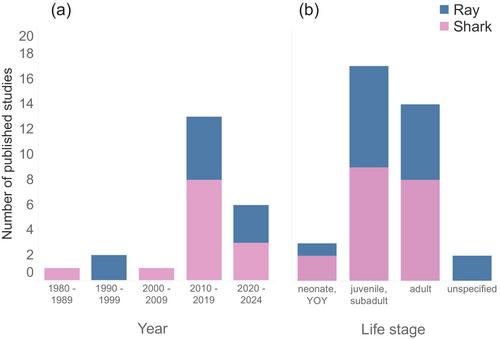
Traditionally, lethal stomach dissection has been used to study the diets of sharks and rays, but conservation and animal welfare concerns necessitate non-lethal alternatives, such as gastric lavage (stomach or gut flushing). In this study, we summarised gastric lavage studies on elasmobranchs to identify which species/groups it has been effective for, the difficulties encountered and if post-release survival has been evaluated. Secondly, we used a field study to (1) demonstrate how to perform gastric lavage on juvenile rays, (2) assess its effectiveness and (3) verify post-release survival using mark-recapture techniques. Only 23 published studies have used gastric lavage on either sharks or rays, indicating that this technique is still highly underutilised in ecological research. Effectiveness at obtaining stomach contents varied but often exceeded 50%, particularly for rays. Captivity studies provided greater evidence of survival than field studies, and only one field study assessed long-term survival using tag-recapture methods. In this field study, gastric lavage was highly effective for young juvenile rays, and recaptures verified survival for various periods after release. More research is needed to adapt gastric lavage across a wider range of species and sizes, especially larger sharks. Furthermore, incorporating approaches to validate survival following non-lethal handling procedures will be essential to ensure ethical compliance and optimal outcomes for research and conservation.
期刊介绍:
The Journal of Fish Biology is a leading international journal for scientists engaged in all aspects of fishes and fisheries research, both fresh water and marine. The journal publishes high-quality papers relevant to the central theme of fish biology and aims to bring together under one cover an overall picture of the research in progress and to provide international communication among researchers in many disciplines with a common interest in the biology of fish.




 京公网安备 11010802042870号
京ICP备2023020795号-1
京公网安备 11010802042870号
京ICP备2023020795号-1

 分享
分享
 求助内容:
求助内容: 应助结果提醒方式:
 扫码关注我们
