{"title":"FDG-PET从新生儿到婴儿的影像学观察。","authors":"Ryogo Minamimoto, Yumi Abe, Shinichiro Kamiya, Toshiki Nakane, Rintaro Ito, Katsuhiko Kato, Shinji Naganawa","doi":"10.1007/s11604-025-01763-z","DOIUrl":null,"url":null,"abstract":"<p><p>In pediatric oncology, <sup>18</sup>F-fluorodeoxyglucose (FDG)-positron emission tomography (PET)/computed tomography (CT) is valuable as a tool for noninvasive imaging and monitoring. While many reports have reviewed the use of PET and PET/CT in pediatrics, considerable variations in age, body size, and metabolism are seen during different stages of childhood development. Neonates (from birth to one month old) and infants (from 1 month to 1 year) present unique challenges for FDG-PET/CT examination due to their small body size, the immaturity of organs, the need for specialized patient preparation, and support requirements during scanning. In addition, differences in metabolic activity can lead to distinct differences in patterns of physiological FDG uptake on PET/CT imaging between neonates and infants. These factors differ significantly from those encountered in older children, who may be treated similarly to adults during imaging procedures. This review, based on both the literature and clinical experience, explores the specific characteristics, challenges, and considerations for FDG-PET/CT imaging from neonates to infants, with a focus on optimizing imaging protocols and interpreting physiological variations in this growth period.</p>","PeriodicalId":14691,"journal":{"name":"Japanese Journal of Radiology","volume":" ","pages":"1066-1077"},"PeriodicalIF":2.1000,"publicationDate":"2025-07-01","publicationTypes":"Journal Article","fieldsOfStudy":null,"isOpenAccess":false,"openAccessPdf":"https://www.ncbi.nlm.nih.gov/pmc/articles/PMC12204885/pdf/","citationCount":"0","resultStr":"{\"title\":\"Imaging insights of FDG-PET from neonates to infants.\",\"authors\":\"Ryogo Minamimoto, Yumi Abe, Shinichiro Kamiya, Toshiki Nakane, Rintaro Ito, Katsuhiko Kato, Shinji Naganawa\",\"doi\":\"10.1007/s11604-025-01763-z\",\"DOIUrl\":null,\"url\":null,\"abstract\":\"<p><p>In pediatric oncology, <sup>18</sup>F-fluorodeoxyglucose (FDG)-positron emission tomography (PET)/computed tomography (CT) is valuable as a tool for noninvasive imaging and monitoring. While many reports have reviewed the use of PET and PET/CT in pediatrics, considerable variations in age, body size, and metabolism are seen during different stages of childhood development. Neonates (from birth to one month old) and infants (from 1 month to 1 year) present unique challenges for FDG-PET/CT examination due to their small body size, the immaturity of organs, the need for specialized patient preparation, and support requirements during scanning. In addition, differences in metabolic activity can lead to distinct differences in patterns of physiological FDG uptake on PET/CT imaging between neonates and infants. These factors differ significantly from those encountered in older children, who may be treated similarly to adults during imaging procedures. This review, based on both the literature and clinical experience, explores the specific characteristics, challenges, and considerations for FDG-PET/CT imaging from neonates to infants, with a focus on optimizing imaging protocols and interpreting physiological variations in this growth period.</p>\",\"PeriodicalId\":14691,\"journal\":{\"name\":\"Japanese Journal of Radiology\",\"volume\":\" \",\"pages\":\"1066-1077\"},\"PeriodicalIF\":2.1000,\"publicationDate\":\"2025-07-01\",\"publicationTypes\":\"Journal Article\",\"fieldsOfStudy\":null,\"isOpenAccess\":false,\"openAccessPdf\":\"https://www.ncbi.nlm.nih.gov/pmc/articles/PMC12204885/pdf/\",\"citationCount\":\"0\",\"resultStr\":null,\"platform\":\"Semanticscholar\",\"paperid\":null,\"PeriodicalName\":\"Japanese Journal of Radiology\",\"FirstCategoryId\":\"3\",\"ListUrlMain\":\"https://doi.org/10.1007/s11604-025-01763-z\",\"RegionNum\":4,\"RegionCategory\":\"医学\",\"ArticlePicture\":[],\"TitleCN\":null,\"AbstractTextCN\":null,\"PMCID\":null,\"EPubDate\":\"2025/3/5 0:00:00\",\"PubModel\":\"Epub\",\"JCR\":\"\",\"JCRName\":\"\",\"Score\":null,\"Total\":0}","platform":"Semanticscholar","paperid":null,"PeriodicalName":"Japanese Journal of Radiology","FirstCategoryId":"3","ListUrlMain":"https://doi.org/10.1007/s11604-025-01763-z","RegionNum":4,"RegionCategory":"医学","ArticlePicture":[],"TitleCN":null,"AbstractTextCN":null,"PMCID":null,"EPubDate":"2025/3/5 0:00:00","PubModel":"Epub","JCR":"","JCRName":"","Score":null,"Total":0}
Imaging insights of FDG-PET from neonates to infants.
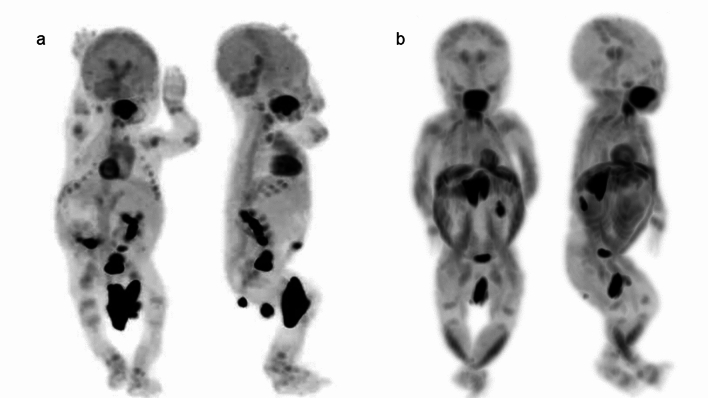
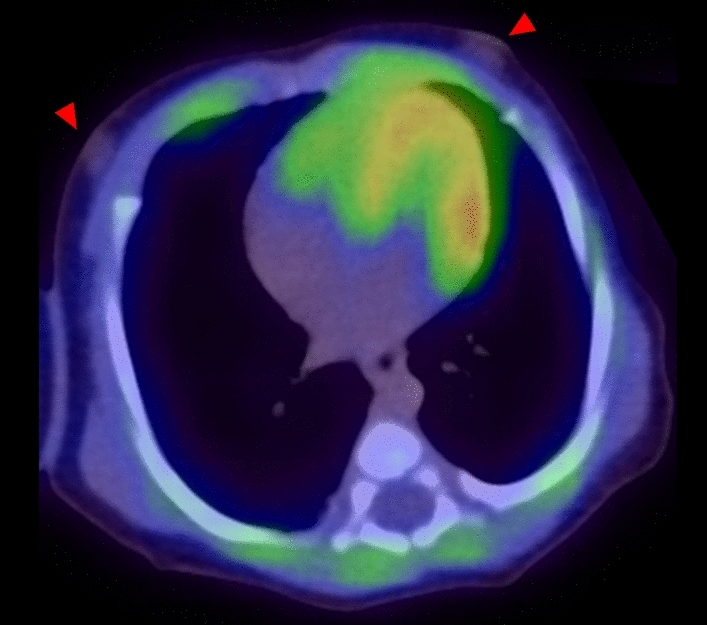
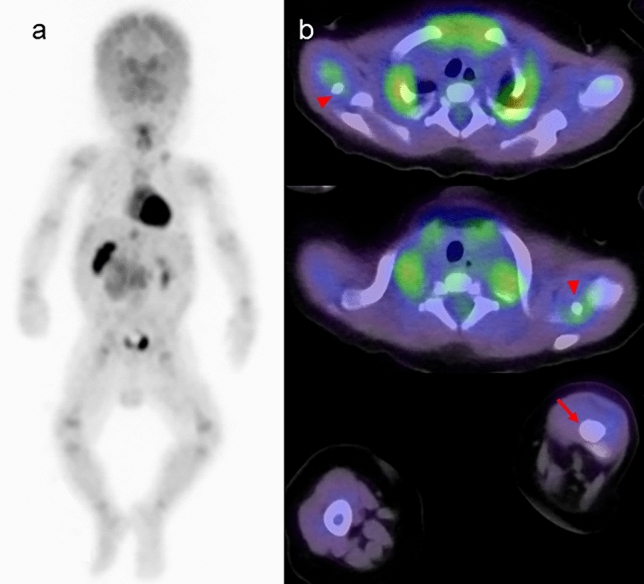
In pediatric oncology, 18F-fluorodeoxyglucose (FDG)-positron emission tomography (PET)/computed tomography (CT) is valuable as a tool for noninvasive imaging and monitoring. While many reports have reviewed the use of PET and PET/CT in pediatrics, considerable variations in age, body size, and metabolism are seen during different stages of childhood development. Neonates (from birth to one month old) and infants (from 1 month to 1 year) present unique challenges for FDG-PET/CT examination due to their small body size, the immaturity of organs, the need for specialized patient preparation, and support requirements during scanning. In addition, differences in metabolic activity can lead to distinct differences in patterns of physiological FDG uptake on PET/CT imaging between neonates and infants. These factors differ significantly from those encountered in older children, who may be treated similarly to adults during imaging procedures. This review, based on both the literature and clinical experience, explores the specific characteristics, challenges, and considerations for FDG-PET/CT imaging from neonates to infants, with a focus on optimizing imaging protocols and interpreting physiological variations in this growth period.
期刊介绍:
Japanese Journal of Radiology is a peer-reviewed journal, officially published by the Japan Radiological Society. The main purpose of the journal is to provide a forum for the publication of papers documenting recent advances and new developments in the field of radiology in medicine and biology. The scope of Japanese Journal of Radiology encompasses but is not restricted to diagnostic radiology, interventional radiology, radiation oncology, nuclear medicine, radiation physics, and radiation biology. Additionally, the journal covers technical and industrial innovations. The journal welcomes original articles, technical notes, review articles, pictorial essays and letters to the editor. The journal also provides announcements from the boards and the committees of the society. Membership in the Japan Radiological Society is not a prerequisite for submission. Contributions are welcomed from all parts of the world.




 京公网安备 11010802042870号
京ICP备2023020795号-1
京公网安备 11010802042870号
京ICP备2023020795号-1

 分享
分享
 求助内容:
求助内容: 应助结果提醒方式:
 扫码关注我们
