Hayden Burch, Georgia Brown, Oliver Adler, Jason Wong, Kenneth D Winkel
{"title":"澳大利亚十大制药公司碳减排计划中的责任、雄心和可量化行动:横截面分析。","authors":"Hayden Burch, Georgia Brown, Oliver Adler, Jason Wong, Kenneth D Winkel","doi":"10.5694/mja2.52621","DOIUrl":null,"url":null,"abstract":"<div>\n \n \n <section>\n \n <h3> Objectives</h3>\n \n <p>To assess the commitment of the ten largest pharmaceutical companies operating in Australia to achieving net zero emissions by evaluating their accountability metrics, ambitions, and quantifiable actions taken.</p>\n </section>\n \n <section>\n \n <h3> Study design</h3>\n \n <p>Cross-sectional study; analysis of publicly available company reports published during 12 December 2015 – 31 December 2023.</p>\n </section>\n \n <section>\n \n <h3> Setting, participants</h3>\n \n <p>Ten largest pharmaceutical companies operating in Australia, defined by total pharmaceutical costs (to patients and Pharmaceutical Benefits Scheme) for PBS-subsidised medications, as reported in PBS expenditure and prescriptions reports for 2020–21 and 2022–23.</p>\n </section>\n \n <section>\n \n <h3> Main outcome measures</h3>\n \n <p>Content analysis of publicly available documents for the ten companies using modified criteria from the PricewaterhouseCoopers <i>Building blocks for net zero transformation framework</i>, with three domains: accountability, ambition, and action; the Carbon Disclosure Project (CDP) grading; the Science Based Targets initiative (SBTi) approval system. We focused on measurement, target setting, and achievement of emission reductions, and ranked the environmental sustainability of companies using a points and colour coding system.</p>\n </section>\n \n <section>\n \n <h3> Results</h3>\n \n <p>Three groups could be defined by evidence of their commitment to emissions reductions. The first — companies leading emissions reduction efforts, with SBTi-approved near term targets, consistent emissions monitoring, well defined commitments, and quantified evidence of action — includes AstraZeneca, Novartis, Johnson & Johnson, Bayer, and Merck & Co. The second group — companies that had made commitments to SBTi-approved targets but their disclosure records are limited — includes AbbVie and Roche. The third group — without public commitments to achieving net zero emissions, minimal or no SBTi-approved targets, and minimal disclosure or monitoring of emissions — includes Viatris, Vertex, and Arrotex.</p>\n </section>\n \n <section>\n \n <h3> Conclusions</h3>\n \n <p>The ten largest pharmaceutical companies in Australia are moving towards net zero greenhouse gas emissions at different rates. Gaps in standardised reporting processes should be closed, and further qualitative research on industry-wide environmental sustainability policy and practice is needed.</p>\n </section>\n </div>","PeriodicalId":18214,"journal":{"name":"Medical Journal of Australia","volume":"222 6","pages":"305-312"},"PeriodicalIF":8.5000,"publicationDate":"2025-03-04","publicationTypes":"Journal Article","fieldsOfStudy":null,"isOpenAccess":false,"openAccessPdf":"https://onlinelibrary.wiley.com/doi/epdf/10.5694/mja2.52621","citationCount":"0","resultStr":"{\"title\":\"Accountability, ambition, and quantifiable action in the carbon emission reduction plans of the ten largest pharmaceutical companies in Australia: a cross-sectional analysis\",\"authors\":\"Hayden Burch, Georgia Brown, Oliver Adler, Jason Wong, Kenneth D Winkel\",\"doi\":\"10.5694/mja2.52621\",\"DOIUrl\":null,\"url\":null,\"abstract\":\"<div>\\n \\n \\n <section>\\n \\n <h3> Objectives</h3>\\n \\n <p>To assess the commitment of the ten largest pharmaceutical companies operating in Australia to achieving net zero emissions by evaluating their accountability metrics, ambitions, and quantifiable actions taken.</p>\\n </section>\\n \\n <section>\\n \\n <h3> Study design</h3>\\n \\n <p>Cross-sectional study; analysis of publicly available company reports published during 12 December 2015 – 31 December 2023.</p>\\n </section>\\n \\n <section>\\n \\n <h3> Setting, participants</h3>\\n \\n <p>Ten largest pharmaceutical companies operating in Australia, defined by total pharmaceutical costs (to patients and Pharmaceutical Benefits Scheme) for PBS-subsidised medications, as reported in PBS expenditure and prescriptions reports for 2020–21 and 2022–23.</p>\\n </section>\\n \\n <section>\\n \\n <h3> Main outcome measures</h3>\\n \\n <p>Content analysis of publicly available documents for the ten companies using modified criteria from the PricewaterhouseCoopers <i>Building blocks for net zero transformation framework</i>, with three domains: accountability, ambition, and action; the Carbon Disclosure Project (CDP) grading; the Science Based Targets initiative (SBTi) approval system. We focused on measurement, target setting, and achievement of emission reductions, and ranked the environmental sustainability of companies using a points and colour coding system.</p>\\n </section>\\n \\n <section>\\n \\n <h3> Results</h3>\\n \\n <p>Three groups could be defined by evidence of their commitment to emissions reductions. The first — companies leading emissions reduction efforts, with SBTi-approved near term targets, consistent emissions monitoring, well defined commitments, and quantified evidence of action — includes AstraZeneca, Novartis, Johnson & Johnson, Bayer, and Merck & Co. The second group — companies that had made commitments to SBTi-approved targets but their disclosure records are limited — includes AbbVie and Roche. The third group — without public commitments to achieving net zero emissions, minimal or no SBTi-approved targets, and minimal disclosure or monitoring of emissions — includes Viatris, Vertex, and Arrotex.</p>\\n </section>\\n \\n <section>\\n \\n <h3> Conclusions</h3>\\n \\n <p>The ten largest pharmaceutical companies in Australia are moving towards net zero greenhouse gas emissions at different rates. Gaps in standardised reporting processes should be closed, and further qualitative research on industry-wide environmental sustainability policy and practice is needed.</p>\\n </section>\\n </div>\",\"PeriodicalId\":18214,\"journal\":{\"name\":\"Medical Journal of Australia\",\"volume\":\"222 6\",\"pages\":\"305-312\"},\"PeriodicalIF\":8.5000,\"publicationDate\":\"2025-03-04\",\"publicationTypes\":\"Journal Article\",\"fieldsOfStudy\":null,\"isOpenAccess\":false,\"openAccessPdf\":\"https://onlinelibrary.wiley.com/doi/epdf/10.5694/mja2.52621\",\"citationCount\":\"0\",\"resultStr\":null,\"platform\":\"Semanticscholar\",\"paperid\":null,\"PeriodicalName\":\"Medical Journal of Australia\",\"FirstCategoryId\":\"3\",\"ListUrlMain\":\"https://onlinelibrary.wiley.com/doi/10.5694/mja2.52621\",\"RegionNum\":2,\"RegionCategory\":\"医学\",\"ArticlePicture\":[],\"TitleCN\":null,\"AbstractTextCN\":null,\"PMCID\":null,\"EPubDate\":\"\",\"PubModel\":\"\",\"JCR\":\"Q1\",\"JCRName\":\"MEDICINE, GENERAL & INTERNAL\",\"Score\":null,\"Total\":0}","platform":"Semanticscholar","paperid":null,"PeriodicalName":"Medical Journal of Australia","FirstCategoryId":"3","ListUrlMain":"https://onlinelibrary.wiley.com/doi/10.5694/mja2.52621","RegionNum":2,"RegionCategory":"医学","ArticlePicture":[],"TitleCN":null,"AbstractTextCN":null,"PMCID":null,"EPubDate":"","PubModel":"","JCR":"Q1","JCRName":"MEDICINE, GENERAL & INTERNAL","Score":null,"Total":0}
Accountability, ambition, and quantifiable action in the carbon emission reduction plans of the ten largest pharmaceutical companies in Australia: a cross-sectional analysis
Objectives
To assess the commitment of the ten largest pharmaceutical companies operating in Australia to achieving net zero emissions by evaluating their accountability metrics, ambitions, and quantifiable actions taken.
Study design
Cross-sectional study; analysis of publicly available company reports published during 12 December 2015 – 31 December 2023.
Setting, participants
Ten largest pharmaceutical companies operating in Australia, defined by total pharmaceutical costs (to patients and Pharmaceutical Benefits Scheme) for PBS-subsidised medications, as reported in PBS expenditure and prescriptions reports for 2020–21 and 2022–23.
Main outcome measures
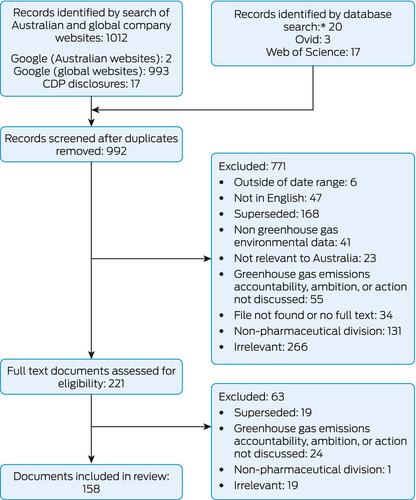
Content analysis of publicly available documents for the ten companies using modified criteria from the PricewaterhouseCoopers Building blocks for net zero transformation framework, with three domains: accountability, ambition, and action; the Carbon Disclosure Project (CDP) grading; the Science Based Targets initiative (SBTi) approval system. We focused on measurement, target setting, and achievement of emission reductions, and ranked the environmental sustainability of companies using a points and colour coding system.
Results
Three groups could be defined by evidence of their commitment to emissions reductions. The first — companies leading emissions reduction efforts, with SBTi-approved near term targets, consistent emissions monitoring, well defined commitments, and quantified evidence of action — includes AstraZeneca, Novartis, Johnson & Johnson, Bayer, and Merck & Co. The second group — companies that had made commitments to SBTi-approved targets but their disclosure records are limited — includes AbbVie and Roche. The third group — without public commitments to achieving net zero emissions, minimal or no SBTi-approved targets, and minimal disclosure or monitoring of emissions — includes Viatris, Vertex, and Arrotex.
Conclusions
The ten largest pharmaceutical companies in Australia are moving towards net zero greenhouse gas emissions at different rates. Gaps in standardised reporting processes should be closed, and further qualitative research on industry-wide environmental sustainability policy and practice is needed.
期刊介绍:
The Medical Journal of Australia (MJA) stands as Australia's foremost general medical journal, leading the dissemination of high-quality research and commentary to shape health policy and influence medical practices within the country. Under the leadership of Professor Virginia Barbour, the expert editorial team at MJA is dedicated to providing authors with a constructive and collaborative peer-review and publication process. Established in 1914, the MJA has evolved into a modern journal that upholds its founding values, maintaining a commitment to supporting the medical profession by delivering high-quality and pertinent information essential to medical practice.




 京公网安备 11010802042870号
京ICP备2023020795号-1
京公网安备 11010802042870号
京ICP备2023020795号-1

 分享
分享
 求助内容:
求助内容: 应助结果提醒方式:
 扫码关注我们
