Guoshan Li, Huyu Du, Yuxin Yan, Yong Hou, Guangsheng Zhao, Xiaolian Lei, Zihan Meng, Haolin Sun, Linfeng Liu
{"title":"部分趾髂骨移植修复ⅰ~ⅲ级手指缺损的疗效观察。","authors":"Guoshan Li, Huyu Du, Yuxin Yan, Yong Hou, Guangsheng Zhao, Xiaolian Lei, Zihan Meng, Haolin Sun, Linfeng Liu","doi":"10.1186/s12891-025-08434-0","DOIUrl":null,"url":null,"abstract":"<p><strong>Objective: </strong>To evaluate the effectiveness of using dorsal toe fibula composite flaps and iliac bone in sequential transplantation for the comprehensive reconstruction of fingers with grade I to III defects.</p><p><strong>Methods: </strong>Between December 2020 and March 2024, data were collected from 36 patients who received complete finger reconstruction for grade I to III defects using dorsal toe fibula composite flaps and iliac bone in sequential transplantation. Postoperative evaluations included Carroll's hand function test scores, hand mobility disability assessments, and overall postoperative conditions.</p><p><strong>Results: </strong>Postoperatively, Carroll's hand function test scores for patients with grade III finger defects showed a significant improvement (P < 0.05), while hand mobility disability scores significantly decreased (P < 0.05). All 47 finger defects in 36 patients were successfully reconstructed with favorable survival outcomes. Among these, two patients with grade III defects experienced donor site numbness; one reported minor walking difficulties, and the other had restricted mobility. Additionally, one case of infection occurred at the recipient site in a grade I defect patient and another at the donor site in a grade II defect patient. Both infections improved with appropriate dressings and cleaning. Overall, the recipient areas healed well, with 32 patients satisfied with the appearance, 4 finding it average, resulting in an 88.89% satisfaction rate. The donor sites also healed well in 33 cases, with 3 cases showing slow healing-one with a grade II and two with grade III defects-none of which developed hypertrophic scars. Of these, 29 patients were satisfied with the appearance, 5 found it average, and 2 were dissatisfied, leading to an 80.56% satisfaction rate for the donor sites.</p><p><strong>Conclusion: </strong>The use of dorsal toe fibula composite flaps and iliac bone in sequential transplantation proves effective for fully reconstructing fingers with grade III defects, while minimizing the impact on both the appearance and function of the donor site.</p>","PeriodicalId":9189,"journal":{"name":"BMC Musculoskeletal Disorders","volume":"26 1","pages":"221"},"PeriodicalIF":2.4000,"publicationDate":"2025-03-05","publicationTypes":"Journal Article","fieldsOfStudy":null,"isOpenAccess":false,"openAccessPdf":"https://www.ncbi.nlm.nih.gov/pmc/articles/PMC11881405/pdf/","citationCount":"0","resultStr":"{\"title\":\"Efficacy of partial toe and iliac bone transfer for reconstruction of grade I-III fingers' defects.\",\"authors\":\"Guoshan Li, Huyu Du, Yuxin Yan, Yong Hou, Guangsheng Zhao, Xiaolian Lei, Zihan Meng, Haolin Sun, Linfeng Liu\",\"doi\":\"10.1186/s12891-025-08434-0\",\"DOIUrl\":null,\"url\":null,\"abstract\":\"<p><strong>Objective: </strong>To evaluate the effectiveness of using dorsal toe fibula composite flaps and iliac bone in sequential transplantation for the comprehensive reconstruction of fingers with grade I to III defects.</p><p><strong>Methods: </strong>Between December 2020 and March 2024, data were collected from 36 patients who received complete finger reconstruction for grade I to III defects using dorsal toe fibula composite flaps and iliac bone in sequential transplantation. Postoperative evaluations included Carroll's hand function test scores, hand mobility disability assessments, and overall postoperative conditions.</p><p><strong>Results: </strong>Postoperatively, Carroll's hand function test scores for patients with grade III finger defects showed a significant improvement (P < 0.05), while hand mobility disability scores significantly decreased (P < 0.05). All 47 finger defects in 36 patients were successfully reconstructed with favorable survival outcomes. Among these, two patients with grade III defects experienced donor site numbness; one reported minor walking difficulties, and the other had restricted mobility. Additionally, one case of infection occurred at the recipient site in a grade I defect patient and another at the donor site in a grade II defect patient. Both infections improved with appropriate dressings and cleaning. Overall, the recipient areas healed well, with 32 patients satisfied with the appearance, 4 finding it average, resulting in an 88.89% satisfaction rate. The donor sites also healed well in 33 cases, with 3 cases showing slow healing-one with a grade II and two with grade III defects-none of which developed hypertrophic scars. Of these, 29 patients were satisfied with the appearance, 5 found it average, and 2 were dissatisfied, leading to an 80.56% satisfaction rate for the donor sites.</p><p><strong>Conclusion: </strong>The use of dorsal toe fibula composite flaps and iliac bone in sequential transplantation proves effective for fully reconstructing fingers with grade III defects, while minimizing the impact on both the appearance and function of the donor site.</p>\",\"PeriodicalId\":9189,\"journal\":{\"name\":\"BMC Musculoskeletal Disorders\",\"volume\":\"26 1\",\"pages\":\"221\"},\"PeriodicalIF\":2.4000,\"publicationDate\":\"2025-03-05\",\"publicationTypes\":\"Journal Article\",\"fieldsOfStudy\":null,\"isOpenAccess\":false,\"openAccessPdf\":\"https://www.ncbi.nlm.nih.gov/pmc/articles/PMC11881405/pdf/\",\"citationCount\":\"0\",\"resultStr\":null,\"platform\":\"Semanticscholar\",\"paperid\":null,\"PeriodicalName\":\"BMC Musculoskeletal Disorders\",\"FirstCategoryId\":\"3\",\"ListUrlMain\":\"https://doi.org/10.1186/s12891-025-08434-0\",\"RegionNum\":3,\"RegionCategory\":\"医学\",\"ArticlePicture\":[],\"TitleCN\":null,\"AbstractTextCN\":null,\"PMCID\":null,\"EPubDate\":\"\",\"PubModel\":\"\",\"JCR\":\"Q2\",\"JCRName\":\"ORTHOPEDICS\",\"Score\":null,\"Total\":0}","platform":"Semanticscholar","paperid":null,"PeriodicalName":"BMC Musculoskeletal Disorders","FirstCategoryId":"3","ListUrlMain":"https://doi.org/10.1186/s12891-025-08434-0","RegionNum":3,"RegionCategory":"医学","ArticlePicture":[],"TitleCN":null,"AbstractTextCN":null,"PMCID":null,"EPubDate":"","PubModel":"","JCR":"Q2","JCRName":"ORTHOPEDICS","Score":null,"Total":0}
Efficacy of partial toe and iliac bone transfer for reconstruction of grade I-III fingers' defects.
Objective: To evaluate the effectiveness of using dorsal toe fibula composite flaps and iliac bone in sequential transplantation for the comprehensive reconstruction of fingers with grade I to III defects.
Methods: Between December 2020 and March 2024, data were collected from 36 patients who received complete finger reconstruction for grade I to III defects using dorsal toe fibula composite flaps and iliac bone in sequential transplantation. Postoperative evaluations included Carroll's hand function test scores, hand mobility disability assessments, and overall postoperative conditions.
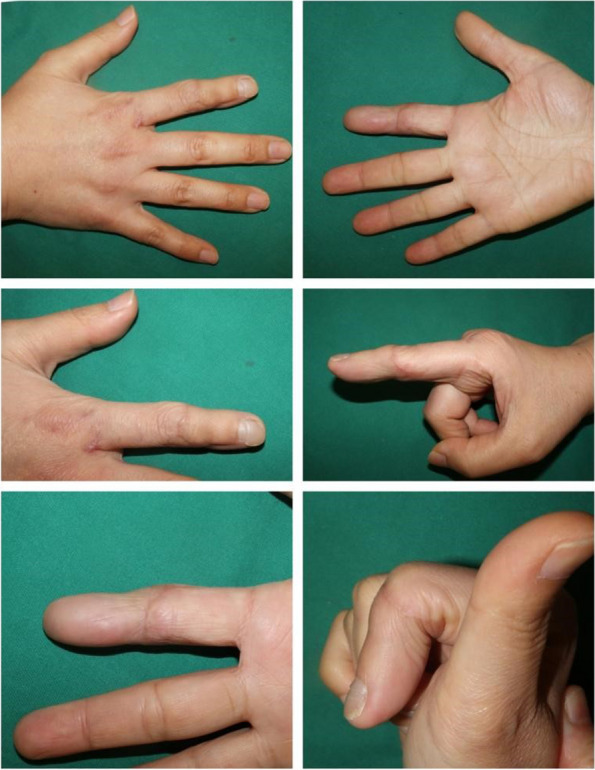
Results: Postoperatively, Carroll's hand function test scores for patients with grade III finger defects showed a significant improvement (P < 0.05), while hand mobility disability scores significantly decreased (P < 0.05). All 47 finger defects in 36 patients were successfully reconstructed with favorable survival outcomes. Among these, two patients with grade III defects experienced donor site numbness; one reported minor walking difficulties, and the other had restricted mobility. Additionally, one case of infection occurred at the recipient site in a grade I defect patient and another at the donor site in a grade II defect patient. Both infections improved with appropriate dressings and cleaning. Overall, the recipient areas healed well, with 32 patients satisfied with the appearance, 4 finding it average, resulting in an 88.89% satisfaction rate. The donor sites also healed well in 33 cases, with 3 cases showing slow healing-one with a grade II and two with grade III defects-none of which developed hypertrophic scars. Of these, 29 patients were satisfied with the appearance, 5 found it average, and 2 were dissatisfied, leading to an 80.56% satisfaction rate for the donor sites.
Conclusion: The use of dorsal toe fibula composite flaps and iliac bone in sequential transplantation proves effective for fully reconstructing fingers with grade III defects, while minimizing the impact on both the appearance and function of the donor site.
期刊介绍:
BMC Musculoskeletal Disorders is an open access, peer-reviewed journal that considers articles on all aspects of the prevention, diagnosis and management of musculoskeletal disorders, as well as related molecular genetics, pathophysiology, and epidemiology.
The scope of the Journal covers research into rheumatic diseases where the primary focus relates specifically to a component(s) of the musculoskeletal system.






 京公网安备 11010802042870号
京ICP备2023020795号-1
京公网安备 11010802042870号
京ICP备2023020795号-1

 分享
分享
 求助内容:
求助内容: 应助结果提醒方式:
 扫码关注我们
