Fariz Selimli, Meryem Taş Reyhanioğlu, Ahmet Can Haskan, Muhammed Said Altun, Soner Mete, Halil Mahir Kaplan
{"title":"Tempol通过氧化应激调节和MAPK通路抑制减轻甲氨蝶呤诱导的骨毒性。","authors":"Fariz Selimli, Meryem Taş Reyhanioğlu, Ahmet Can Haskan, Muhammed Said Altun, Soner Mete, Halil Mahir Kaplan","doi":"10.2147/DDDT.S510206","DOIUrl":null,"url":null,"abstract":"<p><strong>Purpose: </strong>Osteotoxicity, a common consequence of Methotrexate (MTX) therapy, significantly compromises bone health by inducing oxidative stress and disrupting bone remodeling. This study examines the protective effects of Tempol, a nitroxide compound with antioxidant properties, against MTX-induced osteotoxicity.</p><p><strong>Methods: </strong>Osteocyte-like MLO-Y4 cells were cultured and treated with Tempol and MTX to evaluate changes in apoptotic mediators, MAPK signaling pathways, and oxidative stress parameters.</p><p><strong>Results: </strong>MTX treatment significantly increased caspase-3 activity and Bax expression while decreasing Bcl-2 levels, thereby creating a pro-apoptotic environment. It also activated stress-related pathways by elevating JNK and ERK activities. Conversely, Tempol effectively countered these effects by restoring the balance of apoptotic mediators, downregulating MAPK activation, and enhancing Total Antioxidant Status (TAS). Additionally, Tempol reduced Total Oxidant Status (TOS) and improved the activities of superoxide dismutase (SOD) and glutathione peroxidase (GPx).</p><p><strong>Conclusion: </strong>These findings highlight Tempol's potential to mitigate oxidative stress and apoptosis linked to MTX therapy, supporting its use as an adjunctive treatment to protect bone health in patients undergoing MTX therapy. Emphasizing Tempol's clinical implications as a protective agent reinforces the urgency for further research into its long-term effects on cellular viability and bone integrity in the context of chemotherapy.</p>","PeriodicalId":11290,"journal":{"name":"Drug Design, Development and Therapy","volume":"19 ","pages":"1441-1449"},"PeriodicalIF":5.1000,"publicationDate":"2025-02-28","publicationTypes":"Journal Article","fieldsOfStudy":null,"isOpenAccess":false,"openAccessPdf":"https://www.ncbi.nlm.nih.gov/pmc/articles/PMC11881157/pdf/","citationCount":"0","resultStr":"{\"title\":\"Tempol Mitigates Methotrexate-Induced Osteotoxicity via Oxidative Stress Modulation and MAPK Pathway Inhibition.\",\"authors\":\"Fariz Selimli, Meryem Taş Reyhanioğlu, Ahmet Can Haskan, Muhammed Said Altun, Soner Mete, Halil Mahir Kaplan\",\"doi\":\"10.2147/DDDT.S510206\",\"DOIUrl\":null,\"url\":null,\"abstract\":\"<p><strong>Purpose: </strong>Osteotoxicity, a common consequence of Methotrexate (MTX) therapy, significantly compromises bone health by inducing oxidative stress and disrupting bone remodeling. This study examines the protective effects of Tempol, a nitroxide compound with antioxidant properties, against MTX-induced osteotoxicity.</p><p><strong>Methods: </strong>Osteocyte-like MLO-Y4 cells were cultured and treated with Tempol and MTX to evaluate changes in apoptotic mediators, MAPK signaling pathways, and oxidative stress parameters.</p><p><strong>Results: </strong>MTX treatment significantly increased caspase-3 activity and Bax expression while decreasing Bcl-2 levels, thereby creating a pro-apoptotic environment. It also activated stress-related pathways by elevating JNK and ERK activities. Conversely, Tempol effectively countered these effects by restoring the balance of apoptotic mediators, downregulating MAPK activation, and enhancing Total Antioxidant Status (TAS). Additionally, Tempol reduced Total Oxidant Status (TOS) and improved the activities of superoxide dismutase (SOD) and glutathione peroxidase (GPx).</p><p><strong>Conclusion: </strong>These findings highlight Tempol's potential to mitigate oxidative stress and apoptosis linked to MTX therapy, supporting its use as an adjunctive treatment to protect bone health in patients undergoing MTX therapy. Emphasizing Tempol's clinical implications as a protective agent reinforces the urgency for further research into its long-term effects on cellular viability and bone integrity in the context of chemotherapy.</p>\",\"PeriodicalId\":11290,\"journal\":{\"name\":\"Drug Design, Development and Therapy\",\"volume\":\"19 \",\"pages\":\"1441-1449\"},\"PeriodicalIF\":5.1000,\"publicationDate\":\"2025-02-28\",\"publicationTypes\":\"Journal Article\",\"fieldsOfStudy\":null,\"isOpenAccess\":false,\"openAccessPdf\":\"https://www.ncbi.nlm.nih.gov/pmc/articles/PMC11881157/pdf/\",\"citationCount\":\"0\",\"resultStr\":null,\"platform\":\"Semanticscholar\",\"paperid\":null,\"PeriodicalName\":\"Drug Design, Development and Therapy\",\"FirstCategoryId\":\"3\",\"ListUrlMain\":\"https://doi.org/10.2147/DDDT.S510206\",\"RegionNum\":2,\"RegionCategory\":\"医学\",\"ArticlePicture\":[],\"TitleCN\":null,\"AbstractTextCN\":null,\"PMCID\":null,\"EPubDate\":\"2025/1/1 0:00:00\",\"PubModel\":\"eCollection\",\"JCR\":\"Q1\",\"JCRName\":\"CHEMISTRY, MEDICINAL\",\"Score\":null,\"Total\":0}","platform":"Semanticscholar","paperid":null,"PeriodicalName":"Drug Design, Development and Therapy","FirstCategoryId":"3","ListUrlMain":"https://doi.org/10.2147/DDDT.S510206","RegionNum":2,"RegionCategory":"医学","ArticlePicture":[],"TitleCN":null,"AbstractTextCN":null,"PMCID":null,"EPubDate":"2025/1/1 0:00:00","PubModel":"eCollection","JCR":"Q1","JCRName":"CHEMISTRY, MEDICINAL","Score":null,"Total":0}
Tempol Mitigates Methotrexate-Induced Osteotoxicity via Oxidative Stress Modulation and MAPK Pathway Inhibition.
Purpose: Osteotoxicity, a common consequence of Methotrexate (MTX) therapy, significantly compromises bone health by inducing oxidative stress and disrupting bone remodeling. This study examines the protective effects of Tempol, a nitroxide compound with antioxidant properties, against MTX-induced osteotoxicity.
Methods: Osteocyte-like MLO-Y4 cells were cultured and treated with Tempol and MTX to evaluate changes in apoptotic mediators, MAPK signaling pathways, and oxidative stress parameters.
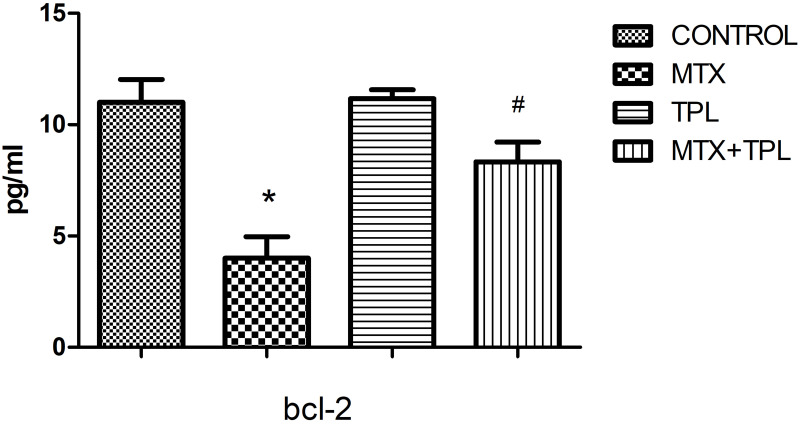
Results: MTX treatment significantly increased caspase-3 activity and Bax expression while decreasing Bcl-2 levels, thereby creating a pro-apoptotic environment. It also activated stress-related pathways by elevating JNK and ERK activities. Conversely, Tempol effectively countered these effects by restoring the balance of apoptotic mediators, downregulating MAPK activation, and enhancing Total Antioxidant Status (TAS). Additionally, Tempol reduced Total Oxidant Status (TOS) and improved the activities of superoxide dismutase (SOD) and glutathione peroxidase (GPx).
Conclusion: These findings highlight Tempol's potential to mitigate oxidative stress and apoptosis linked to MTX therapy, supporting its use as an adjunctive treatment to protect bone health in patients undergoing MTX therapy. Emphasizing Tempol's clinical implications as a protective agent reinforces the urgency for further research into its long-term effects on cellular viability and bone integrity in the context of chemotherapy.
期刊介绍:
Drug Design, Development and Therapy is an international, peer-reviewed, open access journal that spans the spectrum of drug design, discovery and development through to clinical applications.
The journal is characterized by the rapid reporting of high-quality original research, reviews, expert opinions, commentary and clinical studies in all therapeutic areas.
Specific topics covered by the journal include:
Drug target identification and validation
Phenotypic screening and target deconvolution
Biochemical analyses of drug targets and their pathways
New methods or relevant applications in molecular/drug design and computer-aided drug discovery*
Design, synthesis, and biological evaluation of novel biologically active compounds (including diagnostics or chemical probes)
Structural or molecular biological studies elucidating molecular recognition processes
Fragment-based drug discovery
Pharmaceutical/red biotechnology
Isolation, structural characterization, (bio)synthesis, bioengineering and pharmacological evaluation of natural products**
Distribution, pharmacokinetics and metabolic transformations of drugs or biologically active compounds in drug development
Drug delivery and formulation (design and characterization of dosage forms, release mechanisms and in vivo testing)
Preclinical development studies
Translational animal models
Mechanisms of action and signalling pathways
Toxicology
Gene therapy, cell therapy and immunotherapy
Personalized medicine and pharmacogenomics
Clinical drug evaluation
Patient safety and sustained use of medicines.






 京公网安备 11010802042870号
京ICP备2023020795号-1
京公网安备 11010802042870号
京ICP备2023020795号-1

 分享
分享
 求助内容:
求助内容: 应助结果提醒方式:
 扫码关注我们
