Colin A. Ellis, Ruth Ottman, Michael P. Epstein, Epi4K Consortium, Samuel F. Berkovic, Karen L. Oliver
{"title":"家族性癫痫的表型异质性受到全身性和局灶性癫痫多基因风险的影响。","authors":"Colin A. Ellis, Ruth Ottman, Michael P. Epstein, Epi4K Consortium, Samuel F. Berkovic, Karen L. Oliver","doi":"10.1111/epi.18348","DOIUrl":null,"url":null,"abstract":"<div>\n \n \n <section>\n \n <h3> Objective</h3>\n \n <p>Although previous research shows that generalized and focal epilepsies have at least some distinct genetic influences, it remains uncertain why some families manifest both types of epilepsy. We tested two hypotheses: (1) families with both generalized and focal epilepsy carry separate risk alleles for both types; and (2) within mixed families, the type of epilepsy each individual manifests is influenced by the relative burden of separate risk alleles for generalized epilepsies and focal epilepsies.</p>\n </section>\n \n <section>\n \n <h3> Methods</h3>\n \n <p>The Epi4K cohort included 711 individuals with epilepsy from 257 families (113 generalized families, 66 focal families, 78 mixed families). We calculated polygenic risk scores (PRSs) for genetic generalized epilepsy (GGE_PRS) and for focal epilepsy (Focal_PRS). We used mixed-effects models to compare these PRSs between and within families, accounting for relatedness.</p>\n </section>\n \n <section>\n \n <h3> Results</h3>\n \n <p>Compared to population controls, individuals in generalized families had elevated GGE_PRS (<i>p</i> < .001) but not elevated Focal_PRS (<i>p</i> = .50); focal family individuals had elevated Focal_PRS (<i>p</i> = .008) but not elevated GGE_PRS (<i>p</i> = .22); and individuals in mixed families had both elevated GGE_PRS and elevated Focal_PRS (both <i>p</i> < .001). Within mixed families, GGE_PRS was higher in individuals with generalized epilepsy than in individuals with focal epilepsy (<i>p</i> < .001), whereas we did not detect a difference in Focal_PRS between individuals with generalized and focal epilepsy (<i>p</i> = .46). The GGE_PRS value explained 10% of the variance in phenotype within mixed families.</p>\n </section>\n \n <section>\n \n <h3> Significance</h3>\n \n <p>The occurrence of families with both generalized and focal epilepsy in separate individuals is explained at least partly by the chance co-occurrence of distinct genetic risk alleles for generalized and focal epilepsies. Within mixed families, an individual's epilepsy type can be explained at least in part by the relative burden of risk alleles for genetic generalized epilepsy.</p>\n </section>\n </div>","PeriodicalId":11768,"journal":{"name":"Epilepsia","volume":"66 6","pages":"2036-2045"},"PeriodicalIF":6.6000,"publicationDate":"2025-03-06","publicationTypes":"Journal Article","fieldsOfStudy":null,"isOpenAccess":false,"openAccessPdf":"https://onlinelibrary.wiley.com/doi/epdf/10.1111/epi.18348","citationCount":"0","resultStr":"{\"title\":\"Phenotypic heterogeneity in familial epilepsies is influenced by polygenic risk for generalized and focal epilepsies\",\"authors\":\"Colin A. Ellis, Ruth Ottman, Michael P. Epstein, Epi4K Consortium, Samuel F. Berkovic, Karen L. Oliver\",\"doi\":\"10.1111/epi.18348\",\"DOIUrl\":null,\"url\":null,\"abstract\":\"<div>\\n \\n \\n <section>\\n \\n <h3> Objective</h3>\\n \\n <p>Although previous research shows that generalized and focal epilepsies have at least some distinct genetic influences, it remains uncertain why some families manifest both types of epilepsy. We tested two hypotheses: (1) families with both generalized and focal epilepsy carry separate risk alleles for both types; and (2) within mixed families, the type of epilepsy each individual manifests is influenced by the relative burden of separate risk alleles for generalized epilepsies and focal epilepsies.</p>\\n </section>\\n \\n <section>\\n \\n <h3> Methods</h3>\\n \\n <p>The Epi4K cohort included 711 individuals with epilepsy from 257 families (113 generalized families, 66 focal families, 78 mixed families). We calculated polygenic risk scores (PRSs) for genetic generalized epilepsy (GGE_PRS) and for focal epilepsy (Focal_PRS). We used mixed-effects models to compare these PRSs between and within families, accounting for relatedness.</p>\\n </section>\\n \\n <section>\\n \\n <h3> Results</h3>\\n \\n <p>Compared to population controls, individuals in generalized families had elevated GGE_PRS (<i>p</i> < .001) but not elevated Focal_PRS (<i>p</i> = .50); focal family individuals had elevated Focal_PRS (<i>p</i> = .008) but not elevated GGE_PRS (<i>p</i> = .22); and individuals in mixed families had both elevated GGE_PRS and elevated Focal_PRS (both <i>p</i> < .001). Within mixed families, GGE_PRS was higher in individuals with generalized epilepsy than in individuals with focal epilepsy (<i>p</i> < .001), whereas we did not detect a difference in Focal_PRS between individuals with generalized and focal epilepsy (<i>p</i> = .46). The GGE_PRS value explained 10% of the variance in phenotype within mixed families.</p>\\n </section>\\n \\n <section>\\n \\n <h3> Significance</h3>\\n \\n <p>The occurrence of families with both generalized and focal epilepsy in separate individuals is explained at least partly by the chance co-occurrence of distinct genetic risk alleles for generalized and focal epilepsies. Within mixed families, an individual's epilepsy type can be explained at least in part by the relative burden of risk alleles for genetic generalized epilepsy.</p>\\n </section>\\n </div>\",\"PeriodicalId\":11768,\"journal\":{\"name\":\"Epilepsia\",\"volume\":\"66 6\",\"pages\":\"2036-2045\"},\"PeriodicalIF\":6.6000,\"publicationDate\":\"2025-03-06\",\"publicationTypes\":\"Journal Article\",\"fieldsOfStudy\":null,\"isOpenAccess\":false,\"openAccessPdf\":\"https://onlinelibrary.wiley.com/doi/epdf/10.1111/epi.18348\",\"citationCount\":\"0\",\"resultStr\":null,\"platform\":\"Semanticscholar\",\"paperid\":null,\"PeriodicalName\":\"Epilepsia\",\"FirstCategoryId\":\"3\",\"ListUrlMain\":\"https://onlinelibrary.wiley.com/doi/10.1111/epi.18348\",\"RegionNum\":1,\"RegionCategory\":\"医学\",\"ArticlePicture\":[],\"TitleCN\":null,\"AbstractTextCN\":null,\"PMCID\":null,\"EPubDate\":\"\",\"PubModel\":\"\",\"JCR\":\"Q1\",\"JCRName\":\"CLINICAL NEUROLOGY\",\"Score\":null,\"Total\":0}","platform":"Semanticscholar","paperid":null,"PeriodicalName":"Epilepsia","FirstCategoryId":"3","ListUrlMain":"https://onlinelibrary.wiley.com/doi/10.1111/epi.18348","RegionNum":1,"RegionCategory":"医学","ArticlePicture":[],"TitleCN":null,"AbstractTextCN":null,"PMCID":null,"EPubDate":"","PubModel":"","JCR":"Q1","JCRName":"CLINICAL NEUROLOGY","Score":null,"Total":0}
Phenotypic heterogeneity in familial epilepsies is influenced by polygenic risk for generalized and focal epilepsies
Objective
Although previous research shows that generalized and focal epilepsies have at least some distinct genetic influences, it remains uncertain why some families manifest both types of epilepsy. We tested two hypotheses: (1) families with both generalized and focal epilepsy carry separate risk alleles for both types; and (2) within mixed families, the type of epilepsy each individual manifests is influenced by the relative burden of separate risk alleles for generalized epilepsies and focal epilepsies.
Methods
The Epi4K cohort included 711 individuals with epilepsy from 257 families (113 generalized families, 66 focal families, 78 mixed families). We calculated polygenic risk scores (PRSs) for genetic generalized epilepsy (GGE_PRS) and for focal epilepsy (Focal_PRS). We used mixed-effects models to compare these PRSs between and within families, accounting for relatedness.
Results
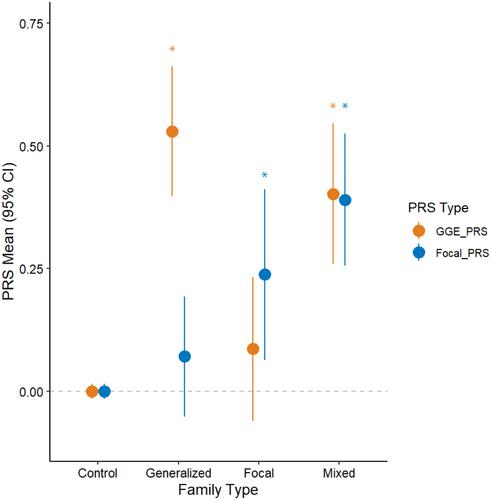
Compared to population controls, individuals in generalized families had elevated GGE_PRS (p < .001) but not elevated Focal_PRS (p = .50); focal family individuals had elevated Focal_PRS (p = .008) but not elevated GGE_PRS (p = .22); and individuals in mixed families had both elevated GGE_PRS and elevated Focal_PRS (both p < .001). Within mixed families, GGE_PRS was higher in individuals with generalized epilepsy than in individuals with focal epilepsy (p < .001), whereas we did not detect a difference in Focal_PRS between individuals with generalized and focal epilepsy (p = .46). The GGE_PRS value explained 10% of the variance in phenotype within mixed families.
Significance
The occurrence of families with both generalized and focal epilepsy in separate individuals is explained at least partly by the chance co-occurrence of distinct genetic risk alleles for generalized and focal epilepsies. Within mixed families, an individual's epilepsy type can be explained at least in part by the relative burden of risk alleles for genetic generalized epilepsy.
期刊介绍:
Epilepsia is the leading, authoritative source for innovative clinical and basic science research for all aspects of epilepsy and seizures. In addition, Epilepsia publishes critical reviews, opinion pieces, and guidelines that foster understanding and aim to improve the diagnosis and treatment of people with seizures and epilepsy.




 京公网安备 11010802042870号
京ICP备2023020795号-1
京公网安备 11010802042870号
京ICP备2023020795号-1

 分享
分享
 求助内容:
求助内容: 应助结果提醒方式:
 扫码关注我们
