Konrad Lewandowski MD, PhD , Martin Lukas MD , Magdalena Kaniewska MD, PhD , Edyta Tulewicz-Marti MD, PhD , Katarzyna Karłowicz MD , Arkadiusz Bednarczuk MD , Martin Kolar MD , Jakub Jirsa MD , Milan Lukas MD, PhD , Grażyna Rydzewska MD, PhD
{"title":"炎性肠病患者中主要为较短和非炎性狭窄的内镜下肠扩张困难的危险因素:来自波兰和捷克共和国IBD三级中心的研究结果。","authors":"Konrad Lewandowski MD, PhD , Martin Lukas MD , Magdalena Kaniewska MD, PhD , Edyta Tulewicz-Marti MD, PhD , Katarzyna Karłowicz MD , Arkadiusz Bednarczuk MD , Martin Kolar MD , Jakub Jirsa MD , Milan Lukas MD, PhD , Grażyna Rydzewska MD, PhD","doi":"10.1016/j.gie.2025.02.036","DOIUrl":null,"url":null,"abstract":"<div><h3>Background and Aims</h3><div>Intestinal strictures are a common and serious adverse event of inflammatory bowel disease (IBD). Endoscopic balloon dilation (EBD) is the first step in treatment to avoid surgery. The aim of this study was to assess the prevalence, risk factors, and clinical sequelae of difficult EBD.</div></div><div><h3>Methods</h3><div>This retrospective, multicenter study included 861 patients with IBD treated with EBD due to strictures. Risk factors for difficult EBD, defined as ≥3 per year, were evaluated.</div></div><div><h3>Results</h3><div>During a median (IQR) of 23.00 (14.00-42.00) months of follow-up, there were 392 (45.5%) easier EBDs performed, while difficult EBDs were performed in 489 (54.5%) cases. Long-term efficacy of EBD, defined as >12 months without surgery, was achieved in 392 (100%) easier EBDs versus 457 (97.4%) difficult EBDs (Cramer’s V = .11; <em>P</em> = .004). However, 149 (17.3%) patients underwent surgery for unsuccessful EBD. The most important risk factors for difficult EBD, classified as modifiable, were smoking and treatment with adalimumab (especially if trough levels were normal) and ustekinumab. Vedolizumab and immunosuppressive therapy were identified as protective factors. Multivariable logistic regression analysis indicated good fit of the model to the data, pointing to a protective role for total parental nutrition and worsening of smoking (both, <em>P</em> < .001).</div></div><div><h3>Conclusions</h3><div>Reduction of difficult EBDs should be considered primarily in the context of their modifiable risk factors. Prospective studies with simultaneous evaluation of transmural healing are needed to truly assess whether vedolizumab treatment, immunosuppressive therapy, and total parenteral nutrition reduce the risk of EBD.</div></div>","PeriodicalId":12542,"journal":{"name":"Gastrointestinal endoscopy","volume":"102 4","pages":"Pages 571-580"},"PeriodicalIF":7.5000,"publicationDate":"2025-10-01","publicationTypes":"Journal Article","fieldsOfStudy":null,"isOpenAccess":false,"openAccessPdf":"","citationCount":"0","resultStr":"{\"title\":\"Risk factors for difficult endoscopic bowel dilation of predominantly shorter and noninflammatory strictures among patients with inflammatory bowel disease: findings from inflammatory bowel disease tertiary centers in Poland and Czech Republic\",\"authors\":\"Konrad Lewandowski MD, PhD , Martin Lukas MD , Magdalena Kaniewska MD, PhD , Edyta Tulewicz-Marti MD, PhD , Katarzyna Karłowicz MD , Arkadiusz Bednarczuk MD , Martin Kolar MD , Jakub Jirsa MD , Milan Lukas MD, PhD , Grażyna Rydzewska MD, PhD\",\"doi\":\"10.1016/j.gie.2025.02.036\",\"DOIUrl\":null,\"url\":null,\"abstract\":\"<div><h3>Background and Aims</h3><div>Intestinal strictures are a common and serious adverse event of inflammatory bowel disease (IBD). Endoscopic balloon dilation (EBD) is the first step in treatment to avoid surgery. The aim of this study was to assess the prevalence, risk factors, and clinical sequelae of difficult EBD.</div></div><div><h3>Methods</h3><div>This retrospective, multicenter study included 861 patients with IBD treated with EBD due to strictures. Risk factors for difficult EBD, defined as ≥3 per year, were evaluated.</div></div><div><h3>Results</h3><div>During a median (IQR) of 23.00 (14.00-42.00) months of follow-up, there were 392 (45.5%) easier EBDs performed, while difficult EBDs were performed in 489 (54.5%) cases. Long-term efficacy of EBD, defined as >12 months without surgery, was achieved in 392 (100%) easier EBDs versus 457 (97.4%) difficult EBDs (Cramer’s V = .11; <em>P</em> = .004). However, 149 (17.3%) patients underwent surgery for unsuccessful EBD. The most important risk factors for difficult EBD, classified as modifiable, were smoking and treatment with adalimumab (especially if trough levels were normal) and ustekinumab. Vedolizumab and immunosuppressive therapy were identified as protective factors. Multivariable logistic regression analysis indicated good fit of the model to the data, pointing to a protective role for total parental nutrition and worsening of smoking (both, <em>P</em> < .001).</div></div><div><h3>Conclusions</h3><div>Reduction of difficult EBDs should be considered primarily in the context of their modifiable risk factors. Prospective studies with simultaneous evaluation of transmural healing are needed to truly assess whether vedolizumab treatment, immunosuppressive therapy, and total parenteral nutrition reduce the risk of EBD.</div></div>\",\"PeriodicalId\":12542,\"journal\":{\"name\":\"Gastrointestinal endoscopy\",\"volume\":\"102 4\",\"pages\":\"Pages 571-580\"},\"PeriodicalIF\":7.5000,\"publicationDate\":\"2025-10-01\",\"publicationTypes\":\"Journal Article\",\"fieldsOfStudy\":null,\"isOpenAccess\":false,\"openAccessPdf\":\"\",\"citationCount\":\"0\",\"resultStr\":null,\"platform\":\"Semanticscholar\",\"paperid\":null,\"PeriodicalName\":\"Gastrointestinal endoscopy\",\"FirstCategoryId\":\"3\",\"ListUrlMain\":\"https://www.sciencedirect.com/science/article/pii/S0016510725001385\",\"RegionNum\":1,\"RegionCategory\":\"医学\",\"ArticlePicture\":[],\"TitleCN\":null,\"AbstractTextCN\":null,\"PMCID\":null,\"EPubDate\":\"2025/3/3 0:00:00\",\"PubModel\":\"Epub\",\"JCR\":\"Q1\",\"JCRName\":\"GASTROENTEROLOGY & HEPATOLOGY\",\"Score\":null,\"Total\":0}","platform":"Semanticscholar","paperid":null,"PeriodicalName":"Gastrointestinal endoscopy","FirstCategoryId":"3","ListUrlMain":"https://www.sciencedirect.com/science/article/pii/S0016510725001385","RegionNum":1,"RegionCategory":"医学","ArticlePicture":[],"TitleCN":null,"AbstractTextCN":null,"PMCID":null,"EPubDate":"2025/3/3 0:00:00","PubModel":"Epub","JCR":"Q1","JCRName":"GASTROENTEROLOGY & HEPATOLOGY","Score":null,"Total":0}
Risk factors for difficult endoscopic bowel dilation of predominantly shorter and noninflammatory strictures among patients with inflammatory bowel disease: findings from inflammatory bowel disease tertiary centers in Poland and Czech Republic
Background and Aims
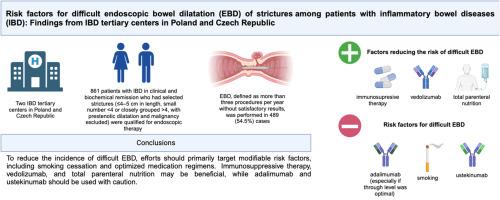
Intestinal strictures are a common and serious adverse event of inflammatory bowel disease (IBD). Endoscopic balloon dilation (EBD) is the first step in treatment to avoid surgery. The aim of this study was to assess the prevalence, risk factors, and clinical sequelae of difficult EBD.
Methods
This retrospective, multicenter study included 861 patients with IBD treated with EBD due to strictures. Risk factors for difficult EBD, defined as ≥3 per year, were evaluated.
Results
During a median (IQR) of 23.00 (14.00-42.00) months of follow-up, there were 392 (45.5%) easier EBDs performed, while difficult EBDs were performed in 489 (54.5%) cases. Long-term efficacy of EBD, defined as >12 months without surgery, was achieved in 392 (100%) easier EBDs versus 457 (97.4%) difficult EBDs (Cramer’s V = .11; P = .004). However, 149 (17.3%) patients underwent surgery for unsuccessful EBD. The most important risk factors for difficult EBD, classified as modifiable, were smoking and treatment with adalimumab (especially if trough levels were normal) and ustekinumab. Vedolizumab and immunosuppressive therapy were identified as protective factors. Multivariable logistic regression analysis indicated good fit of the model to the data, pointing to a protective role for total parental nutrition and worsening of smoking (both, P < .001).
Conclusions
Reduction of difficult EBDs should be considered primarily in the context of their modifiable risk factors. Prospective studies with simultaneous evaluation of transmural healing are needed to truly assess whether vedolizumab treatment, immunosuppressive therapy, and total parenteral nutrition reduce the risk of EBD.
期刊介绍:
Gastrointestinal Endoscopy is a journal publishing original, peer-reviewed articles on endoscopic procedures for studying, diagnosing, and treating digestive diseases. It covers outcomes research, prospective studies, and controlled trials of new endoscopic instruments and treatment methods. The online features include full-text articles, video and audio clips, and MEDLINE links. The journal serves as an international forum for the latest developments in the specialty, offering challenging reports from authorities worldwide. It also publishes abstracts of significant articles from other clinical publications, accompanied by expert commentaries.




 京公网安备 11010802042870号
京ICP备2023020795号-1
京公网安备 11010802042870号
京ICP备2023020795号-1

 分享
分享
 求助内容:
求助内容: 应助结果提醒方式:
 扫码关注我们
