{"title":"中国北方养殖水貂、狐狸和貉中肠贾第虫的流行及聚集分布。","authors":"Shuo Liu, Miao Zhang, Nian-Yu Xue, Hai-Tao Wang, Zhong-Yuan Li, Ya Qin, Xue-Min Li, Qing-Yu Hou, Jing Jiang, Xing Yang, Hong-Bo Ni, Jian-Xin Wen","doi":"10.3389/fvets.2025.1514525","DOIUrl":null,"url":null,"abstract":"<p><p><i>Giardia intestinalis</i> is a widespread protozoan parasite associated with significant health risks in humans and animals. However, there is a lack of epidemiological data regarding this parasite in fur-animals. The present study aimed to investigate the prevalence and assemblage distribution of <i>G. intestinalis</i> in fur-animals in northern China. A total of 871 fecal samples were detected by nested PCR. The results showed an overall infection rate of 1.15%, with the highest rate in Hebei province (2.28%), while no positive cases were observed in Jilin and Heilongjiang provinces. Although no significant differences were found in species group, raccoon dogs (1.72%) were more susceptible to infection than mink (1.40%) and foxes (0.57%). Additionally, the highest infection rate was observed in farms with fewer than 2,000 animals (1.41%), followed by farms with ≥5,000 (0.93%) and those with 2,000-5,000 animals (0.75%). The infection rate was higher in juvenile animals (1.35%) compared to adults (1.08%), and in non-diarrheal animals (1.16%) compared to diarrheal animals (1.08%). Notably, this study is the first to report assemblage A in mink, this finding highlight the potential role of mink as a reservoir for zoonotic transmission. Assemblage D was detected in foxes and raccoon dogs, further suggesting that these animals may serve as potential zoonotic reservoirs. These findings not only complements the epidemiological data of <i>G. intestinalis</i> in fur-animals but also emphasize the importance of monitoring the fur industry to mitigate public health risks.</p>","PeriodicalId":12772,"journal":{"name":"Frontiers in Veterinary Science","volume":"12 ","pages":"1514525"},"PeriodicalIF":3.1000,"publicationDate":"2025-02-19","publicationTypes":"Journal Article","fieldsOfStudy":null,"isOpenAccess":false,"openAccessPdf":"https://www.ncbi.nlm.nih.gov/pmc/articles/PMC11879986/pdf/","citationCount":"0","resultStr":"{\"title\":\"Prevalence and assemblage distribution of <i>Giardia intestinalis</i> in farmed mink, foxes, and raccoon dogs in northern China.\",\"authors\":\"Shuo Liu, Miao Zhang, Nian-Yu Xue, Hai-Tao Wang, Zhong-Yuan Li, Ya Qin, Xue-Min Li, Qing-Yu Hou, Jing Jiang, Xing Yang, Hong-Bo Ni, Jian-Xin Wen\",\"doi\":\"10.3389/fvets.2025.1514525\",\"DOIUrl\":null,\"url\":null,\"abstract\":\"<p><p><i>Giardia intestinalis</i> is a widespread protozoan parasite associated with significant health risks in humans and animals. However, there is a lack of epidemiological data regarding this parasite in fur-animals. The present study aimed to investigate the prevalence and assemblage distribution of <i>G. intestinalis</i> in fur-animals in northern China. A total of 871 fecal samples were detected by nested PCR. The results showed an overall infection rate of 1.15%, with the highest rate in Hebei province (2.28%), while no positive cases were observed in Jilin and Heilongjiang provinces. Although no significant differences were found in species group, raccoon dogs (1.72%) were more susceptible to infection than mink (1.40%) and foxes (0.57%). Additionally, the highest infection rate was observed in farms with fewer than 2,000 animals (1.41%), followed by farms with ≥5,000 (0.93%) and those with 2,000-5,000 animals (0.75%). The infection rate was higher in juvenile animals (1.35%) compared to adults (1.08%), and in non-diarrheal animals (1.16%) compared to diarrheal animals (1.08%). Notably, this study is the first to report assemblage A in mink, this finding highlight the potential role of mink as a reservoir for zoonotic transmission. Assemblage D was detected in foxes and raccoon dogs, further suggesting that these animals may serve as potential zoonotic reservoirs. These findings not only complements the epidemiological data of <i>G. intestinalis</i> in fur-animals but also emphasize the importance of monitoring the fur industry to mitigate public health risks.</p>\",\"PeriodicalId\":12772,\"journal\":{\"name\":\"Frontiers in Veterinary Science\",\"volume\":\"12 \",\"pages\":\"1514525\"},\"PeriodicalIF\":3.1000,\"publicationDate\":\"2025-02-19\",\"publicationTypes\":\"Journal Article\",\"fieldsOfStudy\":null,\"isOpenAccess\":false,\"openAccessPdf\":\"https://www.ncbi.nlm.nih.gov/pmc/articles/PMC11879986/pdf/\",\"citationCount\":\"0\",\"resultStr\":null,\"platform\":\"Semanticscholar\",\"paperid\":null,\"PeriodicalName\":\"Frontiers in Veterinary Science\",\"FirstCategoryId\":\"97\",\"ListUrlMain\":\"https://doi.org/10.3389/fvets.2025.1514525\",\"RegionNum\":2,\"RegionCategory\":\"农林科学\",\"ArticlePicture\":[],\"TitleCN\":null,\"AbstractTextCN\":null,\"PMCID\":null,\"EPubDate\":\"2025/1/1 0:00:00\",\"PubModel\":\"eCollection\",\"JCR\":\"Q1\",\"JCRName\":\"VETERINARY SCIENCES\",\"Score\":null,\"Total\":0}","platform":"Semanticscholar","paperid":null,"PeriodicalName":"Frontiers in Veterinary Science","FirstCategoryId":"97","ListUrlMain":"https://doi.org/10.3389/fvets.2025.1514525","RegionNum":2,"RegionCategory":"农林科学","ArticlePicture":[],"TitleCN":null,"AbstractTextCN":null,"PMCID":null,"EPubDate":"2025/1/1 0:00:00","PubModel":"eCollection","JCR":"Q1","JCRName":"VETERINARY SCIENCES","Score":null,"Total":0}
Prevalence and assemblage distribution of Giardia intestinalis in farmed mink, foxes, and raccoon dogs in northern China.
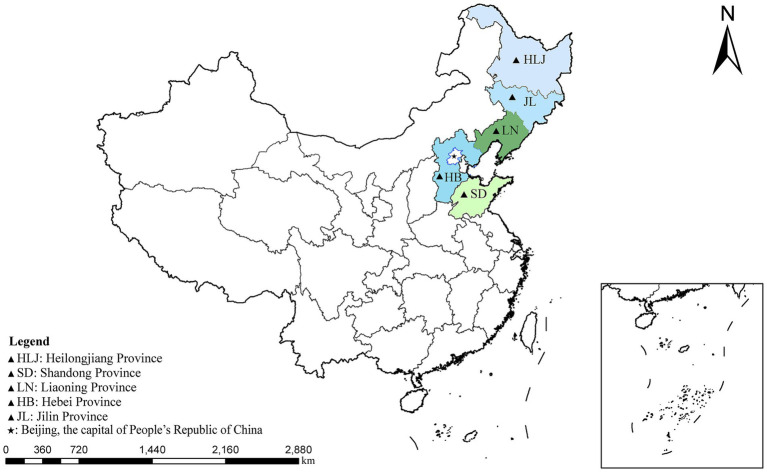
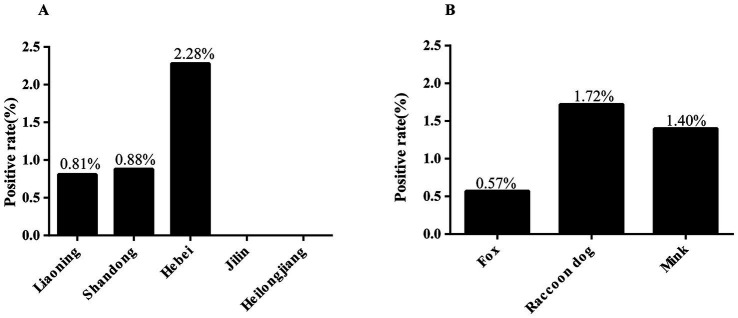
Giardia intestinalis is a widespread protozoan parasite associated with significant health risks in humans and animals. However, there is a lack of epidemiological data regarding this parasite in fur-animals. The present study aimed to investigate the prevalence and assemblage distribution of G. intestinalis in fur-animals in northern China. A total of 871 fecal samples were detected by nested PCR. The results showed an overall infection rate of 1.15%, with the highest rate in Hebei province (2.28%), while no positive cases were observed in Jilin and Heilongjiang provinces. Although no significant differences were found in species group, raccoon dogs (1.72%) were more susceptible to infection than mink (1.40%) and foxes (0.57%). Additionally, the highest infection rate was observed in farms with fewer than 2,000 animals (1.41%), followed by farms with ≥5,000 (0.93%) and those with 2,000-5,000 animals (0.75%). The infection rate was higher in juvenile animals (1.35%) compared to adults (1.08%), and in non-diarrheal animals (1.16%) compared to diarrheal animals (1.08%). Notably, this study is the first to report assemblage A in mink, this finding highlight the potential role of mink as a reservoir for zoonotic transmission. Assemblage D was detected in foxes and raccoon dogs, further suggesting that these animals may serve as potential zoonotic reservoirs. These findings not only complements the epidemiological data of G. intestinalis in fur-animals but also emphasize the importance of monitoring the fur industry to mitigate public health risks.
期刊介绍:
Frontiers in Veterinary Science is a global, peer-reviewed, Open Access journal that bridges animal and human health, brings a comparative approach to medical and surgical challenges, and advances innovative biotechnology and therapy.
Veterinary research today is interdisciplinary, collaborative, and socially relevant, transforming how we understand and investigate animal health and disease. Fundamental research in emerging infectious diseases, predictive genomics, stem cell therapy, and translational modelling is grounded within the integrative social context of public and environmental health, wildlife conservation, novel biomarkers, societal well-being, and cutting-edge clinical practice and specialization. Frontiers in Veterinary Science brings a 21st-century approach—networked, collaborative, and Open Access—to communicate this progress and innovation to both the specialist and to the wider audience of readers in the field.
Frontiers in Veterinary Science publishes articles on outstanding discoveries across a wide spectrum of translational, foundational, and clinical research. The journal''s mission is to bring all relevant veterinary sciences together on a single platform with the goal of improving animal and human health.





 京公网安备 11010802042870号
京ICP备2023020795号-1
京公网安备 11010802042870号
京ICP备2023020795号-1

 分享
分享
 求助内容:
求助内容: 应助结果提醒方式:
 扫码关注我们
