Joshua A Keefe, Yuriana Aguilar-Sanchez, J Alberto Navarro-Garcia, Isabelle Ong, Luge Li, Amelie Paasche, Issam Abu-Taha, Marcel A Tekook, Florian Bruns, Shuai Zhao, Markus Kamler, Ying H Shen, Mihail G Chelu, Na Li, Dobromir Dobrev, Xander Ht Wehrens
{"title":"巨噬细胞介导的白细胞介素-6信号驱动术后心房颤动中良诺定受体-2钙渗漏。","authors":"Joshua A Keefe, Yuriana Aguilar-Sanchez, J Alberto Navarro-Garcia, Isabelle Ong, Luge Li, Amelie Paasche, Issam Abu-Taha, Marcel A Tekook, Florian Bruns, Shuai Zhao, Markus Kamler, Ying H Shen, Mihail G Chelu, Na Li, Dobromir Dobrev, Xander Ht Wehrens","doi":"10.1172/JCI187711","DOIUrl":null,"url":null,"abstract":"<p><p>Postoperative atrial fibrillation (poAF) is AF occurring days after surgery, with a prevalence of 33% among patients undergoing open-heart surgery. The degree of postoperative inflammation correlates with poAF risk, but less is known about the cellular and molecular mechanisms driving postoperative atrial arrhythmogenesis. We performed single-cell RNA-seq comparing atrial nonmyocytes from mice with and without poAF, which revealed infiltrating CCR2+ macrophages to be the most altered cell type. Pseudotime trajectory analyses identified Il-6 as a gene of interest driving in macrophages, which we confirmed in pericardial fluid collected from human patients after cardiac surgery. Indeed, macrophage depletion and macrophage-specific Il6ra conditional knockout (cKO) prevented poAF in mice. Downstream STAT3 inhibition with TTI-101 and cardiomyocyte-specific Stat3 cKO rescued poAF, indicating a proarrhythmogenic role of STAT3 in poAF development. Confocal imaging in isolated atrial cardiomyocytes (ACMs) uncovered what we believe to be a novel link between STAT3 and CaMKII-mediated ryanodine receptor-2 (RyR2)-Ser(S)2814 phosphorylation. Indeed, nonphosphorylatable RyR2S2814A mice were protected from poAF, and CaMKII inhibition prevented arrhythmogenic Ca2+ mishandling in ACMs from mice with poAF. Altogether, we provide multiomic, biochemical, and functional evidence from mice and humans that IL-6-STAT3-CaMKII signaling driven by infiltrating atrial macrophages is a pivotal driver of poAF, which portends therapeutic utility for poAF prevention.</p>","PeriodicalId":15469,"journal":{"name":"Journal of Clinical Investigation","volume":" ","pages":""},"PeriodicalIF":14.3000,"publicationDate":"2025-03-06","publicationTypes":"Journal Article","fieldsOfStudy":null,"isOpenAccess":false,"openAccessPdf":"https://www.ncbi.nlm.nih.gov/pmc/articles/PMC12043083/pdf/","citationCount":"0","resultStr":"{\"title\":\"Macrophage-mediated IL-6 signaling drives ryanodine receptor-2 calcium leak in postoperative atrial fibrillation.\",\"authors\":\"Joshua A Keefe, Yuriana Aguilar-Sanchez, J Alberto Navarro-Garcia, Isabelle Ong, Luge Li, Amelie Paasche, Issam Abu-Taha, Marcel A Tekook, Florian Bruns, Shuai Zhao, Markus Kamler, Ying H Shen, Mihail G Chelu, Na Li, Dobromir Dobrev, Xander Ht Wehrens\",\"doi\":\"10.1172/JCI187711\",\"DOIUrl\":null,\"url\":null,\"abstract\":\"<p><p>Postoperative atrial fibrillation (poAF) is AF occurring days after surgery, with a prevalence of 33% among patients undergoing open-heart surgery. The degree of postoperative inflammation correlates with poAF risk, but less is known about the cellular and molecular mechanisms driving postoperative atrial arrhythmogenesis. We performed single-cell RNA-seq comparing atrial nonmyocytes from mice with and without poAF, which revealed infiltrating CCR2+ macrophages to be the most altered cell type. Pseudotime trajectory analyses identified Il-6 as a gene of interest driving in macrophages, which we confirmed in pericardial fluid collected from human patients after cardiac surgery. Indeed, macrophage depletion and macrophage-specific Il6ra conditional knockout (cKO) prevented poAF in mice. Downstream STAT3 inhibition with TTI-101 and cardiomyocyte-specific Stat3 cKO rescued poAF, indicating a proarrhythmogenic role of STAT3 in poAF development. Confocal imaging in isolated atrial cardiomyocytes (ACMs) uncovered what we believe to be a novel link between STAT3 and CaMKII-mediated ryanodine receptor-2 (RyR2)-Ser(S)2814 phosphorylation. Indeed, nonphosphorylatable RyR2S2814A mice were protected from poAF, and CaMKII inhibition prevented arrhythmogenic Ca2+ mishandling in ACMs from mice with poAF. Altogether, we provide multiomic, biochemical, and functional evidence from mice and humans that IL-6-STAT3-CaMKII signaling driven by infiltrating atrial macrophages is a pivotal driver of poAF, which portends therapeutic utility for poAF prevention.</p>\",\"PeriodicalId\":15469,\"journal\":{\"name\":\"Journal of Clinical Investigation\",\"volume\":\" \",\"pages\":\"\"},\"PeriodicalIF\":14.3000,\"publicationDate\":\"2025-03-06\",\"publicationTypes\":\"Journal Article\",\"fieldsOfStudy\":null,\"isOpenAccess\":false,\"openAccessPdf\":\"https://www.ncbi.nlm.nih.gov/pmc/articles/PMC12043083/pdf/\",\"citationCount\":\"0\",\"resultStr\":null,\"platform\":\"Semanticscholar\",\"paperid\":null,\"PeriodicalName\":\"Journal of Clinical Investigation\",\"FirstCategoryId\":\"3\",\"ListUrlMain\":\"https://doi.org/10.1172/JCI187711\",\"RegionNum\":1,\"RegionCategory\":\"医学\",\"ArticlePicture\":[],\"TitleCN\":null,\"AbstractTextCN\":null,\"PMCID\":null,\"EPubDate\":\"2025/5/1 0:00:00\",\"PubModel\":\"eCollection\",\"JCR\":\"Q1\",\"JCRName\":\"MEDICINE, RESEARCH & EXPERIMENTAL\",\"Score\":null,\"Total\":0}","platform":"Semanticscholar","paperid":null,"PeriodicalName":"Journal of Clinical Investigation","FirstCategoryId":"3","ListUrlMain":"https://doi.org/10.1172/JCI187711","RegionNum":1,"RegionCategory":"医学","ArticlePicture":[],"TitleCN":null,"AbstractTextCN":null,"PMCID":null,"EPubDate":"2025/5/1 0:00:00","PubModel":"eCollection","JCR":"Q1","JCRName":"MEDICINE, RESEARCH & EXPERIMENTAL","Score":null,"Total":0}
Postoperative atrial fibrillation (poAF) is AF occurring days after surgery, with a prevalence of 33% among patients undergoing open-heart surgery. The degree of postoperative inflammation correlates with poAF risk, but less is known about the cellular and molecular mechanisms driving postoperative atrial arrhythmogenesis. We performed single-cell RNA-seq comparing atrial nonmyocytes from mice with and without poAF, which revealed infiltrating CCR2+ macrophages to be the most altered cell type. Pseudotime trajectory analyses identified Il-6 as a gene of interest driving in macrophages, which we confirmed in pericardial fluid collected from human patients after cardiac surgery. Indeed, macrophage depletion and macrophage-specific Il6ra conditional knockout (cKO) prevented poAF in mice. Downstream STAT3 inhibition with TTI-101 and cardiomyocyte-specific Stat3 cKO rescued poAF, indicating a proarrhythmogenic role of STAT3 in poAF development. Confocal imaging in isolated atrial cardiomyocytes (ACMs) uncovered what we believe to be a novel link between STAT3 and CaMKII-mediated ryanodine receptor-2 (RyR2)-Ser(S)2814 phosphorylation. Indeed, nonphosphorylatable RyR2S2814A mice were protected from poAF, and CaMKII inhibition prevented arrhythmogenic Ca2+ mishandling in ACMs from mice with poAF. Altogether, we provide multiomic, biochemical, and functional evidence from mice and humans that IL-6-STAT3-CaMKII signaling driven by infiltrating atrial macrophages is a pivotal driver of poAF, which portends therapeutic utility for poAF prevention.
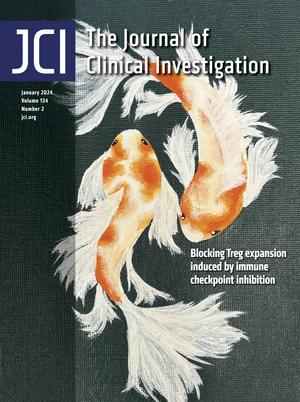
期刊介绍:
The Journal of Clinical Investigation, established in 1924 by the ASCI, is a prestigious publication that focuses on breakthroughs in basic and clinical biomedical science, with the goal of advancing the field of medicine. With an impressive Impact Factor of 15.9 in 2022, it is recognized as one of the leading journals in the "Medicine, Research & Experimental" category of the Web of Science.
The journal attracts a diverse readership from various medical disciplines and sectors. It publishes a wide range of research articles encompassing all biomedical specialties, including Autoimmunity, Gastroenterology, Immunology, Metabolism, Nephrology, Neuroscience, Oncology, Pulmonology, Vascular Biology, and many others.
The Editorial Board consists of esteemed academic editors who possess extensive expertise in their respective fields. They are actively involved in research, ensuring the journal's high standards of publication and scientific rigor.




 京公网安备 11010802042870号
京ICP备2023020795号-1
京公网安备 11010802042870号
京ICP备2023020795号-1

 分享
分享
 求助内容:
求助内容: 应助结果提醒方式:
 扫码关注我们
