Lingxi Qiu, Xuedi Gao, Xinyue Shao, Jingwen Xi, Siyang Chen, Thanh Pham, Yi Wang, Jonathan Dong, Samhita Divakar Rao, Jingting Hao, Jae Ho Lo, Rirong Yang, Esteban A Engel, Colin M Crump, Weiming Yuan
{"title":"HSV-1 UL56蛋白募集细胞nedd4家族泛素连接酶抑制CD1d表达和NKT细胞功能。","authors":"Lingxi Qiu, Xuedi Gao, Xinyue Shao, Jingwen Xi, Siyang Chen, Thanh Pham, Yi Wang, Jonathan Dong, Samhita Divakar Rao, Jingting Hao, Jae Ho Lo, Rirong Yang, Esteban A Engel, Colin M Crump, Weiming Yuan","doi":"10.1128/jvi.02140-24","DOIUrl":null,"url":null,"abstract":"<p><p>Herpesviruses, including α-herpesvirus and herpes simplex virus (HSV-1), are masters of immune evasion. Previously we demonstrated that CD1d-restricted NKT cells are required for optimal anti-HSV-1 immune responses and HSV-1 efficiently downregulates CD1d to suppress NKT cell function. To delineate how the virus evades NKT cell function and establishes infection <i>in vivo</i>, we screened an HSV-1 expression library to identify the viral gene(s) downregulating CD1d and discovered that a leaky late gene, UL56, most efficiently suppresses CD1d expression by degrading the protein, apparently via both proteasome- and lysosome-dependent pathways. To investigate the molecular mechanism of UL56 suppression of CD1d expression, we purified and identified UL56-associated proteins by mass spectrometry. The most abundant associated proteins were members of NEDD4 E3 ubiquitin ligase family. Interestingly overexpression of one member, NEDD4L is sufficient to downregulate CD1d expression. However, different from the K5 protein from Kaposi sarcoma's herpesvirus (KSHV), UL56 and NEDD4L did not directly ubiquitinate CD1d. CD1d protein lacking the key lysine residue in its cytoplasmic tail is similarly downregulated by UL56 and NEDD4L protein. Co-expression of UL56 and NEDD4L synergistically reduced the CD1d expression, suggesting that UL56 collaborates with NEDD4L to downregulate CD1d. During <i>in vivo</i> infection, UL56-deficient mutant virus showed significantly weaker virulence in NKT-sufficient mice but demonstrated higher virulence in mutant mice lacking NKT cells. All our results supported that at least one of the pathogenesis functions of UL56 is its suppression of NKT cell function during infection.</p><p><strong>Importance: </strong>In the large DNA genomes of herpeviruses, there are many genes encoding associate proteins. Most of these proteins are not essential for viral replication but play key roles in viral pathogenesis, in particular, modulating the host immune system to allow efficient viral replication <i>in vivo</i> and latency. The HSV-1 UL56 gene is one of such genes, and its exact pathogenic roles have remain elusive. After we demonstrated the essential roles of CD1d-restricted NKT cells in anti-HSV-1 immunity during HSV-1 ocular infection (P. Rao, X. Wen, J. H. Lo, S. Kim, X. Li, et al., J Virol 92:e01490-18, 2018, https://doi.org/10.1128/jvi.01490-18), we now screened the HSV-1 expression library and identified UL56 is a key factor downregulating CD1d and suppressing NKT cell function. In this manuscript, we are reporting our molecular mechanism study of how UL56 evades CD1d antigen presentation and NKT cell function.</p>","PeriodicalId":17583,"journal":{"name":"Journal of Virology","volume":" ","pages":"e0214024"},"PeriodicalIF":3.8000,"publicationDate":"2025-04-15","publicationTypes":"Journal Article","fieldsOfStudy":null,"isOpenAccess":false,"openAccessPdf":"https://www.ncbi.nlm.nih.gov/pmc/articles/PMC11998485/pdf/","citationCount":"0","resultStr":"{\"title\":\"HSV-1 UL56 protein recruits cellular NEDD4-family ubiquitin ligases to suppress CD1d expression and NKT cell function.\",\"authors\":\"Lingxi Qiu, Xuedi Gao, Xinyue Shao, Jingwen Xi, Siyang Chen, Thanh Pham, Yi Wang, Jonathan Dong, Samhita Divakar Rao, Jingting Hao, Jae Ho Lo, Rirong Yang, Esteban A Engel, Colin M Crump, Weiming Yuan\",\"doi\":\"10.1128/jvi.02140-24\",\"DOIUrl\":null,\"url\":null,\"abstract\":\"<p><p>Herpesviruses, including α-herpesvirus and herpes simplex virus (HSV-1), are masters of immune evasion. Previously we demonstrated that CD1d-restricted NKT cells are required for optimal anti-HSV-1 immune responses and HSV-1 efficiently downregulates CD1d to suppress NKT cell function. To delineate how the virus evades NKT cell function and establishes infection <i>in vivo</i>, we screened an HSV-1 expression library to identify the viral gene(s) downregulating CD1d and discovered that a leaky late gene, UL56, most efficiently suppresses CD1d expression by degrading the protein, apparently via both proteasome- and lysosome-dependent pathways. To investigate the molecular mechanism of UL56 suppression of CD1d expression, we purified and identified UL56-associated proteins by mass spectrometry. The most abundant associated proteins were members of NEDD4 E3 ubiquitin ligase family. Interestingly overexpression of one member, NEDD4L is sufficient to downregulate CD1d expression. However, different from the K5 protein from Kaposi sarcoma's herpesvirus (KSHV), UL56 and NEDD4L did not directly ubiquitinate CD1d. CD1d protein lacking the key lysine residue in its cytoplasmic tail is similarly downregulated by UL56 and NEDD4L protein. Co-expression of UL56 and NEDD4L synergistically reduced the CD1d expression, suggesting that UL56 collaborates with NEDD4L to downregulate CD1d. During <i>in vivo</i> infection, UL56-deficient mutant virus showed significantly weaker virulence in NKT-sufficient mice but demonstrated higher virulence in mutant mice lacking NKT cells. All our results supported that at least one of the pathogenesis functions of UL56 is its suppression of NKT cell function during infection.</p><p><strong>Importance: </strong>In the large DNA genomes of herpeviruses, there are many genes encoding associate proteins. Most of these proteins are not essential for viral replication but play key roles in viral pathogenesis, in particular, modulating the host immune system to allow efficient viral replication <i>in vivo</i> and latency. The HSV-1 UL56 gene is one of such genes, and its exact pathogenic roles have remain elusive. After we demonstrated the essential roles of CD1d-restricted NKT cells in anti-HSV-1 immunity during HSV-1 ocular infection (P. Rao, X. Wen, J. H. Lo, S. Kim, X. Li, et al., J Virol 92:e01490-18, 2018, https://doi.org/10.1128/jvi.01490-18), we now screened the HSV-1 expression library and identified UL56 is a key factor downregulating CD1d and suppressing NKT cell function. In this manuscript, we are reporting our molecular mechanism study of how UL56 evades CD1d antigen presentation and NKT cell function.</p>\",\"PeriodicalId\":17583,\"journal\":{\"name\":\"Journal of Virology\",\"volume\":\" \",\"pages\":\"e0214024\"},\"PeriodicalIF\":3.8000,\"publicationDate\":\"2025-04-15\",\"publicationTypes\":\"Journal Article\",\"fieldsOfStudy\":null,\"isOpenAccess\":false,\"openAccessPdf\":\"https://www.ncbi.nlm.nih.gov/pmc/articles/PMC11998485/pdf/\",\"citationCount\":\"0\",\"resultStr\":null,\"platform\":\"Semanticscholar\",\"paperid\":null,\"PeriodicalName\":\"Journal of Virology\",\"FirstCategoryId\":\"3\",\"ListUrlMain\":\"https://doi.org/10.1128/jvi.02140-24\",\"RegionNum\":2,\"RegionCategory\":\"医学\",\"ArticlePicture\":[],\"TitleCN\":null,\"AbstractTextCN\":null,\"PMCID\":null,\"EPubDate\":\"2025/3/6 0:00:00\",\"PubModel\":\"Epub\",\"JCR\":\"Q2\",\"JCRName\":\"VIROLOGY\",\"Score\":null,\"Total\":0}","platform":"Semanticscholar","paperid":null,"PeriodicalName":"Journal of Virology","FirstCategoryId":"3","ListUrlMain":"https://doi.org/10.1128/jvi.02140-24","RegionNum":2,"RegionCategory":"医学","ArticlePicture":[],"TitleCN":null,"AbstractTextCN":null,"PMCID":null,"EPubDate":"2025/3/6 0:00:00","PubModel":"Epub","JCR":"Q2","JCRName":"VIROLOGY","Score":null,"Total":0}
引用次数: 0
摘要
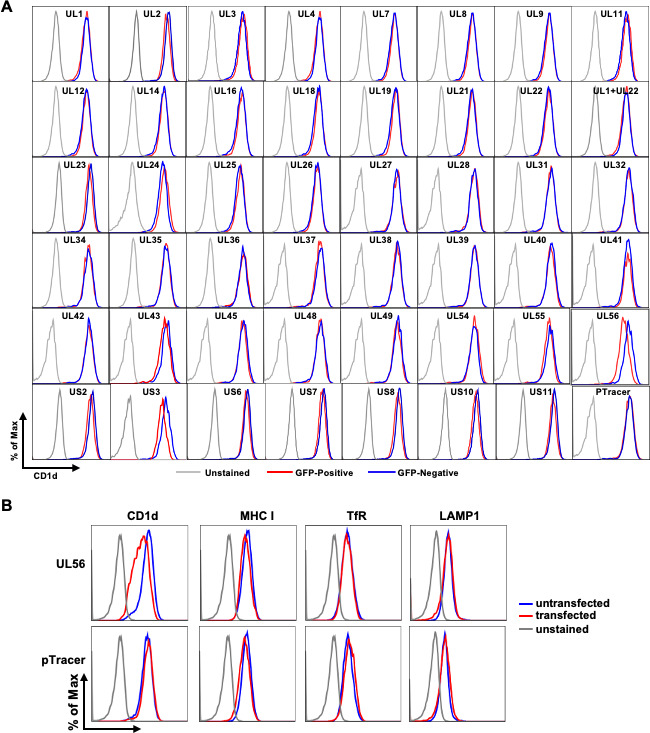
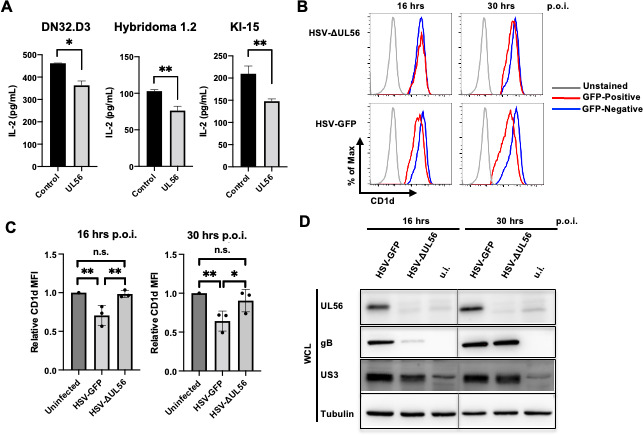
疱疹病毒,包括α-疱疹病毒和单纯疱疹病毒(HSV-1),是免疫逃避的大师。先前我们证明了CD1d限制性NKT细胞是最佳抗HSV-1免疫反应所必需的,HSV-1有效下调CD1d以抑制NKT细胞的功能。为了描述病毒如何逃避NKT细胞功能并在体内建立感染,我们筛选了HSV-1表达文库,以鉴定下调CD1d的病毒基因,并发现泄漏的晚期基因UL56通过降解蛋白质最有效地抑制CD1d的表达,显然是通过蛋白酶体和溶酶体依赖的途径。为了研究UL56抑制CD1d表达的分子机制,我们用质谱法纯化并鉴定了UL56相关蛋白。最丰富的相关蛋白是NEDD4 E3泛素连接酶家族的成员。有趣的是,NEDD4L成员的过表达足以下调CD1d的表达。然而,不同于KSHV的K5蛋白,UL56和NEDD4L并不直接泛素化CD1d。在胞质尾部缺少赖氨酸残基的CD1d蛋白同样被UL56和NEDD4L蛋白下调。UL56与NEDD4L共表达可协同降低CD1d的表达,提示UL56与NEDD4L协同下调CD1d。在体内感染过程中,ul56缺陷突变病毒在NKT充足的小鼠中表现出明显较弱的毒力,但在缺乏NKT细胞的突变小鼠中表现出较高的毒力。我们所有的结果都支持UL56的发病功能之一是在感染期间抑制NKT细胞功能。重要性:在疱疹病毒的大DNA基因组中,有许多基因编码相关蛋白。大多数这些蛋白质对病毒复制不是必需的,但在病毒发病机制中发挥关键作用,特别是调节宿主免疫系统,使病毒在体内和潜伏期内有效复制。HSV-1 UL56基因就是这样的基因之一,其确切的致病作用仍然难以捉摸。在我们证明了CD1d限制性NKT细胞在HSV-1眼部感染中抗HSV-1免疫中的重要作用后(P. Rao, X. Wen, J. H. Lo, S. Kim, X. Li, et ., J Virol 92:e01490-18, 2018, https://doi.org/10.1128/jvi.01490-18),我们现在筛选HSV-1表达文库并确定UL56是下调CD1d和抑制NKT细胞功能的关键因子。在这篇文章中,我们报告了UL56如何逃避CD1d抗原呈递和NKT细胞功能的分子机制研究。
HSV-1 UL56 protein recruits cellular NEDD4-family ubiquitin ligases to suppress CD1d expression and NKT cell function.
Herpesviruses, including α-herpesvirus and herpes simplex virus (HSV-1), are masters of immune evasion. Previously we demonstrated that CD1d-restricted NKT cells are required for optimal anti-HSV-1 immune responses and HSV-1 efficiently downregulates CD1d to suppress NKT cell function. To delineate how the virus evades NKT cell function and establishes infection in vivo, we screened an HSV-1 expression library to identify the viral gene(s) downregulating CD1d and discovered that a leaky late gene, UL56, most efficiently suppresses CD1d expression by degrading the protein, apparently via both proteasome- and lysosome-dependent pathways. To investigate the molecular mechanism of UL56 suppression of CD1d expression, we purified and identified UL56-associated proteins by mass spectrometry. The most abundant associated proteins were members of NEDD4 E3 ubiquitin ligase family. Interestingly overexpression of one member, NEDD4L is sufficient to downregulate CD1d expression. However, different from the K5 protein from Kaposi sarcoma's herpesvirus (KSHV), UL56 and NEDD4L did not directly ubiquitinate CD1d. CD1d protein lacking the key lysine residue in its cytoplasmic tail is similarly downregulated by UL56 and NEDD4L protein. Co-expression of UL56 and NEDD4L synergistically reduced the CD1d expression, suggesting that UL56 collaborates with NEDD4L to downregulate CD1d. During in vivo infection, UL56-deficient mutant virus showed significantly weaker virulence in NKT-sufficient mice but demonstrated higher virulence in mutant mice lacking NKT cells. All our results supported that at least one of the pathogenesis functions of UL56 is its suppression of NKT cell function during infection.
Importance: In the large DNA genomes of herpeviruses, there are many genes encoding associate proteins. Most of these proteins are not essential for viral replication but play key roles in viral pathogenesis, in particular, modulating the host immune system to allow efficient viral replication in vivo and latency. The HSV-1 UL56 gene is one of such genes, and its exact pathogenic roles have remain elusive. After we demonstrated the essential roles of CD1d-restricted NKT cells in anti-HSV-1 immunity during HSV-1 ocular infection (P. Rao, X. Wen, J. H. Lo, S. Kim, X. Li, et al., J Virol 92:e01490-18, 2018, https://doi.org/10.1128/jvi.01490-18), we now screened the HSV-1 expression library and identified UL56 is a key factor downregulating CD1d and suppressing NKT cell function. In this manuscript, we are reporting our molecular mechanism study of how UL56 evades CD1d antigen presentation and NKT cell function.
期刊介绍:
Journal of Virology (JVI) explores the nature of the viruses of animals, archaea, bacteria, fungi, plants, and protozoa. We welcome papers on virion structure and assembly, viral genome replication and regulation of gene expression, genetic diversity and evolution, virus-cell interactions, cellular responses to infection, transformation and oncogenesis, gene delivery, viral pathogenesis and immunity, and vaccines and antiviral agents.





 京公网安备 11010802042870号
京ICP备2023020795号-1
京公网安备 11010802042870号
京ICP备2023020795号-1

 分享
分享
 求助内容:
求助内容: 应助结果提醒方式:
 扫码关注我们
