Fei Ma, Yuheng Liu, Yu Wang, Walter Munesu Chirume, Dengbo Yao, Weiqiang Lan, Zhen Zhao, Xueyuan Xu, Weifei Zhang, Chuan Guo and Qingquan Kong
{"title":"一种具有分阶段干预能力和双重物理状态使用的智能给药微凝胶系统促进糖尿病感染伤口的愈合。","authors":"Fei Ma, Yuheng Liu, Yu Wang, Walter Munesu Chirume, Dengbo Yao, Weiqiang Lan, Zhen Zhao, Xueyuan Xu, Weifei Zhang, Chuan Guo and Qingquan Kong","doi":"10.1039/D4TB02474E","DOIUrl":null,"url":null,"abstract":"<p >Effectively managing infected diabetic wounds involves the elimination of bacteria, neutralization of reactive oxygen species (ROS), suppression of inflammation, and induction of angiogenesis. This study describes the development of a multifunctional hyaluronic acid (HA)-based microgel system capable of serving as either an injectable wet microgel or dry microspheres (MSs). After initially engineering Fe<small><sup>2+</sup></small>/tea polyphenol (TP) metal–polyphenol network (MPN)-functionalized HAMA MS, these particles were found to suppress inflammation and facilitate ROS scavenging. A deferoxamine (DFO)-loaded zinc-based metal–organic framework (ZIF-8@DFO) was then coated using phenylboronic acid (PBA)-functionalized ε-polylysine (PPL) to produce PPZD nanoparticles with antibacterial and pro-angiogenic properties. The dynamic loading of PPZD into MPN-functionalized MS (MMS) <em>via</em> boron ester bonds then yielded a pH/ROS-responsive microgel system (MMS@PPZD). PPL coating endowed the prepared materials with antimicrobial properties while mitigating cytotoxic effects resulting from the rapid release of Zn<small><sup>2+</sup></small> and DFO in acidic micro-environments. This microgel system showed superior biocompatibility and phased intervention activities aligned with the various stages of the wound healing process <em>in vitro</em> and <em>in vivo.</em> Specifically, under acidic conditions, the system sequentially released TP, PL, Zn<small><sup>2+</sup></small>, and DFO, enabling effective ROS scavenging, suppressing inflammation, exhibiting antibacterial activity, and inducing angiogenesis. Overall, this environmentally-responsive, multifunctional, versatile microgel system offers significant promise for infected diabetic wound management.</p>","PeriodicalId":83,"journal":{"name":"Journal of Materials Chemistry B","volume":" 13","pages":" 4138-4156"},"PeriodicalIF":6.1000,"publicationDate":"2025-03-06","publicationTypes":"Journal Article","fieldsOfStudy":null,"isOpenAccess":false,"openAccessPdf":"","citationCount":"0","resultStr":"{\"title\":\"A smart drug delivery microgel system with phased intervention capabilities and dual physical state of use promotes healing of diabetic infected wounds†\",\"authors\":\"Fei Ma, Yuheng Liu, Yu Wang, Walter Munesu Chirume, Dengbo Yao, Weiqiang Lan, Zhen Zhao, Xueyuan Xu, Weifei Zhang, Chuan Guo and Qingquan Kong\",\"doi\":\"10.1039/D4TB02474E\",\"DOIUrl\":null,\"url\":null,\"abstract\":\"<p >Effectively managing infected diabetic wounds involves the elimination of bacteria, neutralization of reactive oxygen species (ROS), suppression of inflammation, and induction of angiogenesis. This study describes the development of a multifunctional hyaluronic acid (HA)-based microgel system capable of serving as either an injectable wet microgel or dry microspheres (MSs). After initially engineering Fe<small><sup>2+</sup></small>/tea polyphenol (TP) metal–polyphenol network (MPN)-functionalized HAMA MS, these particles were found to suppress inflammation and facilitate ROS scavenging. A deferoxamine (DFO)-loaded zinc-based metal–organic framework (ZIF-8@DFO) was then coated using phenylboronic acid (PBA)-functionalized ε-polylysine (PPL) to produce PPZD nanoparticles with antibacterial and pro-angiogenic properties. The dynamic loading of PPZD into MPN-functionalized MS (MMS) <em>via</em> boron ester bonds then yielded a pH/ROS-responsive microgel system (MMS@PPZD). PPL coating endowed the prepared materials with antimicrobial properties while mitigating cytotoxic effects resulting from the rapid release of Zn<small><sup>2+</sup></small> and DFO in acidic micro-environments. This microgel system showed superior biocompatibility and phased intervention activities aligned with the various stages of the wound healing process <em>in vitro</em> and <em>in vivo.</em> Specifically, under acidic conditions, the system sequentially released TP, PL, Zn<small><sup>2+</sup></small>, and DFO, enabling effective ROS scavenging, suppressing inflammation, exhibiting antibacterial activity, and inducing angiogenesis. Overall, this environmentally-responsive, multifunctional, versatile microgel system offers significant promise for infected diabetic wound management.</p>\",\"PeriodicalId\":83,\"journal\":{\"name\":\"Journal of Materials Chemistry B\",\"volume\":\" 13\",\"pages\":\" 4138-4156\"},\"PeriodicalIF\":6.1000,\"publicationDate\":\"2025-03-06\",\"publicationTypes\":\"Journal Article\",\"fieldsOfStudy\":null,\"isOpenAccess\":false,\"openAccessPdf\":\"\",\"citationCount\":\"0\",\"resultStr\":null,\"platform\":\"Semanticscholar\",\"paperid\":null,\"PeriodicalName\":\"Journal of Materials Chemistry B\",\"FirstCategoryId\":\"1\",\"ListUrlMain\":\"https://pubs.rsc.org/en/content/articlelanding/2025/tb/d4tb02474e\",\"RegionNum\":3,\"RegionCategory\":\"医学\",\"ArticlePicture\":[],\"TitleCN\":null,\"AbstractTextCN\":null,\"PMCID\":null,\"EPubDate\":\"\",\"PubModel\":\"\",\"JCR\":\"Q1\",\"JCRName\":\"MATERIALS SCIENCE, BIOMATERIALS\",\"Score\":null,\"Total\":0}","platform":"Semanticscholar","paperid":null,"PeriodicalName":"Journal of Materials Chemistry B","FirstCategoryId":"1","ListUrlMain":"https://pubs.rsc.org/en/content/articlelanding/2025/tb/d4tb02474e","RegionNum":3,"RegionCategory":"医学","ArticlePicture":[],"TitleCN":null,"AbstractTextCN":null,"PMCID":null,"EPubDate":"","PubModel":"","JCR":"Q1","JCRName":"MATERIALS SCIENCE, BIOMATERIALS","Score":null,"Total":0}
A smart drug delivery microgel system with phased intervention capabilities and dual physical state of use promotes healing of diabetic infected wounds†
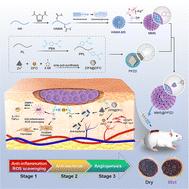
Effectively managing infected diabetic wounds involves the elimination of bacteria, neutralization of reactive oxygen species (ROS), suppression of inflammation, and induction of angiogenesis. This study describes the development of a multifunctional hyaluronic acid (HA)-based microgel system capable of serving as either an injectable wet microgel or dry microspheres (MSs). After initially engineering Fe2+/tea polyphenol (TP) metal–polyphenol network (MPN)-functionalized HAMA MS, these particles were found to suppress inflammation and facilitate ROS scavenging. A deferoxamine (DFO)-loaded zinc-based metal–organic framework (ZIF-8@DFO) was then coated using phenylboronic acid (PBA)-functionalized ε-polylysine (PPL) to produce PPZD nanoparticles with antibacterial and pro-angiogenic properties. The dynamic loading of PPZD into MPN-functionalized MS (MMS) via boron ester bonds then yielded a pH/ROS-responsive microgel system (MMS@PPZD). PPL coating endowed the prepared materials with antimicrobial properties while mitigating cytotoxic effects resulting from the rapid release of Zn2+ and DFO in acidic micro-environments. This microgel system showed superior biocompatibility and phased intervention activities aligned with the various stages of the wound healing process in vitro and in vivo. Specifically, under acidic conditions, the system sequentially released TP, PL, Zn2+, and DFO, enabling effective ROS scavenging, suppressing inflammation, exhibiting antibacterial activity, and inducing angiogenesis. Overall, this environmentally-responsive, multifunctional, versatile microgel system offers significant promise for infected diabetic wound management.
期刊介绍:
Journal of Materials Chemistry A, B & C cover high quality studies across all fields of materials chemistry. The journals focus on those theoretical or experimental studies that report new understanding, applications, properties and synthesis of materials. Journal of Materials Chemistry A, B & C are separated by the intended application of the material studied. Broadly, applications in energy and sustainability are of interest to Journal of Materials Chemistry A, applications in biology and medicine are of interest to Journal of Materials Chemistry B, and applications in optical, magnetic and electronic devices are of interest to Journal of Materials Chemistry C.Journal of Materials Chemistry B is a Transformative Journal and Plan S compliant. Example topic areas within the scope of Journal of Materials Chemistry B are listed below. This list is neither exhaustive nor exclusive:
Antifouling coatings
Biocompatible materials
Bioelectronics
Bioimaging
Biomimetics
Biomineralisation
Bionics
Biosensors
Diagnostics
Drug delivery
Gene delivery
Immunobiology
Nanomedicine
Regenerative medicine & Tissue engineering
Scaffolds
Soft robotics
Stem cells
Therapeutic devices




 京公网安备 11010802042870号
京ICP备2023020795号-1
京公网安备 11010802042870号
京ICP备2023020795号-1

 分享
分享
 求助内容:
求助内容: 应助结果提醒方式:
 扫码关注我们
