{"title":"一种通过成像引导光动力免疫疗法治疗胰腺癌的酯酶激活前药。","authors":"Kaini Yang, Qingyang Sha, Xinsheng Li, Jianli Hua and Wei Chen","doi":"10.1039/D4BM01718H","DOIUrl":null,"url":null,"abstract":"<p >Photodynamic therapy (PDT) has received much attention as a promising modality for tumor treatment. However, the weak targeting ability of conventional photosensitisers and the metastasis of malignant tumors have severely limited the development of PDT. To address this, an esterase-activated prodrug (<strong>BPYM</strong>) has been developed for imaging-guided photodynamic therapy cascade immunotherapy for the treatment of pancreatic cancer. Upon reaction with esterase, <strong>BPYM</strong> releases the photosensitiser <strong>BPY</strong> and exhibits strong red fluorescence emission, which is further enhanced by the aggregation-induced emission (AIE) characteristics of <strong>BPY</strong>. Interestingly, the activation of the fluorescence signal simultaneously indicates the activation of photosensitivity capabilities. Under white light irradiation, activated <strong>BPYM</strong> can generate large amounts of reactive oxygen species (ROS) to induce apoptosis in pancreatic cancer cells. More importantly, <strong>BPYM</strong>-mediated PDT can trigger immunogenic cell death (ICD) and elicit a systemic anti-tumor immune response. Ultimately, this imaging-guided PDT not only precisely ablates the primary pancreatic cancer tumors, but also inhibits the growth of distant tumors through an immune response. In summary, we report a strategy to achieve photodynamic immunotherapy for the treatment of pancreatic cancer through the rational design of an esterase-activated prodrug.</p>","PeriodicalId":65,"journal":{"name":"Biomaterials Science","volume":" 8","pages":" 2092-2101"},"PeriodicalIF":6.1000,"publicationDate":"2025-02-28","publicationTypes":"Journal Article","fieldsOfStudy":null,"isOpenAccess":false,"openAccessPdf":"","citationCount":"0","resultStr":"{\"title\":\"An esterase-activated prodrug against pancreatic cancer by imaging-guided photodynamic immunotherapy†\",\"authors\":\"Kaini Yang, Qingyang Sha, Xinsheng Li, Jianli Hua and Wei Chen\",\"doi\":\"10.1039/D4BM01718H\",\"DOIUrl\":null,\"url\":null,\"abstract\":\"<p >Photodynamic therapy (PDT) has received much attention as a promising modality for tumor treatment. However, the weak targeting ability of conventional photosensitisers and the metastasis of malignant tumors have severely limited the development of PDT. To address this, an esterase-activated prodrug (<strong>BPYM</strong>) has been developed for imaging-guided photodynamic therapy cascade immunotherapy for the treatment of pancreatic cancer. Upon reaction with esterase, <strong>BPYM</strong> releases the photosensitiser <strong>BPY</strong> and exhibits strong red fluorescence emission, which is further enhanced by the aggregation-induced emission (AIE) characteristics of <strong>BPY</strong>. Interestingly, the activation of the fluorescence signal simultaneously indicates the activation of photosensitivity capabilities. Under white light irradiation, activated <strong>BPYM</strong> can generate large amounts of reactive oxygen species (ROS) to induce apoptosis in pancreatic cancer cells. More importantly, <strong>BPYM</strong>-mediated PDT can trigger immunogenic cell death (ICD) and elicit a systemic anti-tumor immune response. Ultimately, this imaging-guided PDT not only precisely ablates the primary pancreatic cancer tumors, but also inhibits the growth of distant tumors through an immune response. In summary, we report a strategy to achieve photodynamic immunotherapy for the treatment of pancreatic cancer through the rational design of an esterase-activated prodrug.</p>\",\"PeriodicalId\":65,\"journal\":{\"name\":\"Biomaterials Science\",\"volume\":\" 8\",\"pages\":\" 2092-2101\"},\"PeriodicalIF\":6.1000,\"publicationDate\":\"2025-02-28\",\"publicationTypes\":\"Journal Article\",\"fieldsOfStudy\":null,\"isOpenAccess\":false,\"openAccessPdf\":\"\",\"citationCount\":\"0\",\"resultStr\":null,\"platform\":\"Semanticscholar\",\"paperid\":null,\"PeriodicalName\":\"Biomaterials Science\",\"FirstCategoryId\":\"5\",\"ListUrlMain\":\"https://pubs.rsc.org/en/content/articlelanding/2025/bm/d4bm01718h\",\"RegionNum\":3,\"RegionCategory\":\"医学\",\"ArticlePicture\":[],\"TitleCN\":null,\"AbstractTextCN\":null,\"PMCID\":null,\"EPubDate\":\"\",\"PubModel\":\"\",\"JCR\":\"Q1\",\"JCRName\":\"MATERIALS SCIENCE, BIOMATERIALS\",\"Score\":null,\"Total\":0}","platform":"Semanticscholar","paperid":null,"PeriodicalName":"Biomaterials Science","FirstCategoryId":"5","ListUrlMain":"https://pubs.rsc.org/en/content/articlelanding/2025/bm/d4bm01718h","RegionNum":3,"RegionCategory":"医学","ArticlePicture":[],"TitleCN":null,"AbstractTextCN":null,"PMCID":null,"EPubDate":"","PubModel":"","JCR":"Q1","JCRName":"MATERIALS SCIENCE, BIOMATERIALS","Score":null,"Total":0}
An esterase-activated prodrug against pancreatic cancer by imaging-guided photodynamic immunotherapy†
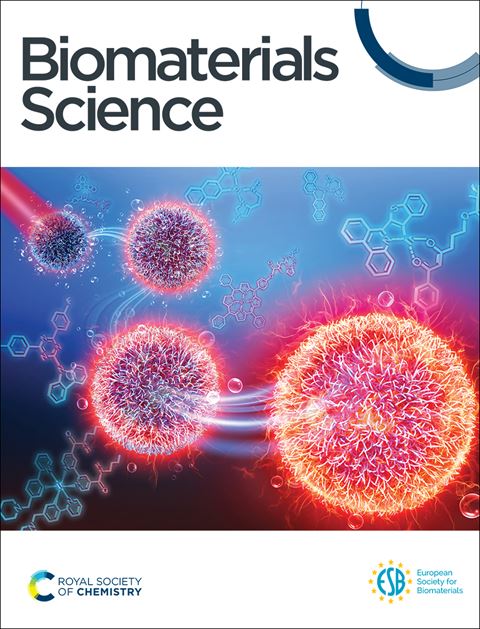
Photodynamic therapy (PDT) has received much attention as a promising modality for tumor treatment. However, the weak targeting ability of conventional photosensitisers and the metastasis of malignant tumors have severely limited the development of PDT. To address this, an esterase-activated prodrug (BPYM) has been developed for imaging-guided photodynamic therapy cascade immunotherapy for the treatment of pancreatic cancer. Upon reaction with esterase, BPYM releases the photosensitiser BPY and exhibits strong red fluorescence emission, which is further enhanced by the aggregation-induced emission (AIE) characteristics of BPY. Interestingly, the activation of the fluorescence signal simultaneously indicates the activation of photosensitivity capabilities. Under white light irradiation, activated BPYM can generate large amounts of reactive oxygen species (ROS) to induce apoptosis in pancreatic cancer cells. More importantly, BPYM-mediated PDT can trigger immunogenic cell death (ICD) and elicit a systemic anti-tumor immune response. Ultimately, this imaging-guided PDT not only precisely ablates the primary pancreatic cancer tumors, but also inhibits the growth of distant tumors through an immune response. In summary, we report a strategy to achieve photodynamic immunotherapy for the treatment of pancreatic cancer through the rational design of an esterase-activated prodrug.
期刊介绍:
Biomaterials Science is an international high impact journal exploring the science of biomaterials and their translation towards clinical use. Its scope encompasses new concepts in biomaterials design, studies into the interaction of biomaterials with the body, and the use of materials to answer fundamental biological questions.





 京公网安备 11010802042870号
京ICP备2023020795号-1
京公网安备 11010802042870号
京ICP备2023020795号-1

 分享
分享
 求助内容:
求助内容: 应助结果提醒方式:
 扫码关注我们
