Dongliang Wu, Chuanzhi Zhao, Walid Korani, Ethan A Thompson, Hui Wang, Gaurav Agarwal, Jake C Fountain, Albert Culbreath, C Corley Holbrook, Xingjun Wang, Josh P Clevenger, Baozhu Guo
{"title":"高分辨率遗传和物理图谱显示,在A01染色体上的一个重组冷点上,发现了一个花生斑点枯萎病对番茄斑点枯萎病毒(TSWV)的抗性位点PSWDR-1。","authors":"Dongliang Wu, Chuanzhi Zhao, Walid Korani, Ethan A Thompson, Hui Wang, Gaurav Agarwal, Jake C Fountain, Albert Culbreath, C Corley Holbrook, Xingjun Wang, Josh P Clevenger, Baozhu Guo","doi":"10.1186/s12864-025-11366-7","DOIUrl":null,"url":null,"abstract":"<p><strong>Background: </strong>Peanut (Arachis hypogaea L.) is a vital global crop, frequently threatened by both abiotic and biotic stresses. Among the most damaging biotic stresses is Tomato spotted wilt virus (TSWV), which causes peanut spotted wilt disease resulting in significant yield loss. Developing TSWV-resistant cultivars is crucial to new cultivar release. Previous studies have used a subset of the \"S\" recombinant inbred line (RIL) population derived from SunOleic 97R and NC94022 and identified quantitative trait loci (QTLs) for resistance to TSWV. These studies utilized different genotyping techniques and found large consistent genomic regions on chromosome A01. The objective of this study was to fine map the QTL and identify candidate genes using the entire population of 352 RILs and high-density, high-quality peanut SNP arrays.</p><p><strong>Results: </strong>We used both versions of the peanut SNP arrays with five years of disease ratings, and successfully mapped the long-sought peanut spotted wilt disease resistance locus, PSWDR-1. QTL analyses identified two major QTLs, explaining 41.43% and 43.69% of the phenotypic variance within 3.6 cM and 0.28 cM intervals using the peanut Axiom_Arachis-v1 and Axiom_Arachis-v2 SNP arrays, respectively, on chromosome A01. These QTLs corresponded to 295 kb and 235 kb physical intervals. The unique overlap region of these two QTLs was 488 kb. A comparison of the genetic linkage map with the reference genome revealed a 1.3 Mb recombination \"cold spot\" (11.325-12.646 Mb) with only two recombination events of RIL-S1 and RIL-S17, which displayed contrasting phenotypes. Sequencing of these two recombinants confirmed the cold spot with only five SNPs detected within this region.</p><p><strong>Conclusions: </strong>This study successfully identified a peanut spotted wilt disease resistance locus, PSWDR-1, on chromosome A01 within a recombination \"cold spot\". The PSWDR-1 locus contains three candidate genes, a TIR-NBS-LRR gene (Arahy.1PK53M), a glutamate receptor-like gene (Arahy.RI1BYW), and an MLO-like protein (Arahy.FX71XI). These findings provide a foundation for future functional studies to validate the roles of these candidate genes in resistance and application in breeding TSWV-resistant peanut cultivars.</p>","PeriodicalId":9030,"journal":{"name":"BMC Genomics","volume":"26 1","pages":"224"},"PeriodicalIF":3.7000,"publicationDate":"2025-03-06","publicationTypes":"Journal Article","fieldsOfStudy":null,"isOpenAccess":false,"openAccessPdf":"https://www.ncbi.nlm.nih.gov/pmc/articles/PMC11887336/pdf/","citationCount":"0","resultStr":"{\"title\":\"High-resolution genetic and physical mapping reveals a peanut spotted wilt disease resistance locus, PSWDR-1, to Tomato spotted wilt virus (TSWV), within a recombination cold-spot on chromosome A01.\",\"authors\":\"Dongliang Wu, Chuanzhi Zhao, Walid Korani, Ethan A Thompson, Hui Wang, Gaurav Agarwal, Jake C Fountain, Albert Culbreath, C Corley Holbrook, Xingjun Wang, Josh P Clevenger, Baozhu Guo\",\"doi\":\"10.1186/s12864-025-11366-7\",\"DOIUrl\":null,\"url\":null,\"abstract\":\"<p><strong>Background: </strong>Peanut (Arachis hypogaea L.) is a vital global crop, frequently threatened by both abiotic and biotic stresses. Among the most damaging biotic stresses is Tomato spotted wilt virus (TSWV), which causes peanut spotted wilt disease resulting in significant yield loss. Developing TSWV-resistant cultivars is crucial to new cultivar release. Previous studies have used a subset of the \\\"S\\\" recombinant inbred line (RIL) population derived from SunOleic 97R and NC94022 and identified quantitative trait loci (QTLs) for resistance to TSWV. These studies utilized different genotyping techniques and found large consistent genomic regions on chromosome A01. The objective of this study was to fine map the QTL and identify candidate genes using the entire population of 352 RILs and high-density, high-quality peanut SNP arrays.</p><p><strong>Results: </strong>We used both versions of the peanut SNP arrays with five years of disease ratings, and successfully mapped the long-sought peanut spotted wilt disease resistance locus, PSWDR-1. QTL analyses identified two major QTLs, explaining 41.43% and 43.69% of the phenotypic variance within 3.6 cM and 0.28 cM intervals using the peanut Axiom_Arachis-v1 and Axiom_Arachis-v2 SNP arrays, respectively, on chromosome A01. These QTLs corresponded to 295 kb and 235 kb physical intervals. The unique overlap region of these two QTLs was 488 kb. A comparison of the genetic linkage map with the reference genome revealed a 1.3 Mb recombination \\\"cold spot\\\" (11.325-12.646 Mb) with only two recombination events of RIL-S1 and RIL-S17, which displayed contrasting phenotypes. Sequencing of these two recombinants confirmed the cold spot with only five SNPs detected within this region.</p><p><strong>Conclusions: </strong>This study successfully identified a peanut spotted wilt disease resistance locus, PSWDR-1, on chromosome A01 within a recombination \\\"cold spot\\\". The PSWDR-1 locus contains three candidate genes, a TIR-NBS-LRR gene (Arahy.1PK53M), a glutamate receptor-like gene (Arahy.RI1BYW), and an MLO-like protein (Arahy.FX71XI). These findings provide a foundation for future functional studies to validate the roles of these candidate genes in resistance and application in breeding TSWV-resistant peanut cultivars.</p>\",\"PeriodicalId\":9030,\"journal\":{\"name\":\"BMC Genomics\",\"volume\":\"26 1\",\"pages\":\"224\"},\"PeriodicalIF\":3.7000,\"publicationDate\":\"2025-03-06\",\"publicationTypes\":\"Journal Article\",\"fieldsOfStudy\":null,\"isOpenAccess\":false,\"openAccessPdf\":\"https://www.ncbi.nlm.nih.gov/pmc/articles/PMC11887336/pdf/\",\"citationCount\":\"0\",\"resultStr\":null,\"platform\":\"Semanticscholar\",\"paperid\":null,\"PeriodicalName\":\"BMC Genomics\",\"FirstCategoryId\":\"99\",\"ListUrlMain\":\"https://doi.org/10.1186/s12864-025-11366-7\",\"RegionNum\":2,\"RegionCategory\":\"生物学\",\"ArticlePicture\":[],\"TitleCN\":null,\"AbstractTextCN\":null,\"PMCID\":null,\"EPubDate\":\"\",\"PubModel\":\"\",\"JCR\":\"Q2\",\"JCRName\":\"BIOTECHNOLOGY & APPLIED MICROBIOLOGY\",\"Score\":null,\"Total\":0}","platform":"Semanticscholar","paperid":null,"PeriodicalName":"BMC Genomics","FirstCategoryId":"99","ListUrlMain":"https://doi.org/10.1186/s12864-025-11366-7","RegionNum":2,"RegionCategory":"生物学","ArticlePicture":[],"TitleCN":null,"AbstractTextCN":null,"PMCID":null,"EPubDate":"","PubModel":"","JCR":"Q2","JCRName":"BIOTECHNOLOGY & APPLIED MICROBIOLOGY","Score":null,"Total":0}
High-resolution genetic and physical mapping reveals a peanut spotted wilt disease resistance locus, PSWDR-1, to Tomato spotted wilt virus (TSWV), within a recombination cold-spot on chromosome A01.
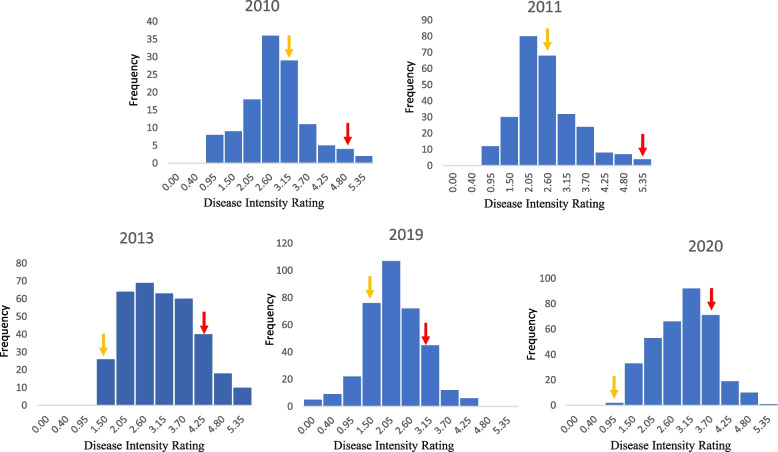
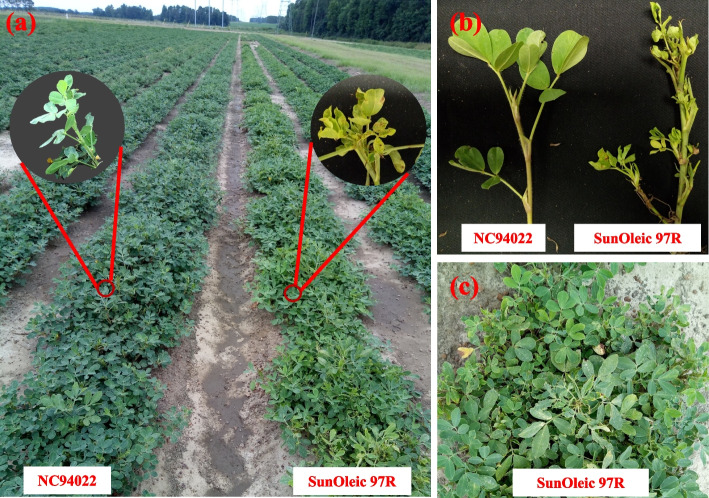
Background: Peanut (Arachis hypogaea L.) is a vital global crop, frequently threatened by both abiotic and biotic stresses. Among the most damaging biotic stresses is Tomato spotted wilt virus (TSWV), which causes peanut spotted wilt disease resulting in significant yield loss. Developing TSWV-resistant cultivars is crucial to new cultivar release. Previous studies have used a subset of the "S" recombinant inbred line (RIL) population derived from SunOleic 97R and NC94022 and identified quantitative trait loci (QTLs) for resistance to TSWV. These studies utilized different genotyping techniques and found large consistent genomic regions on chromosome A01. The objective of this study was to fine map the QTL and identify candidate genes using the entire population of 352 RILs and high-density, high-quality peanut SNP arrays.
Results: We used both versions of the peanut SNP arrays with five years of disease ratings, and successfully mapped the long-sought peanut spotted wilt disease resistance locus, PSWDR-1. QTL analyses identified two major QTLs, explaining 41.43% and 43.69% of the phenotypic variance within 3.6 cM and 0.28 cM intervals using the peanut Axiom_Arachis-v1 and Axiom_Arachis-v2 SNP arrays, respectively, on chromosome A01. These QTLs corresponded to 295 kb and 235 kb physical intervals. The unique overlap region of these two QTLs was 488 kb. A comparison of the genetic linkage map with the reference genome revealed a 1.3 Mb recombination "cold spot" (11.325-12.646 Mb) with only two recombination events of RIL-S1 and RIL-S17, which displayed contrasting phenotypes. Sequencing of these two recombinants confirmed the cold spot with only five SNPs detected within this region.
Conclusions: This study successfully identified a peanut spotted wilt disease resistance locus, PSWDR-1, on chromosome A01 within a recombination "cold spot". The PSWDR-1 locus contains three candidate genes, a TIR-NBS-LRR gene (Arahy.1PK53M), a glutamate receptor-like gene (Arahy.RI1BYW), and an MLO-like protein (Arahy.FX71XI). These findings provide a foundation for future functional studies to validate the roles of these candidate genes in resistance and application in breeding TSWV-resistant peanut cultivars.
期刊介绍:
BMC Genomics is an open access, peer-reviewed journal that considers articles on all aspects of genome-scale analysis, functional genomics, and proteomics.
BMC Genomics is part of the BMC series which publishes subject-specific journals focused on the needs of individual research communities across all areas of biology and medicine. We offer an efficient, fair and friendly peer review service, and are committed to publishing all sound science, provided that there is some advance in knowledge presented by the work.






 京公网安备 11010802042870号
京ICP备2023020795号-1
京公网安备 11010802042870号
京ICP备2023020795号-1

 分享
分享
 求助内容:
求助内容: 应助结果提醒方式:
 扫码关注我们
