Jing Wen, Zongju Chen, Li Zou, Yang Fei, Pu Zhang, Zijun Xiong, Yifang Liu, Yu Lu, Jiaxin Tao, Shijiao Yan, Longti Li, Wenning Fu
{"title":"湖北省新冠肺炎大流行2年后医护人员创伤后应激障碍、创伤后成长和故意反刍的纵向交叉滞后关系","authors":"Jing Wen, Zongju Chen, Li Zou, Yang Fei, Pu Zhang, Zijun Xiong, Yifang Liu, Yu Lu, Jiaxin Tao, Shijiao Yan, Longti Li, Wenning Fu","doi":"10.1186/s12888-025-06540-w","DOIUrl":null,"url":null,"abstract":"<p><strong>Background: </strong>Post-traumatic stress disorder (PTSD) and post-traumatic growth (PTG) are inspiratory areas of psychological research in which deliberate rumination has important implications. However, these relationships have not yet been assessed in the COVID-19 pandemic using longitudinal designs.</p><p><strong>Methods: </strong>In this study, measures of PTSD, PTG, and deliberate rumination were collected from 2,292 healthcare staff members at two-time points six months apart in 2022-2023 from two general hospitals in Hubei Province, China. A cross-lagged analysis was used to simultaneously determine the directional relationships between these three variables.</p><p><strong>Results: </strong>The results suggest that the relationship between PTG and deliberate behavior is bidirectional and mutually reinforcing (β = 0.133, P < 0.001; β = 0.129, P < 0.001). Significant prospective relations were observed between PTG and PTSD (β = 0.054, P < 0.01), and PTSD prospectively predicted changes in deliberate rumination (β = 0.204, P < 0.001). In addition, significant sex differences were observed in the cross-lagged models.</p><p><strong>Conclusion: </strong>These findings highlighted the noteworthy cross-lagged relationship between PTSD, PTG, and deliberate rumination two years after the COVID-19 pandemic in Hubei Province, China. Therefore, interventions to reduce PTSD, promote PTG, and improve well-being among healthcare staff are important.</p>","PeriodicalId":9029,"journal":{"name":"BMC Psychiatry","volume":"25 1","pages":"206"},"PeriodicalIF":4.6000,"publicationDate":"2025-03-06","publicationTypes":"Journal Article","fieldsOfStudy":null,"isOpenAccess":false,"openAccessPdf":"https://www.ncbi.nlm.nih.gov/pmc/articles/PMC11887192/pdf/","citationCount":"0","resultStr":"{\"title\":\"Longitudinal cross-lagged association between posttraumatic stress disorder, post-traumatic growth, and deliberate rumination among healthcare staff 2 years after the COVID-19 pandemic in Hubei Province, China.\",\"authors\":\"Jing Wen, Zongju Chen, Li Zou, Yang Fei, Pu Zhang, Zijun Xiong, Yifang Liu, Yu Lu, Jiaxin Tao, Shijiao Yan, Longti Li, Wenning Fu\",\"doi\":\"10.1186/s12888-025-06540-w\",\"DOIUrl\":null,\"url\":null,\"abstract\":\"<p><strong>Background: </strong>Post-traumatic stress disorder (PTSD) and post-traumatic growth (PTG) are inspiratory areas of psychological research in which deliberate rumination has important implications. However, these relationships have not yet been assessed in the COVID-19 pandemic using longitudinal designs.</p><p><strong>Methods: </strong>In this study, measures of PTSD, PTG, and deliberate rumination were collected from 2,292 healthcare staff members at two-time points six months apart in 2022-2023 from two general hospitals in Hubei Province, China. A cross-lagged analysis was used to simultaneously determine the directional relationships between these three variables.</p><p><strong>Results: </strong>The results suggest that the relationship between PTG and deliberate behavior is bidirectional and mutually reinforcing (β = 0.133, P < 0.001; β = 0.129, P < 0.001). Significant prospective relations were observed between PTG and PTSD (β = 0.054, P < 0.01), and PTSD prospectively predicted changes in deliberate rumination (β = 0.204, P < 0.001). In addition, significant sex differences were observed in the cross-lagged models.</p><p><strong>Conclusion: </strong>These findings highlighted the noteworthy cross-lagged relationship between PTSD, PTG, and deliberate rumination two years after the COVID-19 pandemic in Hubei Province, China. Therefore, interventions to reduce PTSD, promote PTG, and improve well-being among healthcare staff are important.</p>\",\"PeriodicalId\":9029,\"journal\":{\"name\":\"BMC Psychiatry\",\"volume\":\"25 1\",\"pages\":\"206\"},\"PeriodicalIF\":4.6000,\"publicationDate\":\"2025-03-06\",\"publicationTypes\":\"Journal Article\",\"fieldsOfStudy\":null,\"isOpenAccess\":false,\"openAccessPdf\":\"https://www.ncbi.nlm.nih.gov/pmc/articles/PMC11887192/pdf/\",\"citationCount\":\"0\",\"resultStr\":null,\"platform\":\"Semanticscholar\",\"paperid\":null,\"PeriodicalName\":\"BMC Psychiatry\",\"FirstCategoryId\":\"3\",\"ListUrlMain\":\"https://doi.org/10.1186/s12888-025-06540-w\",\"RegionNum\":2,\"RegionCategory\":\"医学\",\"ArticlePicture\":[],\"TitleCN\":null,\"AbstractTextCN\":null,\"PMCID\":null,\"EPubDate\":\"\",\"PubModel\":\"\",\"JCR\":\"Q2\",\"JCRName\":\"PSYCHIATRY\",\"Score\":null,\"Total\":0}","platform":"Semanticscholar","paperid":null,"PeriodicalName":"BMC Psychiatry","FirstCategoryId":"3","ListUrlMain":"https://doi.org/10.1186/s12888-025-06540-w","RegionNum":2,"RegionCategory":"医学","ArticlePicture":[],"TitleCN":null,"AbstractTextCN":null,"PMCID":null,"EPubDate":"","PubModel":"","JCR":"Q2","JCRName":"PSYCHIATRY","Score":null,"Total":0}
Longitudinal cross-lagged association between posttraumatic stress disorder, post-traumatic growth, and deliberate rumination among healthcare staff 2 years after the COVID-19 pandemic in Hubei Province, China.
Background: Post-traumatic stress disorder (PTSD) and post-traumatic growth (PTG) are inspiratory areas of psychological research in which deliberate rumination has important implications. However, these relationships have not yet been assessed in the COVID-19 pandemic using longitudinal designs.
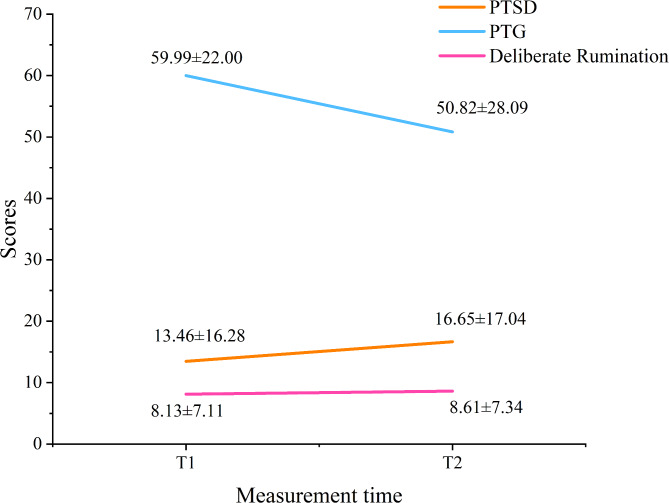
Methods: In this study, measures of PTSD, PTG, and deliberate rumination were collected from 2,292 healthcare staff members at two-time points six months apart in 2022-2023 from two general hospitals in Hubei Province, China. A cross-lagged analysis was used to simultaneously determine the directional relationships between these three variables.
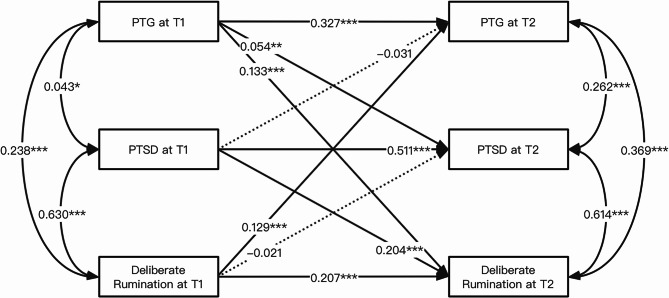
Results: The results suggest that the relationship between PTG and deliberate behavior is bidirectional and mutually reinforcing (β = 0.133, P < 0.001; β = 0.129, P < 0.001). Significant prospective relations were observed between PTG and PTSD (β = 0.054, P < 0.01), and PTSD prospectively predicted changes in deliberate rumination (β = 0.204, P < 0.001). In addition, significant sex differences were observed in the cross-lagged models.
Conclusion: These findings highlighted the noteworthy cross-lagged relationship between PTSD, PTG, and deliberate rumination two years after the COVID-19 pandemic in Hubei Province, China. Therefore, interventions to reduce PTSD, promote PTG, and improve well-being among healthcare staff are important.
期刊介绍:
BMC Psychiatry is an open access, peer-reviewed journal that considers articles on all aspects of the prevention, diagnosis and management of psychiatric disorders, as well as related molecular genetics, pathophysiology, and epidemiology.





 京公网安备 11010802042870号
京ICP备2023020795号-1
京公网安备 11010802042870号
京ICP备2023020795号-1

 分享
分享
 求助内容:
求助内容: 应助结果提醒方式:
 扫码关注我们
