{"title":"MiRNA及其靶向甲基转移酶3在QN橙扇贝内收肌类胡萝卜素积累中的作用","authors":"Junlin Song, Xiao Sun, Chunde Wang","doi":"10.1186/s12864-025-11388-1","DOIUrl":null,"url":null,"abstract":"<p><strong>Background: </strong>QN Orange scallops are interspecific hybrids with orange adductor muscles that are rich in carotenoids. In this study, analysis of miRNA expression profiles was performed to explore possible regulatory patterns involved in carotenoid accumulation in adductor muscles of QN Orange scallops.</p><p><strong>Results: </strong>A total of 91 differentially expressed miRNA between the white and orange adductor muscles were identified. GO and KEGG analysis of target genes of differentially expressed miRNAs revealed enrichments in the transmembrane transporter activity-related pathways, kinase activity-related pathways, signal transduction-related pathways, ATP binding cassette transporters (ABC transporters), retinol metabolism, lipid-related metabolism, and calcium signaling pathway. In particular, miRNA Contig1462_36180, which was shown to negatively regulate the activity of methyltransferase 3 (METTL3) by dual-luciferase reporter assay, may play a pivotal role in the accumulation of carotenoids. Furthermore, METTL3 interference seemed to reduce the pectenoxanthin content and m6A level.</p><p><strong>Conclusion: </strong>It is thus speculated that Contig1462_36180 may regulate m6A methylation by regulating METTL3, which in turn affects pectenoxanthin accumulation in QN Orange scallops.</p>","PeriodicalId":9030,"journal":{"name":"BMC Genomics","volume":"26 1","pages":"223"},"PeriodicalIF":3.7000,"publicationDate":"2025-03-06","publicationTypes":"Journal Article","fieldsOfStudy":null,"isOpenAccess":false,"openAccessPdf":"https://www.ncbi.nlm.nih.gov/pmc/articles/PMC11884202/pdf/","citationCount":"0","resultStr":"{\"title\":\"The roles of a MiRNA and its targeted methyltransferase 3 in carotenoid accumulation in adductor muscles of QN orange scallops.\",\"authors\":\"Junlin Song, Xiao Sun, Chunde Wang\",\"doi\":\"10.1186/s12864-025-11388-1\",\"DOIUrl\":null,\"url\":null,\"abstract\":\"<p><strong>Background: </strong>QN Orange scallops are interspecific hybrids with orange adductor muscles that are rich in carotenoids. In this study, analysis of miRNA expression profiles was performed to explore possible regulatory patterns involved in carotenoid accumulation in adductor muscles of QN Orange scallops.</p><p><strong>Results: </strong>A total of 91 differentially expressed miRNA between the white and orange adductor muscles were identified. GO and KEGG analysis of target genes of differentially expressed miRNAs revealed enrichments in the transmembrane transporter activity-related pathways, kinase activity-related pathways, signal transduction-related pathways, ATP binding cassette transporters (ABC transporters), retinol metabolism, lipid-related metabolism, and calcium signaling pathway. In particular, miRNA Contig1462_36180, which was shown to negatively regulate the activity of methyltransferase 3 (METTL3) by dual-luciferase reporter assay, may play a pivotal role in the accumulation of carotenoids. Furthermore, METTL3 interference seemed to reduce the pectenoxanthin content and m6A level.</p><p><strong>Conclusion: </strong>It is thus speculated that Contig1462_36180 may regulate m6A methylation by regulating METTL3, which in turn affects pectenoxanthin accumulation in QN Orange scallops.</p>\",\"PeriodicalId\":9030,\"journal\":{\"name\":\"BMC Genomics\",\"volume\":\"26 1\",\"pages\":\"223\"},\"PeriodicalIF\":3.7000,\"publicationDate\":\"2025-03-06\",\"publicationTypes\":\"Journal Article\",\"fieldsOfStudy\":null,\"isOpenAccess\":false,\"openAccessPdf\":\"https://www.ncbi.nlm.nih.gov/pmc/articles/PMC11884202/pdf/\",\"citationCount\":\"0\",\"resultStr\":null,\"platform\":\"Semanticscholar\",\"paperid\":null,\"PeriodicalName\":\"BMC Genomics\",\"FirstCategoryId\":\"99\",\"ListUrlMain\":\"https://doi.org/10.1186/s12864-025-11388-1\",\"RegionNum\":2,\"RegionCategory\":\"生物学\",\"ArticlePicture\":[],\"TitleCN\":null,\"AbstractTextCN\":null,\"PMCID\":null,\"EPubDate\":\"\",\"PubModel\":\"\",\"JCR\":\"Q2\",\"JCRName\":\"BIOTECHNOLOGY & APPLIED MICROBIOLOGY\",\"Score\":null,\"Total\":0}","platform":"Semanticscholar","paperid":null,"PeriodicalName":"BMC Genomics","FirstCategoryId":"99","ListUrlMain":"https://doi.org/10.1186/s12864-025-11388-1","RegionNum":2,"RegionCategory":"生物学","ArticlePicture":[],"TitleCN":null,"AbstractTextCN":null,"PMCID":null,"EPubDate":"","PubModel":"","JCR":"Q2","JCRName":"BIOTECHNOLOGY & APPLIED MICROBIOLOGY","Score":null,"Total":0}
The roles of a MiRNA and its targeted methyltransferase 3 in carotenoid accumulation in adductor muscles of QN orange scallops.
Background: QN Orange scallops are interspecific hybrids with orange adductor muscles that are rich in carotenoids. In this study, analysis of miRNA expression profiles was performed to explore possible regulatory patterns involved in carotenoid accumulation in adductor muscles of QN Orange scallops.
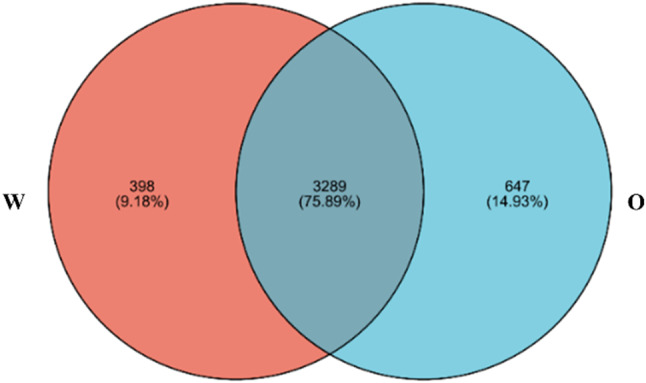
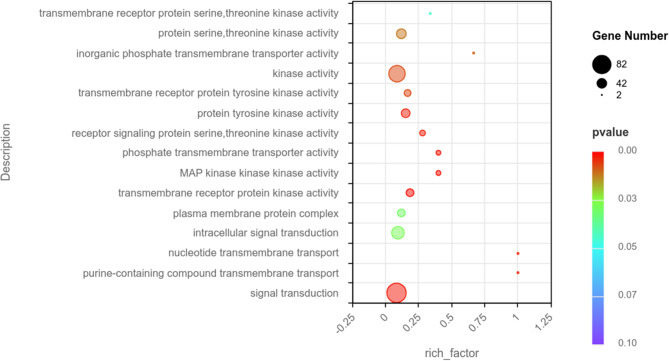
Results: A total of 91 differentially expressed miRNA between the white and orange adductor muscles were identified. GO and KEGG analysis of target genes of differentially expressed miRNAs revealed enrichments in the transmembrane transporter activity-related pathways, kinase activity-related pathways, signal transduction-related pathways, ATP binding cassette transporters (ABC transporters), retinol metabolism, lipid-related metabolism, and calcium signaling pathway. In particular, miRNA Contig1462_36180, which was shown to negatively regulate the activity of methyltransferase 3 (METTL3) by dual-luciferase reporter assay, may play a pivotal role in the accumulation of carotenoids. Furthermore, METTL3 interference seemed to reduce the pectenoxanthin content and m6A level.
Conclusion: It is thus speculated that Contig1462_36180 may regulate m6A methylation by regulating METTL3, which in turn affects pectenoxanthin accumulation in QN Orange scallops.
期刊介绍:
BMC Genomics is an open access, peer-reviewed journal that considers articles on all aspects of genome-scale analysis, functional genomics, and proteomics.
BMC Genomics is part of the BMC series which publishes subject-specific journals focused on the needs of individual research communities across all areas of biology and medicine. We offer an efficient, fair and friendly peer review service, and are committed to publishing all sound science, provided that there is some advance in knowledge presented by the work.





 京公网安备 11010802042870号
京ICP备2023020795号-1
京公网安备 11010802042870号
京ICP备2023020795号-1

 分享
分享
 求助内容:
求助内容: 应助结果提醒方式:
 扫码关注我们
